
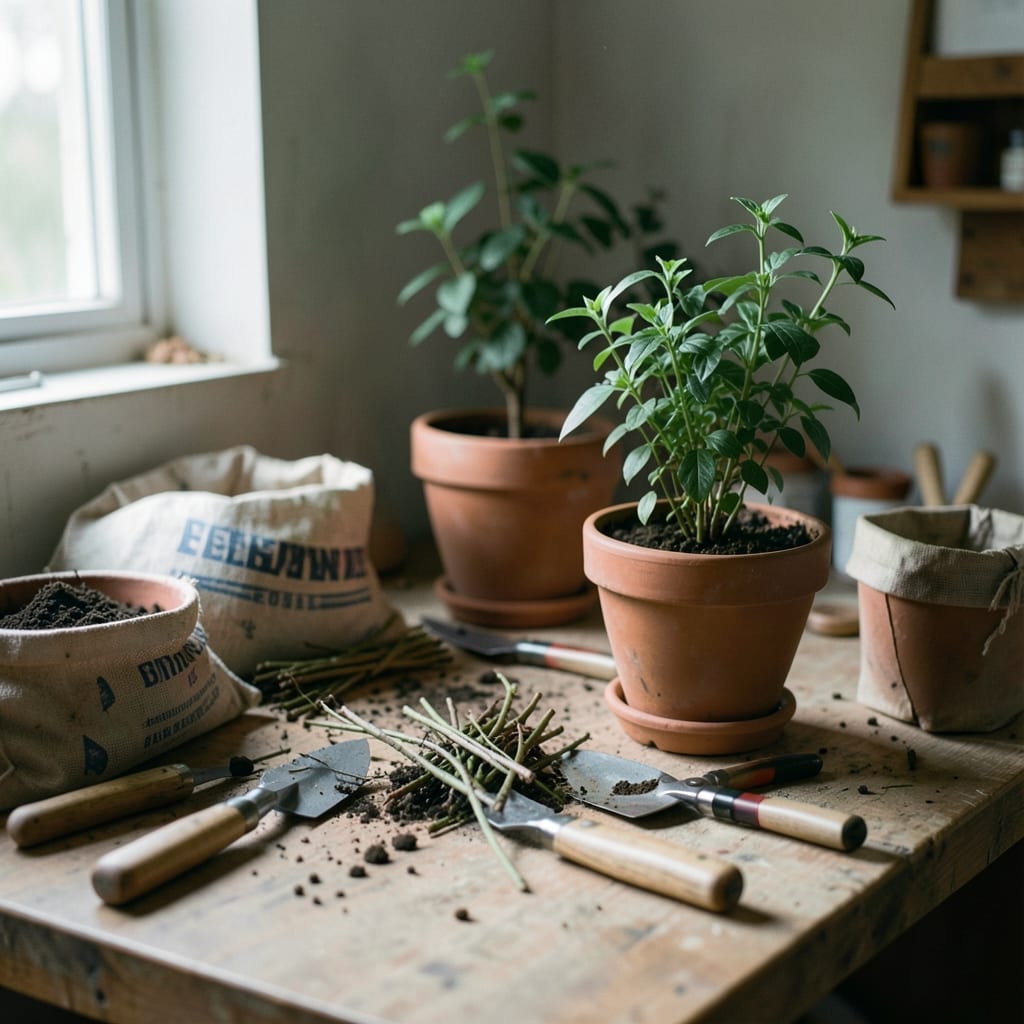
Welcome to Bulb And Bloom
You’ve planted a seed—maybe it’s a stubborn tomato that refuses to sprout, or a houseplant that’s wilting despite your best care—and now you’re not sure what went wrong. The soil was too dry. The light was wrong.
Or worse, you’ve just stared at a bare patch of earth and wondered where to begin. *Bulb And Bloom* exists for the moments when gardening feels like a puzzle without the missing piece.
This is for the people who roll up their sleeves and get their hands dirty, whether that means wrestling with weeds in a backyard plot or coaxing life from a windowsill herb garden. No jargon, no assumptions about what you already know.
Just the real answers: how to save a dying fern, why your peppers keep bolting early, and which mulch actually works in clay soil. Because the best gardens—like the best gardeners—start with honesty.
Our story
It started in a rented apartment in Portland, where Kirsten’s tomato plants kept dying from overwatering—despite the care instructions on the seed packet.
She’d call her grandmother, who’d laugh and say, *‘Child, you’re drowning ‘em like a first-time fisherman.’* That was the moment the idea took root: a site that didn’t treat gardeners like beginners, but like people who just needed the right nudge.
The first drafts were messy. A list of ‘10 Easy Houseplants’ turned into a rant about why no one warned her about root rot in pothos.
A guide to composting became a story about the bin that sat untouched for three months until she finally admitted she’d forgotten to turn it.
The turning point came at 3:17 AM, when a single email arrived from a reader in Ohio who’d used her ‘revive wilting basil’ trick—and sent back a photo of the plant thriving. That’s when it stopped being a hobby and became *Bulb And Bloom*.
Now, the site grows alongside the gardens it writes about. The ‘failed experiments’ section is just as popular as the success stories, because the best lessons come from the things that didn’t work the first time. And the team?
They’re still out there—digging, pruning, and occasionally cursing at a stubborn weed—just like the readers.
What we stand for
*Bulb And Bloom* believes gardening should be about growth, not guilt. Whether you’re a city dweller with a single windowsill or a farmer with acres, the rules are the same: plants don’t care about your schedule, your budget, or your past mistakes. They only care about what you do next.
What you will always get here
- Advice that matches the conditions you’re actually working with—not the ‘ideal’ ones in a catalog.
- Clear warnings about plants that look pretty but fight you at every turn (looking at you, mint).
- No ‘wait until spring’ hand-waving. What to do *now*, even if your season is already half over.
- A mix of science and street-smart tricks—like why your zucchini plants need a beer bath (yes, really).
Meet the team

Behind *Bulb And Bloom* is a small group of gardeners who’ve all had the same frustration: finding advice that either treats them like children or assumes they’re experts.
We’re the people who’ve killed cacti by over-loving them, grown heirloom tomatoes that split open in the rain, and still show up with dirt under our nails. Our work is built on the things we’ve learned the hard way—and the things we’re still learning.
Kirsten Delgado
Kirsten Delgado is the founder and editor of *Bulb And Bloom*, and her desk is a battlefield of seed packets, a half-empty mug of cold tea, and a single pothos plant that she’s sworn to save—despite having killed three others before it.
She started gardening by sneaking seeds from her grandmother’s garden in New Mexico, where the soil was so rich it made up for her clumsy hands. Now, she runs the site with the same no-nonsense approach she used on her first tomato plants: if it doesn’t work, try something else.
Her background is in botany, but her real expertise is in translating lab terms into what happens in a backyard at 9 PM under a porch light.
She’s the one who notices when a ‘full sun’ plant actually means ‘six hours of direct light, or it bolts,’ and who keeps a running list of ‘things I’ll never do again’—currently topped by ‘planting marigolds in clay soil without amending it first.’
I’d rather tell you why your peppers are turning bitter than sell you a ‘miracle grow’ packet. Gardening isn’t about perfection—it’s about what happens when you actually dig in.
Kirsten Delgado
How we create our content
Every piece on *Bulb And Bloom* starts with a problem—either one we’ve faced ourselves or one a reader has described in agonizing detail.
The first draft is always written in the moment: notes scribbled after a failed experiment, a photo of a plant that’s doing something bizarre, or a conversation with a fellow gardener who’s seen it all before. Then comes the hard part: turning chaos into something useful.
The first draft: raw and real
We begin by testing everything in the conditions we know readers are working with—not a greenhouse, not a ‘perfect’ summer day, but the real world.
That means planting seeds in a bathtub if that’s all the space you’ve got, growing herbs under fluorescent lights, and tracking how long it takes for basil to bolt in a city apartment where the sun disappears by 4 PM.
Every note—*‘soil stayed soggy for 48 hours,’ ‘temp dropped to 45°F at night’*—goes into the first draft.
The ‘failed experiments’ section isn’t a mistake; it’s the most important part. A guide to reviving a dying fern includes the three times we killed one ourselves, the exact hour we realized the roots were rotting, and what we did to fix it.
Because if we can’t admit we’ve screwed up, how can we help you when you do?
The edit: sharpening the advice
The second stage is where the raw notes become something you can actually use.
We cut out the fluff, double-check every measurement (yes, even the ‘pinch of salt’ gets weighed), and add the details that make the difference between ‘maybe it’ll work’ and ‘this will grow.’ That’s why our ‘composting’ guides include a chart for how long it takes to break down banana peels in 70°F vs. 50°F soil—and why we never say ‘use well-draining soil’ without specifying what that means for your local clay.
Finally, we run it by someone who’s never seen the plant before. If a first-time gardener can’t understand why you’re supposed to ‘harden off’ seedlings, we rewrite it. If a photo shows a ‘thriving’ garden but the text admits the tomatoes were half-eaten by squirrels, we fix that too.
Because the goal isn’t to make you feel like an expert—it’s to make you feel like you’ve got a fighting chance.
Join our community
This isn’t just a site—it’s a place where questions get real answers. Stuck with a mystery plant? We’ll help you identify it (and whether it’s invasive). Your zucchini plants are wilting by noon? We’ll tell you why—and how to fix it before the squirrels get to them.
Got a gardening tip that actually works? Send it in. The best suggestions get tested, and if they pass, they end up here for everyone to use.
No ‘ask an expert’ paywalls. No ‘like and share’ gimmicks. Just a group of people who’ve all been there: staring at a sad-looking plant and wondering if you’re doomed to fail. The only rule? Be honest about what’s happening in *your* garden, not the one in the catalog.
Let's connect
We love hearing about the gardens you’re building—whether it’s a single pot of herbs on a fire escape or a plot that’s finally producing more tomatoes than neighbors. Got a question, a triumph, or a plant that’s baffling you? The contact page is the best place to start.
And if you’re still not sure where to begin? Try the ‘first-time gardener’ guides. We’ve all been there.
Happy growing.
The guides are grouped by category: Advice, Aphids, Blooming, Companion Plants, Container Gardens and Diseases.