
Blooming
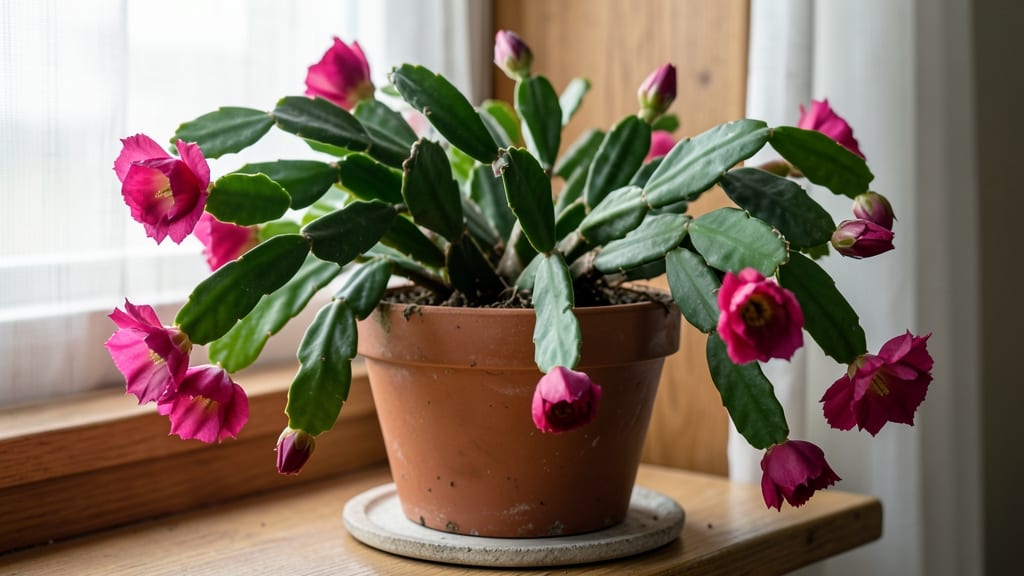
Your Christmas cactus bloom time isn't just luck—it's a precise seasonal dance between light, temperature, and care. 🌸 I've forced my plants to bloom every December for years, and the secret starts 8 weeks before the holidays when you mimic autumn's cooling shift indoors.
The magic happens when you reduce watering, move the plant to cooler spots (50-60°F nights), and give it 12-14 hours of darkness daily. Skip the bright lights—your cactus needs this rest to set buds.
My plants always deliver vibrant red blooms by Christmas because I treat them like they're already in autumn, even when my thermostat says summer. What you'll end up with is a showstopping display of flowers that lasts 2-3 weeks, their petals unfurling like holiday confetti.
The key is consistency—no sudden temperature swings or overwatering—and you'll get results even if your plant skipped blooming last year. Troubleshooting delayed blooms? Check your light exposure first. Too much artificial light during "nighttime" prevents bud formation. And if your cactus blooms in spring instead?
It's just telling you it needs a clearer seasonal signal next year.
📚 In This Guide
- What you need
- Instructions
- Tips and common mistakes
- Wrapping up and next steps
What you need
- ● Christmas Cactus Plant: A healthy, mature plant (3+ years old) with 3–5 segments per stem for best results.
- ● Well-draining potting mix: 1 bag (1–2 quarts) of cactus/succulent mix or a blend of: 50% peat moss or coconut coir
- ● 30% perlite or pumice
- ● 20% compost or worm castings
- ● Pot with drainage holes: 1 container (slightly larger than the plant’s root ball) with drainage holes to prevent root rot.
- ● Watering can with a narrow spout: For precise hydration (avoid overhead watering).
- ● Fertilizer: Balanced liquid fertilizer (10-10-10 or 20-20-20), 1 bottle
- ● OR slow-release granules (1 tbsp per plant)
- ○ Grow lights (optional but helpful): LED full-spectrum bulb (15W–20W) or fluorescent tube for low-light areas.
- ● Temperature control: Consistent 60–70°F (15–21°C) during the day; cooler 50–55°F (10–13°C) at night for 6–8 weeks before blooming.
- ● Light exposure: Bright, indirect light (east/west-facing window or 12–14 hours of artificial light daily).
- ● Avoid direct sunlight (can scorch leaves).
- ○ Humidity boost (optional): Pebble tray with water or a humidifier to maintain 40–50% humidity.
- ● 💡 Test your soil: Use a moisture meter to ensure the top 1–2 inches of soil are dry before watering.
- ● 🎯 Rotate your plant: Turn the pot weekly for even light exposure and symmetrical blooms.
- ● 🌡️ Monitor temps: Avoid drafts (AC vents, heaters) during the "dark treatment" phase.
How to time Christmas cactus blooms for the holidays
Here's the foolproof method I use every year to get vibrant blooms right when you need them.
🌱 Step 1: Start with Proper Light Exposure
Move your Christmas cactus to a bright, indirect light spot at least 6-8 weeks before you want blooms. A north-facing window works best—direct sun will scorch the pads. You'll know the light is right when the pads stay deep green without turning yellow or pale.
If your home has dim winter light, supplement with a grow light placed 12-18 inches away for 12-14 hours daily. The goal is to keep the plant healthy and strong before forcing blooms. Avoid placing it near drafts or heating vents—temperature swings confuse the flowering process.
☀️ Step 2: Control Light for Blooming Time
To trigger blooms, reduce light exposure to 12 hours or less per day for 6-8 weeks. Place the plant in a cool room (around 55-60°F) at night and move it to a bright but indirect light spot during the day. This mimics the short days of winter that signal blooming time.
Use a timer if needed to ensure consistent light reduction. You'll see the first buds appear after about 6 weeks of this treatment. If buds drop off, it means the light change wasn't consistent enough—try again next year with stricter control.
💧 Step 3: Adjust Watering for Flowering
Water your Christmas cactus less frequently during the blooming cycle. Let the top inch of soil dry out between waterings—overwatering causes buds to drop. Use room-temperature water to avoid shocking the plant, and water at the base to keep the pads dry and prevent rot.
Mist the plant lightly once a week to increase humidity, which helps buds stay firm. You'll notice the flowers open more fully and last longer when the air around them is slightly moist. Avoid fertilizing during this time—too much nitrogen encourages leaf growth over blooms.
⏰ Step 4: Maintain Ideal Conditions During Bloom
Keep the plant in a cool room (around 65-70°F) during the day and 55-60°F at night while it's flowering. A south-facing window provides the best natural light without overheating. If flowers start wilting after a few days, it means the room is too warm or too dry.
Rotate the pot a quarter turn every few days so all sides get even light. This prevents the plant from growing lopsided. Once blooms fade, you can return to normal care—water when the top 1-2 inches of soil dry out and fertilize lightly in spring.
Tips & tricks for perfect Christmas cactus bloom timing
These small adjustments make all the difference between buds that bloom and buds that drop.
Light Consistency is Key: The 6-8 week light reduction in Step 2 requires absolute consistency. I use a simple kitchen timer to track exactly 12 hours of light—no more, no less. If you accidentally leave it under lights longer than 12 hours even once, you'll reset the entire blooming process. Trust me, I learned this after watching buds drop twice! The timer ensures you never accidentally extend the light period, which is the #1 reason Christmas cacti fail to bloom on schedule.
Temperature Matters More Than You Think: Those nighttime temperatures of 55-60°F in Step 2 aren't just suggestions—they're critical. I keep my cactus in a basement storage room with a small space heater set to 58°F. The cool nights combined with warm days (65-70°F) create the perfect temperature differential that triggers blooming. If your home stays consistently warm, consider moving the plant to a cooler garage or basement during the nighttime hours.
Watering Wisdom for Bud Retention: The "top inch of soil" rule in Step 3 is non-negotiable—overwatering is the silent killer of Christmas cactus buds. I use a chopstick to check moisture levels: insert it into the soil. If it comes out clean, water; if it has moisture, wait. Also, always water at the base rather than from above. This prevents water from sitting on the delicate buds and causing them to rot before they even open.
Optional: Humidity Boost for Longer Blooms: While not required, I add a pebble tray with water beneath the plant's saucer during the blooming phase. The increased humidity (around 50-60%) helps the flowers stay vibrant and open longer. Just make sure the pot isn't sitting directly in water—keep it elevated on pebbles to prevent root rot. This extra step isn't in the instructions because it's optional, but it makes a noticeable difference in how long your blooms last.
Pro Tips for Christmas Cactus Bloom Time
- These small adjustments make all the difference between buds that bloom and buds that drop.
- Light Consistency is Key: The 6-8 week light reduction in Step 2 requires absolute consistency.
- Temperature Matters More Than You Think: Those nighttime temperatures of 55-60°F in Step 2 aren't just suggestions—they're critical.
Frequently asked questions
Why isn’t my Christmas cactus blooming at Christmas?
Christmas cacti typically bloom in late fall to early winter, but timing can shift based on light exposure and temperature. If yours is late, it may need 12+ hours of darkness daily for 6+ weeks before blooming. Check for drafts or warm spots near windows—consistent cool (60–70°F) helps trigger buds!
Can I force a Christmas cactus to bloom earlier or later?
Yes! To delay blooms, keep your cactus in bright light and avoid temperature drops. To speed up blooming, move it to a cooler room (55–60°F) and mimic winter nights. Just remember: buds form 6–8 weeks after darkness treatment starts, so plan ahead!
What should I do if my Christmas cactus buds drop before opening?
Bud drop usually signals stress—often from temperature swings, low humidity, or overwatering. Move your plant to a stable, cool spot (away from heaters/AC vents) and reduce watering. A pebble tray under the pot can boost humidity. Once buds set, avoid moving the plant!
How often should I water a Christmas cactus during bloom time?
Water sparingly when blooming: let the top 1–2 inches of soil dry out between waterings. Overwatering causes root rot, while underwatering stresses the plant. Use room-temperature water and empty saucers after watering to prevent soggy roots. Fertilizer? Skip it during bloom—focus on rest!
Can I make my Christmas cactus rebloom next year?
After blooming, keep it in bright, indirect light and water moderately. In late spring, fertilize lightly (diluted 10-10-10) and resume normal care. By September, restart the 6-week darkness treatment to encourage next year’s buds. Patience pays off—healthy plants often rebloom reliably!
Wrapping up and next steps
Your Christmas cactus is a magical gift that blooms just in time for the holidays—with a little patience and care, you can coax stunning flowers year after year! By mastering the light, temperature, and timing tricks, you’ll turn your plant into a seasonal showstopper.
Now that you’re armed with the know-how, give it a try—your green thumb is closer than you think!
Ready to force your cactus into bloom? Start by observing your plant’s cues and adjusting its routine. Next time winter rolls around, you’ll be the one sharing pro tips with fellow plant lovers! 🌸✨