
Blooming
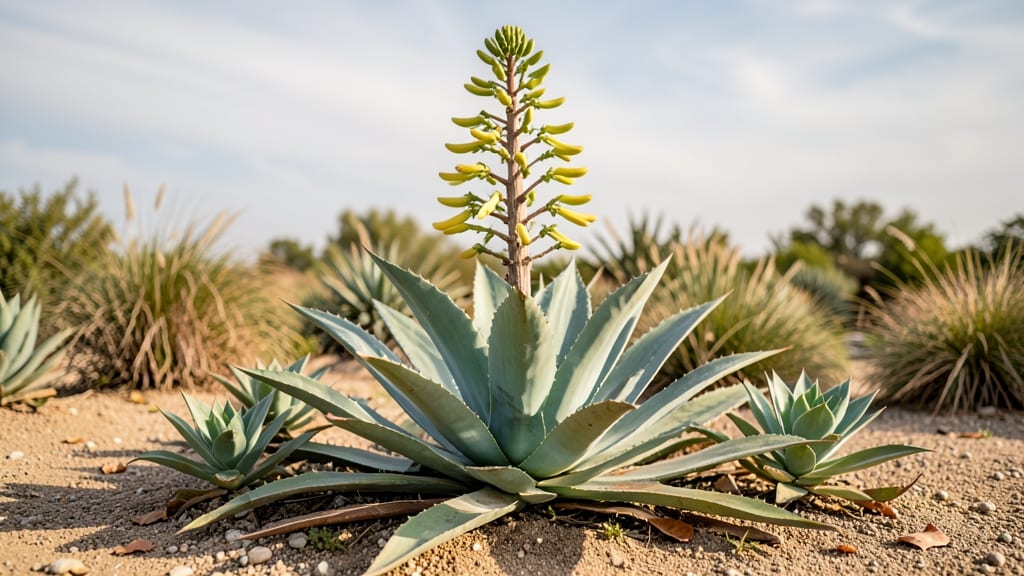
Your agave’s dramatic purple death bloom is nature’s way of saying, "I’m about to put on a show." 🌵 This heat-triggered spectacle happens once in an agave’s lifetime, signaling it’s time to harvest those pups—before the mother plant bows out.
I’ve watched my own agaves send up those striking spikes, and the pups that follow are the real prize: free, hardy new plants ready to thrive.
The moment you spot that towering flower spike, act fast—your agave will drain energy into blooming, leaving it vulnerable. Pups form at the base, and once they’re 6-8 inches tall, they’re ready to transplant.
The mother plant? It’ll fade after flowering, but those pups carry on its legacy, growing into stately agaves of their own.
You’ll end up with 3-5 pups per plant, each a potential centerpiece for your desert garden or container displays. The process is simple: dig carefully, let roots establish, and watch them grow—no fuss, just satisfying propagation.
Plus, the drama of the death bloom makes every pup feel like a reward for patience.
Perfect for warm climates, but even indoor agaves can produce pups with the right light. Here’s how to turn that final flourish into a gardening win—without losing the mother plant to the process.
📚 In This Guide
- What you need
- Instructions
- Tips and common mistakes
- Wrapping up and next steps
What you need
- ● Agave pups (1-5+): Healthy, rooted offsets from a parent agave plant (ensure they’re at least 3-4 inches tall).
- ● Well-draining soil mix (2-3 gallons): 60% cactus/succulent mix
- ● 30% perlite or pumice
- ● 10% coarse sand (for aeration)
- ● 6-12 inch pots (1 per pup): Terracotta or fabric pots with drainage holes (avoid plastic—it traps moisture!).
- ● Gravel or pebbles (1 cup): For the pot’s drainage layer.
- ○ Gloves (optional but recommended): Agave spines can be sharp—protect your hands!
- ● Small hand trowel or spoon: For transplanting pups gently.
- ● Watering can with a narrow spout: To avoid oversaturating the soil.
- ○ Heat mat or grow light (optional): Heat mat (70-80°F range) for indoor setups.
- ● LED grow light (12-14 hours/day) if natural light is low.
- ○ Thermometer (optional): To monitor soil/air temps—critical for heat-loving agaves!
- ● 🌡️ Heat is key! Agaves need temps above 75°F (24°C) to trigger blooming. Use a sunny windowsill, greenhouse, or heat lamp.
- ● ✨ Patience pays off. Pups may take 1-3 years to bloom—keep them happy in the meantime!
Step-by-Step guide to harvesting and propagating agave death bloom pups
Here’s how to turn that dramatic purple spike into more agaves for your collection.
🌱 Step 1: Identify and Prepare for the Death Bloom
Watch for the iconic purple flower spike emerging from your agave’s center—this signals the mother plant’s final act. The bloom itself is stunning but short-lived; the real magic happens with the pups (baby plants) that form at its base. Once the spike reaches 12-18 inches tall, the mother plant’s energy shifts to producing these offsets.
I like to mark the pup’s growth with a small stake or photo every 2-3 weeks—this helps track which ones are ready to separate. Pups need 3-5 inches of stem and roots before transplanting. If you wait too long, they’ll be too large and stressed when you finally move them.
✂️ Step 2: Separate Pups at the Right Time
Use sterilized pruners or a sharp knife to cut pups from the mother plant after the bloom has fully died back (usually 4-6 weeks post-bloom). This gives the pups time to develop their own root systems. Work on a dry, sunny day—agaves hate wet soil when disturbed.
Dig around the pup gently with a trowel to expose its roots. You’ll see a small white root ball forming. If roots are under 2 inches long, wait another month. I’ve learned the hard way that rushing leads to weak, floppy pups that never thrive.
🪴 Step 3: Pot Up Pups for Initial Recovery
Fill 4-inch pots with cactus/succulent mix (the one from your list—it drains fast and mimics agaves’ natural soil). Plant each pup so its crown sits just above soil level—burying it invites rot. Tap the pot gently to settle the soil, then water lightly until it drips from the drainage hole.
Place pots in bright, indirect light (like an east-facing window) for 2-3 weeks. Avoid direct sun—new roots are sensitive. You’ll know they’re settling in when the leaves perk up and no longer look wilted. Overwatering here is the #1 killer of pups.
☀️ Step 4: Harden Off and Transition to Outdoor Conditions
After 4-6 weeks, move pups to a shaded outdoor spot for 1-2 hours daily, gradually increasing time over 2 weeks. This toughens them up for full sun. Agaves love heat but hate soggy roots—only water when the soil is completely dry (stick your finger in; if it’s damp, wait).
Once pups tolerate full sun without scorching, transplant them to their permanent spots. Space them 2-3 feet apart—agaves grow slowly but spread over time. The mother plant? Compost it after it dies back completely; its nutrients will feed your new pups indirectly.
💧 Step 5: Maintain Pups for Long-Term Growth
Water newly planted pups every 3-4 weeks in summer, less in winter. Agaves store water in their leaves, so drought is better than overwatering. Fertilize once in spring with a low-nitrogen succulent feed—too much nitrogen makes them floppy and weak.
Watch for yellowing leaves (underwatering) or mushy stems (overwatering). Both fix easily: adjust your watering schedule. In 3-5 years, your pups will bloom themselves—just like the mother plant that triggered this whole process!
Tips & tricks for perfect agave death bloom pups
Took me years to perfect these tricks—now your agave pups will thrive like mine do. Here's what nobody tells you about turning those purple spikes into thriving plants.
Timing is Everything: In Step 1, those 2-3 weeks between growth checks are crucial. I track pup development with a simple photo series—it helps you spot when roots reach the 3-5 inches needed for transplanting. If you rush and roots are under 2 inches, the pup will struggle to establish itself. Trust me, the extra patience pays off with stronger plants.
Root Health Matters: When separating pups in Step 2, focus on that small white root ball. If you see any brown or mushy roots, trim them off immediately with sterilized pruners. Healthy roots mean healthy growth—this is where most propagation failures happen. I always do this separation on a dry, sunny day to prevent any soil-borne issues from taking hold.
Light Management: During the 2-3 weeks in Step 3, bright indirect light is non-negotiable. I use an east-facing window because it provides gentle morning sun without the harsh afternoon rays. Direct sun at this stage can scorch tender new roots. Watch for leaves that perk up—this is your sign that the pup is happily settling in. Overwatering here is the silent killer, so let the soil dry completely between waterings.
Harden Off Gradually: The 1-2 hours daily transition in Step 4 is where most people rush and regret it. I start with just 1 hour in shade, then increase by 30 minutes every 3 days. This gradual approach prevents sun shock that can turn leaves crispy. Agaves are tough once established, but baby pups need time to adjust.
Pro Tips for Agave Death Bloom Pups
- Took me years to perfect these tricks—now your agave pups will thrive like mine do.
- Timing is Everything: In Step 1, those 2-3 weeks between growth checks are crucial.
- Root Health Matters: When separating pups in Step 2, focus on that small white root ball.
Frequently asked questions
about agave death bloom pups—because even the most dramatic plants need a little clarification! Here are answers to the questions that pop up most often.What exactly is a "death bloom," and why is it called that?
A death bloom is the dramatic, towering flower spike (often purple or red) that appears when an agave plant reaches the end of its lifespan—usually after 10–20 years. It’s called a "death bloom" because the mother plant dies after flowering, but the good news? It produces pups (baby plants) around its base to carry on the legacy!
How long does it take for agave pups to be ready for transplanting?
Agave pups typically take 1–3 years to grow large enough for transplanting, depending on species and growing conditions. Wait until the pup is at least 1/3 the size of the mother plant and has its own root system. Patience pays off—rushing can stress the young plant!
Can I force an agave to bloom earlier than its natural timeline?
While you can’t force an agave to bloom prematurely, you can accelerate growth with optimal care: full sun, well-draining soil, and minimal watering (especially in winter). Some gardeners use heat treatments (like wrapping the base in a heat mat) to encourage flowering, but results vary by species.
What do I do if my agave pups aren’t growing after the death bloom?
If pups stall, check for these issues:
- Overwatering: Agaves hate soggy roots—let soil dry completely between waterings.
- Poor drainage: Ensure pots/containers have drainage holes.
- Low light: Move to a sunnier spot (6+ hours of direct sun daily).
- Nutrient deficiency: Feed with a low-nitrogen cactus fertilizer in spring.
Are there non-lethal agave varieties that still produce dramatic blooms?
Yes! If you want dramatic spikes without losing the mother plant, try these perennials:
- Yucca (e.g., Yucca rostrata) – Tall, architectural blooms and reblooms.
- Dracaena (e.g., Dracaena marginata) – "Dragon tree" with striking red blooms and pups.
- Hesperaloe (e.g., Hesperaloe parviflora) – Red/yellow flowers and clumping growth.
Wrapping up and next steps
Watching your agave death bloom transform into vibrant purple spikes—and then propagate pups—is a rewarding experience that brings year-round excitement to your garden! 🌱 With the right heat-triggered care, you’ll turn a "one-and-done" plant into a thriving, multi-generational display. Ready to dive deeper?
🌿 Next Steps:
- Experiment with heat: Try different temperatures to see how your agave responds—document the results!
- Share the magic: Snap photos of your pups and tag #AgaveBloom to inspire others.
- Expand your collection: Use the pups to create a stunning agave garden or gift them to fellow plant lovers.
Your agave’s drama is just beginning—happy growing! 🌵✨