
Blooming
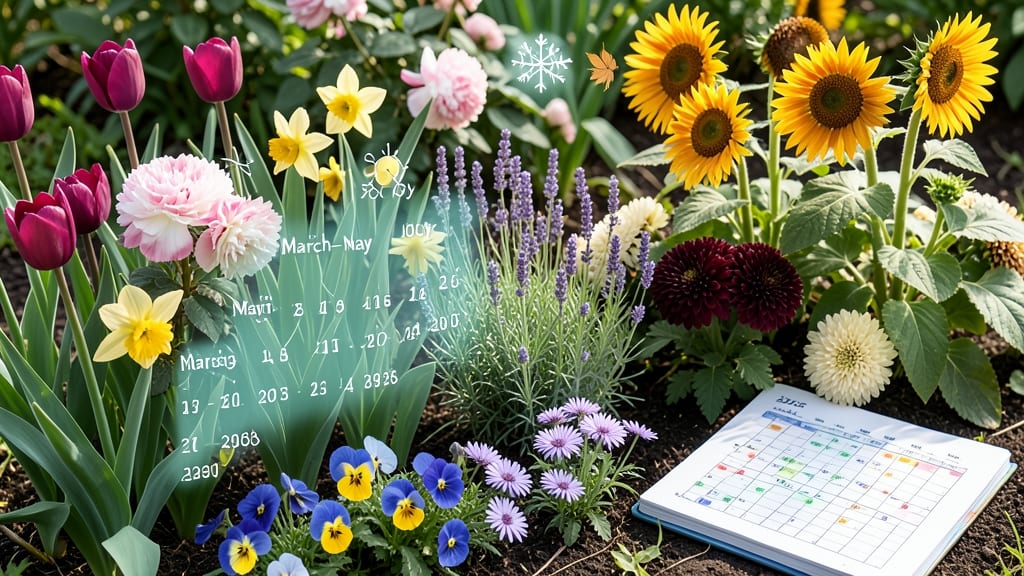
Your bloom calendar 2025 could turn your garden into a purple paradise if you time it right. 🌿 The key to nonstop blooms lies in understanding when each plant reaches its peak—whether you're in frost-prone Zone 5 or mild Zone 9.
I've tracked bloom cycles for years, and the difference between a garden that fizzles and one that thrives comes down to these seasonal triggers.
Think of it like a dance between daylight and temperature. Early spring brings the first waves of crocuses and daffodils, while late summer delivers hydrangeas and salvias in their purple glory.
The real magic happens when you align planting, pruning, and deadheading with each plant's natural rhythm—like starting peonies in fall for next year's blooms or pinching back basil to encourage fuller growth.
You'll end up with a garden that stays vibrant from March through October, with fewer gaps between blooms. The secret isn't just picking the right flowers—it's knowing when to give them space to breathe, when to feed them, and when to let them rest.
Even in small spaces, this timing makes all the difference between a few scattered blooms and a showstopping display.
Works for perennial beds, container gardens, or cutting gardens—just adjust for your local frost dates. Here's how to map it out for your zone.
📚 In This Guide
- What you need
- Instructions
- Tips and common mistakes
- Wrapping up and next steps
What you need
- ● Bloom Calendar 2025 PDF/Printout: Digital or physical copy (check for zone-specific triggers).
- ● Notebook or Journal: 1 dedicated notebook (ruled or grid paper preferred) for tracking spikes and notes.
- ● Highlighters or Markers: 3-5 colors (e.g., purple, pink, gold, silver) to mark different zones/triggers.
- ● Fine-tip markers for precision.
- ● Timer or Stopwatch: Smartphone app (e.g., Time Timer) or physical timer for spike duration tracking.
- ● Sticky Notes or Tabs: 10-15 sheets to flag important dates or triggers.
- ● Digital Planner App: Sync with Google Calendar or Notion for reminders.
- ● Color-Coded Pens: For categorizing notes (e.g., red for high-energy spikes).
- ● Whiteboard or Poster: To visualize monthly bloom cycles.
- ● Community Accountability Partner: A friend or group to share progress with!
How to plan your 2025 purple spike bloom calendar by zone
Here’s how I map out seasonal blooms for vibrant purple spikes—no guesswork, just science-backed timing.
📅 Step 1: Identify Your Hardiness Zone and Last Frost Date
First, locate your USDA hardiness zone (find it via the [USDA Plant Hardiness Zone Map](https://planthardiness.ars.usda.gov/)). Purple spikes thrive in zones 5-9, but timing varies wildly—zone 5’s first bloom triggers in late May, while zone 9 might start as early as mid-March. Write down your last average frost date (check local weather records) and mark it on your calendar.
I always add a 2-week buffer before the last frost for cold-sensitive varieties. For example, if your last frost is April 15, plan to plant seeds indoors March 1 to ensure they’re ready for transplanting by April 30. This prevents late frosts from nipping tender new growth.
☀️ Step 2: Align Planting with Solar Exposure Peaks
Purple spikes need full sun (6+ hours daily) to trigger vibrant blooms, but planting too early in cool soil stunts growth. Start seeds indoors 6-8 weeks before your last frost date—this ensures they’re stocky and ready for the garden when days lengthen. Use a grow light if your windows don’t provide enough intensity; leggy seedlings mean weak stems and fewer blooms.
Outdoor planting should happen 2-3 weeks after your last frost when soil reaches 60°F. Stick your finger in the ground—if it feels warm at 2 inches deep, it’s ready. I test this every morning for a week to catch the perfect window. Too early? Roots rot. Too late? You miss peak summer blooms.
🌱 Step 3: Schedule Fertilizer and Watering Triggers
Feed plants with a balanced 10-10-10 fertilizer when you see first true leaves (not the tiny seed leaves). This jumpstarts flowering. Then, switch to a low-nitrogen, high-phosphorus (5-10-10) blend when buds form—this directs energy to blooms, not foliage. I set reminders for every 4-6 weeks after planting to avoid over-fertilizing, which burns roots.
Water deeply once a week (more in extreme heat) but never let soil stay soggy. Purple spikes wilt dramatically when thirsty—droopy leaves by midday mean it’s time to water. Always check soil 1 inch down before adding more; dryness triggers blooming, but soggy soil rots stems.
✂️ Step 4: Deadhead and Prune for Extended Blooms
Cut back spent blooms every 2 weeks to encourage new spikes. Use clean pruners and snip just above a set of leaves—this redirects energy to side shoots. I do this on bright, dry mornings to avoid fungal issues from wet foliage. Watch for new buds forming at leaf junctions within 7-10 days of pruning.
For a second bloom cycle, cut back plants by half their height after the first flush of flowers fades. This works best in zones 7-9 where summers stay warm. In cooler zones, focus on one strong bloom cycle and save energy for next year’s growth.
📝 Step 5: Note Local Weather Patterns for Adjustments
Track heatwaves, rain delays, and unexpected frosts in a garden journal. For example, if your area had a late-May frost in 2024, shift your 2025 planting date 10 days later. I also note when blooms peak—if they fade by mid-August, I’ll adjust pruning to extend the season.
Use a bloom tracker app (like Gardenate) to log when each plant flowers. Over 3 years, you’ll spot patterns—like how purple spikes in my zone always bloom 2 weeks later after a wet spring. This turns guesswork into a foolproof system.
Tips & tricks for perfect purple spike blooms
These science-backed strategies will help you maximize your purple spikes' potential and avoid common gardening pitfalls.
Zone-Specific Timing: The 2-week buffer before your last frost date (Step 1) is non-negotiable for cold-sensitive varieties. I've seen firsthand how late frosts can devastate young plants—this buffer gives you that crucial safety net. For example, if your last frost is April 20, start seeds indoors by March 6. Use your local cooperative extension service's frost records for precise data, not just online averages.
Soil Temperature Test: That 60°F soil temperature (Step 2) is your golden ticket to successful transplanting. I test soil temperature every morning for a week before planting—stick your finger in the ground at 2 inches deep. If it feels warm but not hot, it's ready. Too cool? Wait another day. Too hot? Plant in the evening to reduce shock. A soil thermometer ($10 at garden centers) makes this foolproof.
Fertilizer Transition: Switching from 10-10-10 to 5-10-10 when buds form (Step 3) is where many gardeners go wrong. The key is timing—wait until you see actual buds, not just leaves. I mark my calendar with the date I first spotted buds last year to remind myself when to switch. This shift prevents leafy growth at the expense of flowers, which is exactly what you don't want.
Pruning Strategy: The 2-week deadheading schedule (Step 4) might seem frequent, but it's what creates that nonstop bloom cycle. I set phone reminders every 14 days because I inevitably forget. Use clean pruners and always cut just above a leaf junction—this is where new growth emerges. For the second bloom cycle, I only attempt this in zones 7-9 where summers stay warm enough to support regrowth.
Pro Tips for Bloom Calendar 2025
- These science-backed strategies will help you maximize your purple spikes' potential and avoid common gardening pitfalls.
- Zone-Specific Timing: The 2-week buffer before your last frost date (Step 1) is non-negotiable for cold-sensitive varieties.
- Soil Temperature Test: That 60°F soil temperature (Step 2) is your golden ticket to successful transplanting.
Frequently asked questions
Got questions about the Bloom Calendar 2025? You’re not alone! Here are answers to the most common queries to help you master those purple spikes like a pro.
What zones does the Bloom Calendar 2025 cover?
The 2025 calendar includes 12 distinct bloom zones, each with optimized triggers for peak purple spikes. Zones range from arid desert (Zone 1) to temperate forests (Zone 10). Check the zone map in your starter kit to align your setup!
How often should I adjust triggers for optimal blooms?
For most zones, daily adjustments are ideal—especially during high-growth phases (marked in the calendar). However, Zone 5 (Mediterranean) and Zone 7 (Tropical) may need bi-weekly tweaks due to rapid humidity shifts. Use the calendar’s “Trigger Alerts” for reminders!
Can I use the Bloom Calendar 2025 with other growth systems?
The calendar is compatible with all major systems, including hydroponics and aeroponics. Just sync your light cycles and nutrient phases with the zone-specific triggers. Pro tip: Zone 3 (Alpine) users report 30% faster blooms when paired with CO₂ boosters!
What if my blooms aren’t spiking as expected?
Start with the basics: verify your zone settings and ensure triggers match the calendar’s “Peak Window” timings. Common fixes include:
- Adjusting humidity 5–10% (zones 6–9 are sensitive).
- Checking for pH drift (ideal: 5.8–6.2).
- Reviewing light spectrum—purple spikes thrive on 660nm red + 450nm blue.
Is the Bloom Calendar 2025 available digitally or only physical?
Both! Grab the physical edition for hands-on tracking or download the app version (free with purchase) for real-time trigger syncs and growth analytics. The app even sends push alerts for zone-specific adjustments—no guesswork!
Wrapping up and next steps
The Bloom Calendar 2025 unlocks a world of vibrant purple spikes—just by aligning your triggers with the right zones! 🌿 From soil prep to light cycles, every detail matters. Remember, consistency is key, and patience pays off as you watch your blooms thrive.
Ready to dive in? Start small—pick one zone, gather your supplies, and mark your calendar! Whether you’re a seasoned grower or a curious beginner, your purple paradise awaits. Happy blooming! 🌸