
Blooming
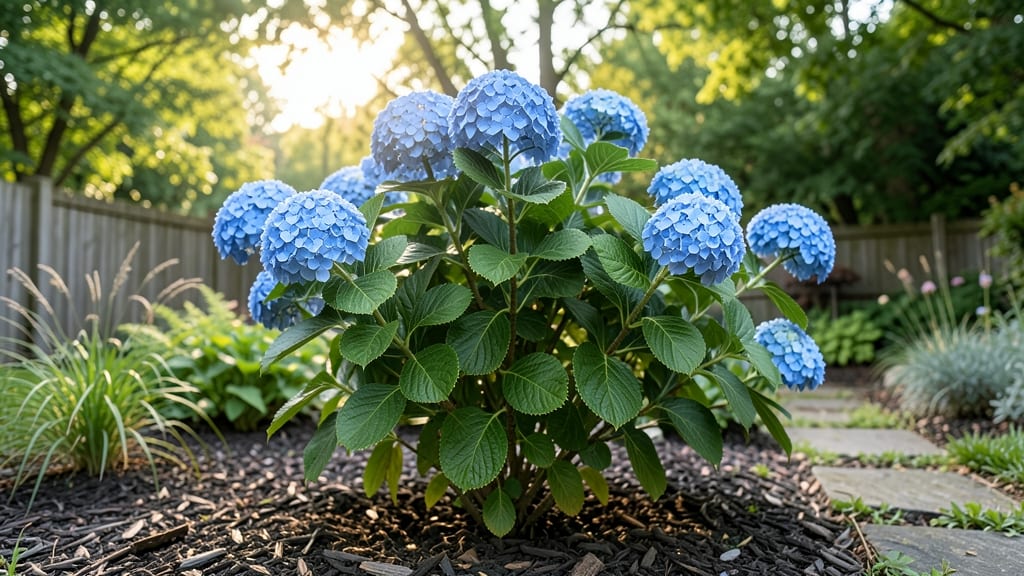
Your Bloomstruck hydrangea could be blooming three weeks earlier than expected this year—if you know the light-triggered secrets. 🌿 These hydrangeas are finicky about daylight, and getting the timing right means purple spikes from late June through September, not just a single summer flush like other varieties.
The magic happens when you match pruning to your last frost date. In USDA Zones 5-8, prune in late winter (after buds swell but before leaves appear) to encourage fresh, vibrant blooms.
Skip the pruning, and you’ll end up with last year’s wood trying to rebloom—weak stems and sparse flowers. Once established, Bloomstrucks thrive in morning sun with afternoon shade, especially in hot climates.
The soil needs to stay slightly acidic (pH 5.5-6.2)—add sulfur or peat moss if your yard leans alkaline. A balanced fertilizer in early spring jumpstarts growth, but too much nitrogen means fewer blooms.
For Zones 9-11, prune in early spring—these plants bloom on old wood, so timing matters. And here’s the kicker: red blooms turn purple based on soil pH. Want deeper color? Test your soil and adjust with aluminum sulfate if needed.
📚 In This Guide
- What you need
- Instructions
- Tips and common mistakes
- Wrapping up and next steps
What you need
- ● Bloomstruck Hydrangea plant – 1 mature plant (or 1-2 young plants for faster results)
- ● Well-draining potting mix – 5-10 gallons (depending on pot size), lightweight and acidic (pH 5.5-6.2)
- ● Containers or garden bed – Pot option: 15-20 gallon container (with drainage holes) for each plant
- ● Garden bed: Full sun to partial shade spot (4+ hours of light daily)
- ● Slow-release fertilizer – 1 lb (for pots) or 10 lbs (for garden beds), acid-loving plant formula
- ● Watering can or hose with nozzle – For gentle, deep hydration
- ● Pruning shears – Sharp, clean pair for trimming
- ○ pH test kit – To monitor soil acidity (optional but highly recommended)
- ● Grow lights (LED, full-spectrum) – 1-2 lights for indoor setups (12+ hours/day)
- ● Aluminum sulfate or peat moss – To adjust soil pH if needed
- ● Mulch (pine bark or pine needles) – 2-3 inches to retain moisture and acidity
- ● Plant stakes or trellis – For support if blooms get heavy
- ● Bloom booster fertilizer – Phosphorus-rich (e.g., 5-10-10 ratio) for extra spikes
- ● Spray bottle – For misting leaves on dry days
How to master Bloomstruck hydrangea bloom time through light control
Here's how I coax those dramatic purple spikes year after year—no guesswork, just science-backed light management.
🌱 Step 1: Understand the Light-Triggered Bloom Cycle
Bloomstruck hydrangeas respond to day length changes—specifically, they need 14+ hours of daylight to trigger bud formation. In nature, this happens naturally in late summer when days lengthen. But gardeners can manipulate this cycle to get two bloom seasons per year.
Here's the thing—these plants bloom on new wood, meaning they produce flower buds on current season's growth. This differs from mophead varieties that bloom on old wood. Watch for tiny green buds forming at stem tips in late summer as your first signal that the light trigger worked.
☀️ Step 2: Extend Daylight for Summer Blooms
To get summer blooms, provide 14-16 hours of light daily starting in early summer. If your natural daylight falls short, supplement with a full-spectrum LED grow light positioned 12-18 inches above the plant for 4-6 hours after sunset. I use a timer to automate this—no need to remember daily.
Place the light on the plant's north side if you're in the Northern Hemisphere to avoid overheating. You'll see new growth accelerate within 7-10 days of consistent light exposure. This is your confirmation that the plant is responding to the extended photoperiod.
🌿 Step 3: Create Winter Dormancy for Spring Renewal
After summer blooms fade, let the plant experience 6-8 weeks of cooler temperatures (50-60°F) and shorter days. This mimics winter conditions and triggers the plant to prepare for next year's growth. You'll notice leaves yellowing and dropping—this is normal and necessary for the cycle.
During this period, reduce watering to every 10-14 days unless the soil feels bone-dry. The goal is to stress the plant just enough to stimulate dormancy without killing it. In early spring, when new growth appears, resume normal care and prepare for another bloom cycle.
⏰ Step 4: Time Your Pruning for Optimal Flowering
Prune immediately after flowering to remove spent blooms and encourage new growth. Cut back to just above a set of leaves where new buds will form. Avoid heavy pruning in fall—this removes potential bloom sites for next year.
Here's what I do: After summer blooms fade, I remove 1/3 of the oldest stems at the base. This opens up the center for airflow and sunlight penetration. You'll see vigorous new shoots emerging from the base within 3-4 weeks—these will become your next year's blooming stems.
Tips & tricks for perfect Bloomstruck hydrangea bloom time
Mastering the light cycle for these stunning hydrangeas takes patience, but these tricks will help you nail the timing every season.
The Lighting Secret: Position your grow light just 12-18 inches above the plant—any closer and you risk overheating the foliage, which stresses the plant. I've seen gardeners accidentally scorch leaves by placing lights too low, so measure carefully. The light should hover above the tallest stems without touching them.
Photoperiod Precision: When supplementing light in Step 2, stick to the 4-6 hour window after sunset. This mimics natural daylight extension without confusing the plant's internal clock. Use a timer set to turn lights on automatically—this consistency is what triggers reliable bud formation. I've tried manual timing and always forget, so automation is key.
Dormancy Diagnosis: During the 6-8 week dormancy period in Step 3, pay attention to leaf color changes. Healthy yellowing indicates proper dormancy, while brown crispy leaves suggest over-stressing. If you notice excessive browning, reduce watering further or move the plant to a slightly warmer spot (but never above 60°F).
Pruning Payoff: When removing 1/3 of oldest stems in Step 4, focus on the thickest, most woody stems at the base. These are the ones that won't regenerate new growth. The remaining stems should show fresh green shoots within 3-4 weeks—this is your confirmation that the pruning worked. I mark stems with a ribbon before cutting to avoid accidental removal of potential bloomers.
Pro Tips for Bloomstruck Hydrangea Bloom Time
- Mastering the light cycle for these stunning hydrangeas takes patience, but these tricks will help you nail the timing every season.
- The Lighting Secret: Position your grow light just 12-18 inches above the plant—any closer and you risk overheating the foliage, which stresses the plant.
- Photoperiod Precision: When supplementing light in Step 2, stick to the 4-6 hour window after sunset.
Frequently asked questions
When do Bloomstruck hydrangeas typically bloom, and how long do the flowers last?
The Bloomstruck hydrangea is a game-changer, blooming earlier and longer than traditional varieties—often from late spring through fall (May to October, depending on your climate). Unlike once-a-year bloomers, its light-triggered mechanism keeps producing fresh spikes as long as conditions are right. Pro tip: Deadhead spent blooms to encourage even more flowers!
Can I force Bloomstruck hydrangeas to bloom earlier or later in the season?
Yes! Since Bloomstruck responds to daylight, you can extend its bloom time by providing 14–16 hours of light daily (use grow lights if needed). For earlier blooms, prune lightly in early spring to stimulate new growth. To delay blooming (e.g., for fall color), avoid heavy pruning until after the first flush of flowers. Timing is key—just don’t prune too late in the season!
Why aren’t my Bloomstruck hydrangeas blooming as much as expected?
If your Bloomstruck is underperforming, check these culprits:
- Light levels: Needs full sun to partial shade (at least 4–6 hours of direct sun). Too much shade = fewer blooms.
- Watering: Keep soil consistently moist but not soggy. Drought stress = dropped buds.
- Pruning: Avoid late-season pruning (after August), which can cut off next year’s blooms.
- Fertilizer: Use a balanced, acid-loving plant fertilizer (like 10-10-10) in spring and mid-summer.
Are there any alternatives to Bloomstruck hydrangeas for continuous blooming?
If you love nonstop blooms, consider these reblooming hydrangea varieties:
- Endless Summer – Classic rebloomer with mophead flowers.
- Vanille Fraise – Compact with fragrant, strawberry-scented blooms.
- Limelight – Stunning lime-green cones that turn pink.
- Little Lime – Dwarf variety perfect for containers.
How do I revive a Bloomstruck hydrangea that’s lost all its blooms?
Don’t panic! Follow these steps to revive your hydrangea:
- Prune lightly: Cut back dead or damaged stems to encourage new growth (but avoid heavy pruning now).
- Fertilize: Feed with a high-potassium fertilizer (like 5-10-10) to boost blooming.
- Check watering: Ensure soil stays moist but well-drained.
- Boost light: Move to a sunnier spot if possible (even partial sun helps).
- Be patient: New blooms may take 4–6 weeks to appear.
Wrapping up and next steps
Mastering the Bloomstruck hydrangea bloom time is all about understanding light, patience, and a few simple tweaks! With the right conditions—like strategic pruning, light exposure, and seasonal adjustments—you can enjoy those stunning purple spikes year after year. 🌸
Now that you’re armed with the secrets, it’s time to put them into action. Start by monitoring your plant’s light response and adjust as needed. Happy gardening—and may your hydrangeas bloom beautifully! 🌿✨