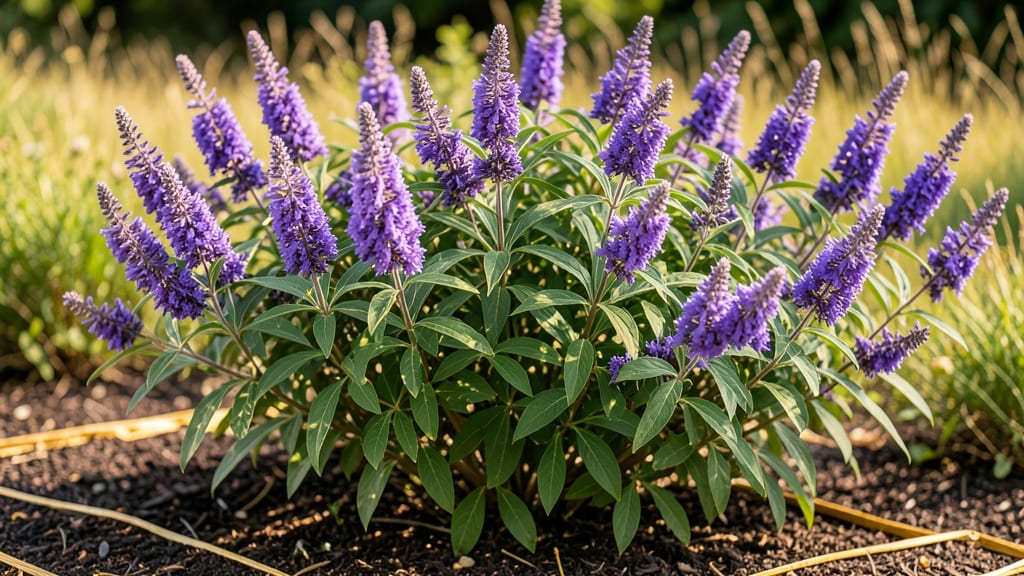
The butterfly bush blooms in mid-to-late summer for most of the country, but the exact timing depends on your climate and how you care for it.
If you've ever watched your 🦋 Butterfly Bush put on a spectacular show for just a few weeks before fading, you know the frustration. The good news? With the right light exposure and pruning, you can stretch those vibrant blooms into fall—and even coax a second flush in some varieties.
Full sun is non-negotiable for peak blooms, but even a few hours less can delay flowering. Meanwhile, pruning at the wrong time—like cutting back too late in the season—can rob you of next year’s flowers.
I’ll show you the exact timing and techniques to keep your bush in bloom longer, whether you’re in Zone 6a or a warmer region.
From choosing the right variety (like the compact 'Lo & Behold®') to adjusting your pruning schedule, these simple tweaks can turn a short-lived burst of color into months of butterfly magnetism.
Understanding butterfly bush bloom time: seasonal patterns & light requirements
If you've ever wondered why your butterfly bush (Buddleia spp.) puts on a spectacular show in mid-summer but fades quickly, the answer lies in its natural bloom cycle and light requirements.
These hardy shrubs typically bloom once per season, but with the right care, you can coax extended flowering for months. Let's break down how sunlight exposure and regional climate influence your butterfly bush's performance.
The primary bloom period for butterfly bushes occurs in late summer, typically between July and September in most US climates. However, some cultivars like 'Lo & Behold®' have been bred to flower earlier in the season, sometimes as early as June.
Understanding these patterns helps you plan for maximum visual impact in your garden while attracting pollinators.
Here's the key insight: Butterfly bushes are light-hungry plants. They thrive in full sun conditions (6+ hours of direct sunlight daily), which directly impacts both bloom intensity and duration.
When planted in partial shade, you'll notice fewer flowers and softer stems, as the plant puts more energy into leaf growth rather than flowering.
🦋
| Factor |
Primary Bloom Period |
Secondary Bloom Potential |
Light Requirements |
Regional Variations |
| Standard Cultivars |
July-August |
Minimal (late fall) |
6+ hours full sun |
Zones 5-9: Consistent |
| Lo & Behold® Series |
June-July |
Moderate (fall rebloom) |
5-6 hours sun |
Zones 5-10: Extended |
| Partial Shade Conditions |
August-September |
None |
3-4 hours sun |
Zones 6-8: Delayed |
| Southern Climates |
June-July |
Strong (fall) |
6+ hours sun |
Zones 9-11: Year-round |
| Northern Climates |
Pruning techniques to extend butterfly bush bloom time
Your butterfly bush (Buddleia) can bloom from early summer through fall—but only if you prune it correctly. Most varieties produce one main bloom cycle unless you encourage second flushes with strategic cuts.
The key is timing: prune too early, and you’ll cut off flowers; prune too late, and you’ll miss the chance for reblooming.
Butterfly bushes thrive in USDA Zones 5-9, but their pruning schedule shifts slightly depending on your zone. In warmer zones (8-9), you can prune year-round with minimal risk, while cooler zones (5-7) require careful timing to avoid frost damage.
Let’s break down the best methods to maximize your blooms.
Pruning Methods Compared
Soft Pruning
- Pros: Encourages reblooming in summer/fall
- Pros: Preserves existing flowers while stimulating new growth
- Cons: Requires multiple pruning sessions (spring + late summer)
Hard Pruning
- Pros: Simplifies shape control and rejuvenates older bushes
- Pros: Best for late winter/early spring (before new growth starts)
- Cons: Removes all current year’s blooms—no summer/fall flowers that year
💡 Tip: For longest bloom time, use soft pruning in Zones 6-9 and hard pruning in Zones 5 only in late winter.
For soft pruning, start by cutting back 1/3 of the oldest stems in early spring (March-April) before buds swell. This removes last year’s wood and makes room for new, flower-bearing branches.
Then, in late summer (August-September), trim back spent blooms by 1/3 again to trigger second flushes.
In USDA Zone 5, delay pruning until after the last frost (mid-May) to avoid frost damage to fresh cuts. Zones 6-9 can prune as early as February-March, but always wait until dormant season ends. Never prune when buds are already swelling—this cuts off potential blooms.
If you’re in a warmer zone (8-9), you can even prune lightly in fall to shape the bush, but avoid heavy cuts. The goal is to balance growth and flower production—never sacrifice one for the other.
Always use clean, sharp pruners and make cuts at a 45-degree angle just above a leaf node.
One common mistake is over-pruning in spring, which can delay blooming by weeks. Another is pruning too late in fall, leaving tender new growth vulnerable to winter frost. Stick to the spring + late summer schedule for consistent blooms from June through October.
★★★★★4.5(13 reviews)
|