
Blooming
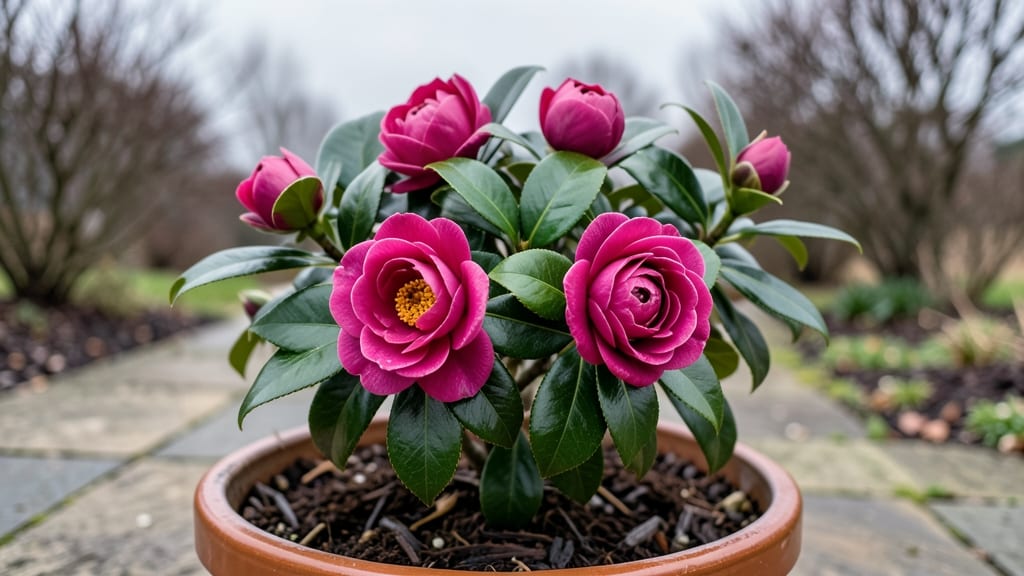
The camellia bush bloom in winter like no other plant—these evergreen shrubs burst into vibrant color when most gardens sleep. ✨ I've watched mine defy December chill for years, their waxy petals unfurling like nature's own holiday decorations.
The secret lies in their origins: native to East Asia, camellias evolved to thrive in mild winters where temperatures rarely dip below freezing.
For these winter wonders to shine, they need partial shade (morning sun, afternoon shelter) and well-draining, acidic soil (pH 5.0-6.5). Prune right after blooming to shape the bush and remove dead wood—never in fall, or you'll sacrifice next year's flowers.
In colder zones (below 7), protect young plants with burlap wraps or mulch to prevent frost damage to buds.
You'll know you're doing it right when your camellia becomes the garden's star attraction—velvety petals in shades of pink, red, or white that perfume the air with sweet, spicy fragrance.
The key is patience: established bushes (3+ years old) produce the most spectacular displays, with blooms lasting 4-6 weeks if deadheaded promptly.
Regional tweaks matter: Southern gardeners can plant camellias year-round, while Northern growers should wait until spring. Avoid common mistakes like over-fertilizing (which causes leaf burn) or letting soil dry out completely—camellias hate both. With the right care, your winter garden will stay lush and fragrant when everything else is dormant.
📚 In This Guide
- What you need
- Instructions
- Tips and common mistakes
- Wrapping up and next steps
What you need
- ● Camellia plants: Choose Camellia japonica or Camellia sasanqua (sasanqua blooms earlier in winter). Buy 1–3 mature plants (3–5 ft tall) for a striking focal point or 5+ for a lush hedge.
- ● Well-draining soil: Mix 50% native soil, 30% peat moss or coconut coir, and 20% perlite/sand (1–2 cubic yards per plant). Pro tip: Test soil pH—camellias thrive in acidic soil (5.0–6.0)! 🌡️
- ● Organic mulch: Pine bark fines or shredded leaves (3–4 inches deep) to insulate roots and retain moisture.
- ● Slow-release fertilizer: Acid-loving plant fertilizer (e.g., 10-10-10 or 8-3-9) with micronutrients. Use 2–3 lbs per 100 sq ft in early spring.
- ● Garden trowel or spade (for digging holes 2x wider than the root ball).
- ● Pruning shears (sterilized with rubbing alcohol) for shaping and deadheading.
- ● Garden hose with nozzle (or watering can) for deep watering.
- ● Gloves & knee pads (camellia care involves lots of bending!).
- ○ Optional but helpful: Soil pH test kit ($10–$15).
- ● Burlap or landscape fabric to suppress weeds.
- ● Drip irrigation system for consistent moisture.
- ● Sunlight: Camellias need partial shade (3–6 hours of morning sun; afternoon shade in hot climates).
- ● Climate: Hardy to USDA Zones 7–10. In colder zones, plant near a south-facing wall for winter protection. ❄️
- ● Timing: Plant in early spring or fall (avoid frost periods).
How to ensure your camellia bush blooms vibrantly in winter
Winter-blooming camellias thrive with the right care—here’s how to coax those fragrant, frost-defying flowers.
🌱 Step 1: Choose the Right Camellia Variety for Your Climate
Not all camellias bloom in winter—focus on Camellia japonica or Camellia sasanqua varieties bred for cold tolerance. Sasanqua types often bloom earlier and handle 15-20°F without damage, while japonica varieties may need winter protection below 10°F. Check your USDA hardiness zone: Zone 7-10 is ideal for winter blooms.
I always verify the parentage—look for labels noting "winter-flowering" or "cold-hardy." A nursery tag might say "Sasanqua hybrid" or "japonica with sasanqua lineage," which means it’s more likely to bloom in cooler months. If you’re unsure, ask the staff which varieties perform best in your area’s lowest winter temperatures.
☀️ Step 2: Plant in a Sheltered, Partially Shaded Spot
Camellias need morning sun and afternoon shade—think east-facing or dappled light under tall trees. A south-facing wall provides winter sun without summer scorching, but avoid harsh afternoon rays that dry out buds. I plant mine near evergreens to break wind and create a microclimate that stays 5-10°F warmer than open areas.
Dig a hole twice as wide as the root ball but no deeper—camellias hate sitting too low, which causes root rot. Mix the excavated soil with 20% organic matter (like compost or peat moss) to improve drainage. Water deeply before backfilling to eliminate air pockets around the roots.
💧 Step 3: Water Deeply and Mulch for Winter Protection
Camellias need consistent moisture but hate soggy roots. Water once a week in winter (more in drought or windy conditions) until the soil 6 inches deep feels damp. Overwatering in cold weather stresses plants and invites fungal diseases. I use a rain gauge to track rainfall—if we get 1 inch of rain weekly, I skip watering entirely.
Apply 4-6 inches of mulch (pine straw or shredded bark) around the base, keeping it 6 inches away from the trunk. This insulates roots from freezing temperatures while retaining moisture. Replenish mulch in early spring—you’ll see fewer brown buds if roots dry out during winter.
✂️ Step 4: Prune After Blooming to Encourage Next Year’s Flowers
Prune immediately after flowers fade (late winter to early spring) to shape the bush and remove dead wood. Never prune in fall—you’ll cut off next year’s flower buds. Use clean, sharp shears to make cuts just above a leaf node or outward-facing bud. I avoid heavy pruning; camellias bloom on old wood, so aggressive cuts reduce winter flowers.
Remove any crossing branches or suckers growing from the base. These compete with the main plant for nutrients and weaken winter hardiness. A light shaping pass keeps air circulating and prevents fungal issues. If your camellia blooms poorly, check for dense centers—thinning improves light penetration and bud formation.
🌿 Step 5: Fertilize Strategically for Winter Blooms
Feed in early spring and late summer with a balanced, acid-loving fertilizer (like 8-8-8 or 10-10-10). Camellias need low nitrogen in winter to avoid leafy growth at the expense of flowers. I use a slow-release granular fertilizer spread evenly over the root zone, then water it in deeply. Avoid high-phosphorus fertilizers—they encourage roots over blooms.
Test your soil pH annually—camellias thrive in acidic soil (5.5-6.5). If your soil is alkaline, amend with sulfur or peat moss. Yellow leaves in winter often signal pH issues or over-fertilization. A simple soil test kit clarifies whether you need to adjust pH or reduce feeding.
Tips & tricks for perfect winter-blooming camellias
These insights will help you transform your camellia into a winter floral showstopper—no guesswork required.
Variety Verification: When selecting your camellia, don't just trust the label—ask for the parentage details. Sasanqua varieties like 'Yuletide' or 'Bonanza' are my top picks for winter blooms, as they consistently handle temperatures down to 15°F. For japonica types in colder zones (below 10°F), consider wrapping the plant in burlap or using frost cloth during extreme cold snaps. I've seen 'Winter's Star' japonicas bloom beautifully with this protection, even in Zone 6.
Microclimate Mastery: The 5-10°F warmer microclimate created by evergreens isn't just helpful—it's essential. Position your camellia where it receives morning sun but has afternoon shade from a taller plant or structure. I've noticed that east-facing locations with afternoon shade produce the most vibrant winter blooms. If you're planting near a south-facing wall, space the plant at least 3 feet away to prevent overheating during winter sun exposure.
Watering Wisdom: That once-a-week winter watering guideline works perfectly when your soil stays damp 6 inches deep—but don't rely solely on memory. I always check moisture by inserting my finger into the soil; if it feels dry at that depth, it's time to water. The key is preventing both drought stress and waterlogged roots. In particularly windy conditions, I increase watering to twice weekly, as wind desiccates both leaves and buds faster than you'd expect.
Pruning Precision: The late winter to early spring pruning window is non-negotiable for winter blooms. I make my cuts just above a leaf node or outward-facing bud using clean, sharp shears—this encourages new growth that will produce next year's flowers. For dense centers, I remove no more than 20% of the plant's volume in any single pruning session. This might seem counterintuitive, but camellias bloom on old wood, so aggressive pruning actually reduces your winter flower potential.
Pro Tips for Camellia Bush Bloom In Winter
- These insights will help you transform your camellia into a winter floral showstopper—no guesswork required.
- Variety Verification: When selecting your camellia, don't just trust the label—ask for the parentage details.
- Microclimate Mastery: The 5-10°F warmer microclimate created by evergreens isn't just helpful—it's essential.
Frequently asked questions
Got questions about coaxing stunning winter blooms from your camellia bush? Here are answers to the most common queries—so you can enjoy frost-resistant fragrance without the guesswork!
Can camellias survive heavy frost or freezing temperatures?
Most camellias are cold-hardy but vary by variety. Hardy types (like Camellia sasanqua) tolerate temps down to 10–15°F (-12 to -9°C), while tender varieties (e.g., Camellia japonica) need winter protection. Mulch heavily, wrap young plants, and avoid late-season pruning to boost resilience. Pro tip: Evergreen foliage acts as natural insulation!
Why aren’t my camellias blooming in winter?
Winter blooms depend on light, water, and timing. Check these:
- Light: Camellias need dappled shade (morning sun, afternoon shade) to avoid leaf scorch.
- Water: Keep soil consistently moist—drought stress delays blooms.
- Fertilizer: Apply acidic, slow-release fertilizer in early fall (not spring) to encourage winter flowers.
- Pruning: Trim after blooming (late winter/early spring) to avoid cutting next year’s buds.
What’s the best way to protect camellias from winter damage?
Prevent frost injury with these low-effort strategies:
- Mulch: Spread 3–4 inches of organic mulch (pine needles, wood chips) around the base after the first frost.
- Windbreaks: Use burlap or frost cloth to shield young plants from drying winds.
- Avoid salt: De-ice walkways away from camellias—salt burns roots.
- Water deeply: Before hard freezes, give plants a deep soak to hydrate roots.
Can I grow camellias in containers for winter blooms?
Yes! Container-grown camellias thrive with these adjustments:
- Pot size: Choose a 15–20 gallon container with drainage holes.
- Soil: Use acidic, peat-based mix (pH 5.5–6.5).
- Winter care:
- Move pots to a protected spot (e.g., against a south-facing wall).
- Wrap the pot in bubble wrap or use a container jacket.
- Avoid letting soil dry out—water when the top 1 inch feels dry.
- Fertilizer: Reduce feeding in winter; resume in early spring.
What should I do if my camellia leaves turn brown or crispy in winter?
Brown/crispy leaves usually signal frost burn, sun scald, or dehydration. Try this:
Issue
Fix
Frost burn (edges brown, leaves intact)
Prune damaged leaves in early spring; avoid fertilizing until new growth appears.
Sun scald (leaves yellow/brown in patches)
Provide afternoon shade (use sheer fabric or a lattice screen).
Dehydration (leaves crispy, brittle)
Water deeply 1–2x/week (check soil moisture 2 inches down).
Salt damage (brown spots near edges)
Flush soil with water to leach out salt; mulch heavily to protect roots.
If more than 50% of leaves are damaged, the plant may need recovery pruning in late winter.
Wrapping up and next steps
Watching your camellia bush bloom in winter is like having a little piece of sunshine in the coldest months—and you’re now part of the magic! These stunning, frost-resistant plants not only add beauty and fragrance to your garden but also prove that winter doesn’t have to be dull.
Whether you’re a seasoned gardener or just starting, your effort will reward you with vibrant blooms that turn heads and fill the air with natural elegance.
Ready to take the next step? Share your progress with fellow plant lovers online, or explore local gardening groups for tips on nurturing your camellia even further. 🌸✨ Happy gardening—your winter wonderland awaits!