
Blooming
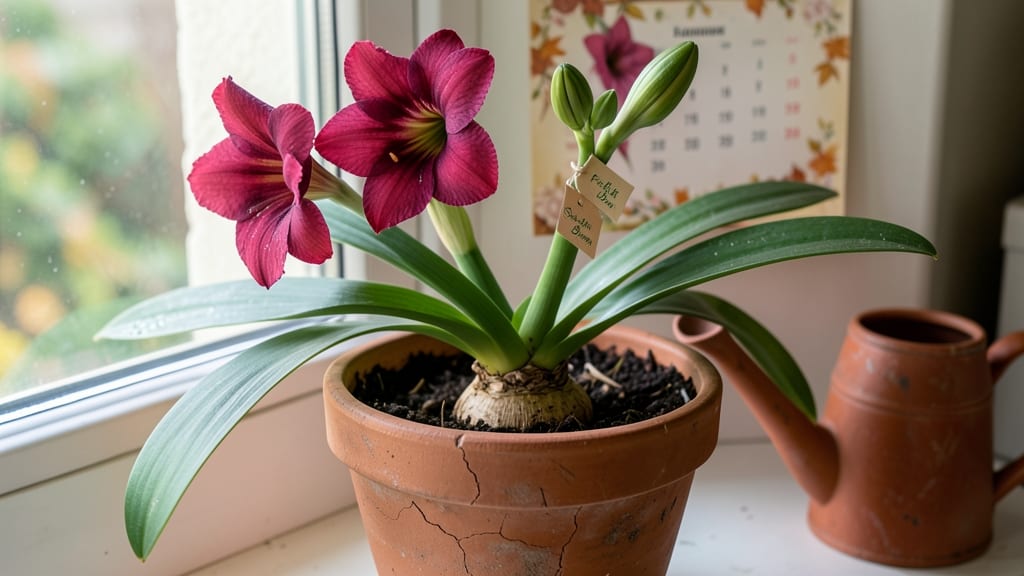
Can amaryllis bloom twice a year? Yes—with the right conditions: give them 12-14 hours of bright light daily, keep temperatures steady at 70-75°F, and enforce a 6-8 week dormant phase after each bloom with cooler temps (55-60°F) and minimal water.
Amaryllis bulbs are surprisingly adaptable when you mimic their natural seasonal rhythms. 🌱 The key lies in their dormancy phase—this isn't just about cutting back on water, but creating a cooler environment that signals the bulb to "reset" for its next growth cycle.
I've seen amaryllis rebloom reliably when given this precise balance of light, warmth, and rest, though some varieties like 'Paperwhite' are more eager to cooperate than others. The trick is consistency: skip the dormancy step, and you'll likely get just one bloom per year.
What's fascinating is how these bulbs store energy during their active growing phase. When you provide the right conditions, they'll redirect that stored energy into producing another stunning flower spike.
Think of it like recharging a battery—if you don't let it fully recharge, it won't have enough power for that second bloom.
💡 In This Article
- How Light and Temperature Control Amaryllis Blooming Cycles
- Step-by-Step Guide to Encouraging Second Amaryllis Blooms
How light and temperature control amaryllis blooming cycles
Amaryllis bulbs rely on a biological process called photoperiodism—their response to light duration—to trigger blooming. These plants need 12-14 hours of bright, direct light daily during their active growth phase to produce flower buds. Without sufficient light, the bulb won't allocate energy toward blooming, instead focusing on leaf growth.
Think of it like a plant's internal clock: when daylight hours shorten (as in autumn), it signals the bulb to prepare for dormancy and eventual reblooming. 🌿
The temperature dance is equally critical. Amaryllis thrive in 70-75°F during active growth, but they require a 6-8 week cooling period at 55-60°F after blooming to enter dormancy. This temperature drop mimics winter conditions, which is when bulbs in the wild would naturally rest.
Without this cooler phase, the bulb won't complete its energy recharge cycle—like trying to run a marathon without proper rest between races. Some growers even place bulbs in a dark, cool closet during dormancy to better simulate natural conditions.
Here's where the science gets interesting: the bulb's vascular system actually redirects nutrients during dormancy. When temperatures drop, the plant stops producing leaves and instead stores carbohydrates in the bulb itself—these become the fuel for next year's bloom.
This is why you'll often see the leaves yellow and die back during dormancy: the plant is conserving energy. If you keep temperatures too warm during this period, the bulb may stay in a semi-active state, preventing proper energy storage and reducing the chance of reblooming.
Light quality matters too. While bright light is essential, artificial grow lights can supplement natural sunlight during winter months when days are shorter. LED grow lights with a 6000K color temperature mimic sunlight well and can help maintain the photoperiod needed for consistent blooming.
I've found that placing amaryllis near south-facing windows during winter boosts their chances of reblooming, as they receive more intense light for longer periods each day.
One common misconception is that amaryllis need darkness to bloom. Actually, they require light during their active growth phase—the darkness comes later during dormancy. This is why many growers use blackout curtains during the cooling period: it helps simulate the shorter daylight hours of winter.
The combination of reduced light and cooler temperatures sends the strongest signal to the bulb that it's time to prepare for another bloom cycle. 💡
For those in colder climates, this seasonal temperature shift happens naturally. But in warmer regions where winters don't drop below 60°F, you'll need to create artificial dormancy conditions.
This might mean moving your amaryllis to a basement, garage, or even a refrigerator (with proper ventilation) for the required cooling period. The key is consistency—the bulb needs to experience this temperature drop reliably each year to maintain its blooming rhythm.
The payoff comes when you see those first signs of new growth emerging from the bulb after dormancy. That's your cue that the energy recharge worked!
With this precise balance of light and temperature management, you can coax your amaryllis into blooming twice annually—though some varieties may take a year or two to fully adjust to this routine. Patience and consistency are the real secrets here. ✨