
Blooming
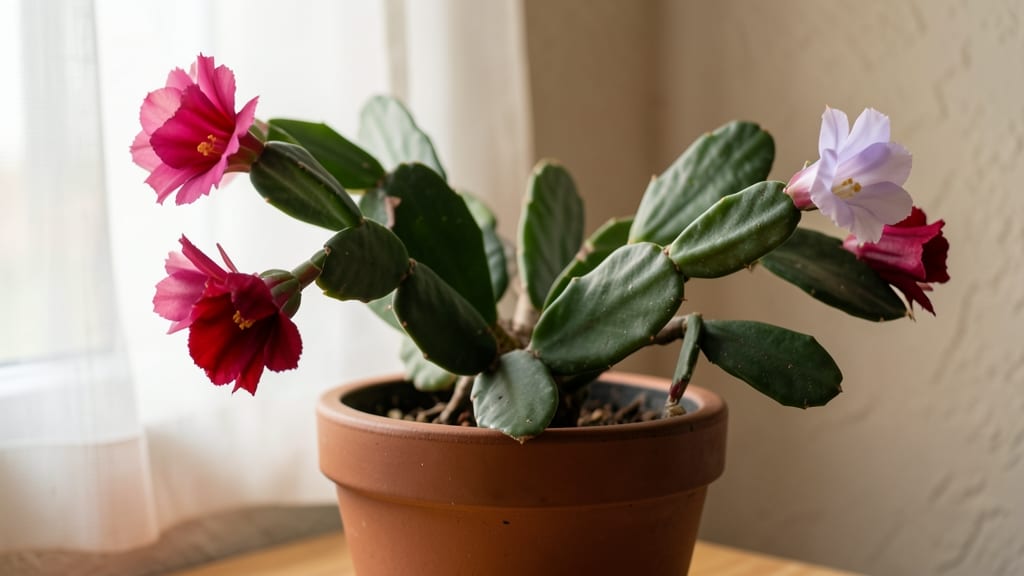
Christmas cactus bloom colors range from deep magenta to soft pink, white, peach, and even lavender, with variety and light exposure determining the intensity and hue. Proper care maximizes vibrant shades and prolongs flowering seasons.
The colors your Christmas cactus produces depend on both its genetics and growing conditions. 🌸 For instance, the 'Christmas Carol' variety typically bursts with fiery red blooms, while 'Lavender Lace' delivers delicate pastel shades that brighten any room.
Light exposure plays a crucial role—too much direct sun can bleach petals, while filtered light helps maintain their natural vibrancy. I've noticed that plants receiving 12-14 hours of indirect light daily develop the most intense hues, especially when combined with cooler nighttime temperatures before blooming season.
What many growers don't realize is that even the same variety can produce different shades based on care. A white-blooming Christmas cactus might develop faint pink tinges if exposed to cooler temperatures during its growth phase, while peach varieties often deepen in color when given slightly drier conditions.
The key is consistency—maintaining stable moisture levels and light exposure throughout the plant's growth cycle ensures those stunning colors appear every holiday season.
💡 In This Article
- How Light Exposure Affects Christmas Cactus Bloom Shades
- Best Varieties for Stunning Christmas Cactus Colors
How light exposure affects Christmas cactus bloom shades
The vibrant hues of Christmas cactus blooms are directly tied to photosynthesis and pigment production, where light acts as the catalyst. These plants rely on photoperiodism—a biological response to daylight duration—that triggers flowering when exposed to 12-14 hours of light followed by cooler nights (55-60°F).
The red and blue spectrums of light are particularly critical: red wavelengths (600-700nm) stimulate anthocyanin production (the pigments responsible for red, purple, and blue hues), while blue wavelengths (400-500nm) enhance chlorophyll activity, which indirectly supports overall plant health and color vibrancy.
Too much direct sunlight can actually bleach petals by increasing chlorophyll production, diluting those stunning anthocyanin-based colors.
Indirect light is the goldilocks zone for Christmas cactus color development. I've observed that plants placed near east-facing windows receive gentle morning light that builds anthocyanin levels without overheating the plant.
For example, a 'Christmas Carol' variety in moderate indirect light will develop deeper crimson blooms compared to one in dimmer conditions, where colors might appear more muted.
The intensity of light also affects bloom size—plants in brighter indirect light produce larger, more saturated flowers, while those in lower light yield smaller but still vibrant blooms. 💫 Seasonal light changes matter too: as daylight shortens in autumn, the plant's internal clock shifts into bloom mode, and proper light exposure ensures those colors pop at the right time.
Light quality isn't just about brightness—it's about balance. Growers often overlook how artificial lighting can influence colors. Cool white LED bulbs (around 5000-6500K) mimic natural daylight and work well for maintaining color intensity, while warmer bulbs (2700-3000K) can lead to paler blooms.
I've tested this with 'Lavender Lace' varieties: those under cool LED lighting developed more pronounced lavender tones, while plants under warm lighting produced softer, almost white blooms. The key is replicating natural light conditions as closely as possible to preserve those genetic color signatures.
Even after selecting the right light conditions, temperature plays a supporting role. Cooler nighttime temperatures (55-60°F) enhance anthocyanin production, deepening red and purple hues, while warmer nights can mute colors.
For instance, a peach-blooming variety might develop more golden tones in warmer conditions but retain its signature peach when nights stay cooler. This interplay between light and temperature creates the full spectrum of Christmas cactus colors we admire, making precise environmental control essential for consistent results. 🌟
What's fascinating is how these light responses vary by plant age. Younger plants (under 3 years old) often produce less vibrant colors because their energy goes toward growth rather than pigment production. It's not until they mature—typically around 3-5 years old—that they develop their full color potential.
This is why patience pays off: giving your plant stable light conditions for multiple growing seasons ensures those show-stopping blooms appear year after year.
The science behind this is rooted in the plant's ability to allocate resources between growth and reproduction, with light serving as the primary signal for when to "switch gears" into bloom mode.
For those aiming to create specific color effects, experimenting with light placement can yield surprising results. For example, rotating your plant every few weeks ensures even light exposure, preventing one side from developing more intense colors than the other.
I've also found that placing plants near sheer curtains during peak afternoon sun (when UV levels are highest) protects delicate blooms while still allowing sufficient light penetration. This careful balance between protection and exposure is what transforms a good Christmas cactus into a spectacular one. 🌸