
Blooming
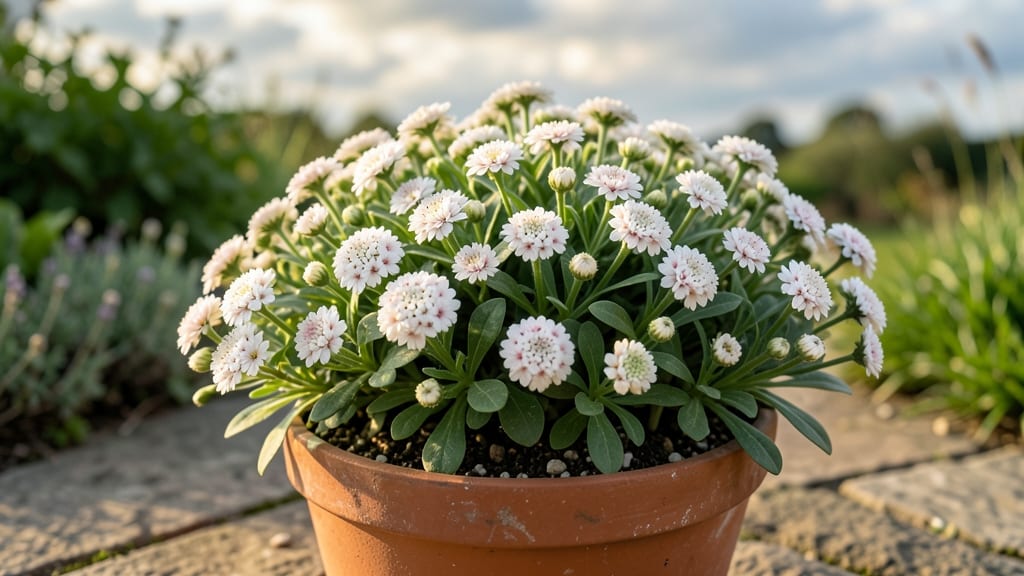
Most candytuft varieties continue blooming all summer, particularly heat-tolerant types like Iberis sempervirens, which often produce staggered reblooms triggered by warm temperatures after their initial spring display. Cool-season types may wane by mid-summer unless you deadhead regularly.
Candytuft's summer performance depends heavily on its variety and growing conditions. 🌸 Heat-loving types like Iberis sempervirens actually thrive when daytime temperatures hit 70°F+, which signals their plants to produce new flower buds.
This staggered reblooming creates a continuous show, while cooler varieties may need extra care to keep flowering. The key is understanding your specific candytuft's temperature preferences and adjusting care accordingly.
For those wondering about maintenance, regular deadheading is your best friend for extending blooms. Simply snip off spent flowers just above the next set of leaves to encourage new growth.
I've found that well-draining soil with a slightly alkaline pH (around 6.5-7.5) helps candytuft handle summer heat better, while consistent moisture without waterlogging keeps roots happy. Pairing with drought-tolerant companions like lavender or sedum can also create a more resilient planting environment.
💡 In This Article
- Heat-Triggered Reblooming Mechanics in Candytuft
- Summer Care Tips to Extend Candytuft Blooms
Heat-triggered reblooming mechanics in candytuft
The secret behind candytuft's summer-long blooms lies in its dual response to temperature and daylight. When daytime temperatures consistently reach 70°F+, the plant's apical meristems (growth points) receive a hormonal signal to shift from vegetative growth to flower production.
This process is mediated by gibberellins, plant hormones that promote flowering in response to heat. 🔥 Unlike many spring-bloomers that rely on cooler temperatures, candytuft varieties like Iberis sempervirens actually prefer warmth, which explains their ability to produce staggered reblooms throughout summer.
Photoperiod sensitivity also plays a critical role. Most candytuft varieties are "day-neutral," meaning they don't strictly depend on day length changes like short-day or long-day plants. Instead, they respond to cumulative heat exposure. For example, Iberis gibraltarica—a Mediterranean native—thrives in 80°F+ conditions, where its flowering cycle accelerates.
The plant's leaves contain specialized cells that detect temperature shifts, triggering a cascade of genetic responses that activate floral meristems. This is why you'll often see candytuft rebloom after a heatwave, even if it appeared dormant earlier in summer.
Not all candytuft behaves the same, though. Cool-season varieties like Iberis amara may produce fewer blooms in summer heat because their optimal temperature range sits between 60-75°F. These varieties rely more on spring's cooler temperatures for their initial flush of flowers.
The key difference lies in their native habitats: Mediterranean species evolved to handle summer heat, while European types adapted to milder climates. This explains why Iberis sempervirens—native to southern Europe—can handle 90°F+ temperatures better than its northern cousins.
Here's what's happening at the cellular level: Heat stress actually reduces the plant's ethylene production (a hormone that promotes aging), which delays flower senescence. This is why deadheaded candytuft often reblooms within 4-6 weeks in summer—new flower buds form while old blooms remain vibrant longer.
The plant's ability to balance heat tolerance with flowering efficiency makes it one of the most reliable long-blooming perennials for warm climates. 🌡️
Consider this comparison: While petunias often wilt in summer heat, candytuft's deep root system (reaching 12-18 inches deep) helps it access moisture and nutrients even during drought. Its waxy leaf coating reduces water loss, and its compact growth habit prevents overheating.
These adaptations explain why candytuft can maintain blooms when many other annuals fail in summer's peak.
The staggered reblooming pattern works like this: After the initial spring flush, the plant enters a "resting" phase where it focuses on root development. When temperatures rise, it triggers 50-70% of its total annual flower production in summer waves, rather than one massive bloom.
This strategy ensures continuous color while conserving energy during heat stress. For gardeners, this means you can expect 3-5 distinct blooming periods per season from heat-tolerant varieties.