
Blooming
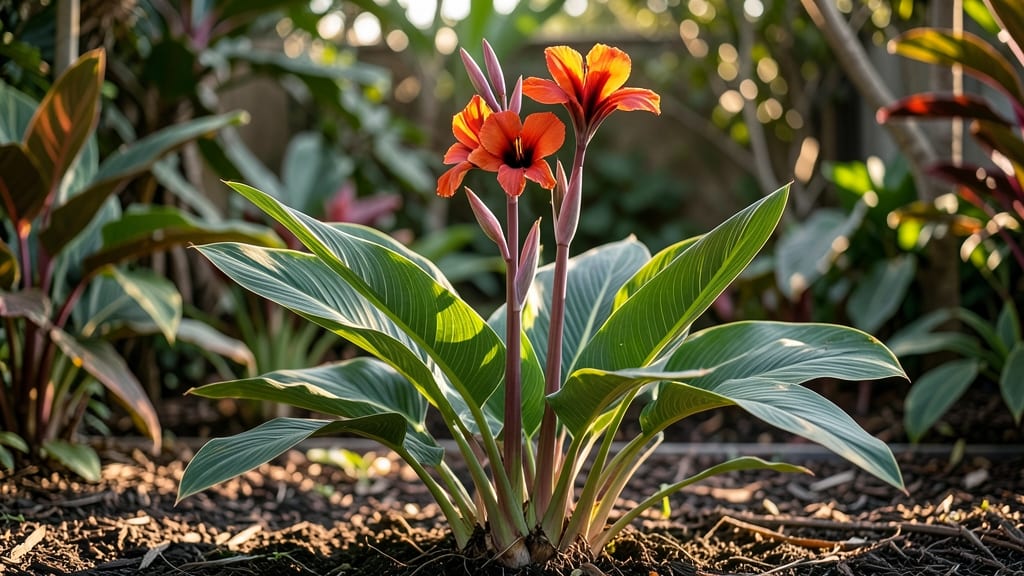
Canna lilies can bloom all summer when given full sun, warm temperatures, and rich soil—but their flowering patterns vary by type and care. Some varieties produce continuous blooms, while others require winter dormancy to rebloom the following season.
These tropical plants thrive in zones 8-11 where summer lasts 6+ months, but even in cooler climates, they can rebloom if given proper winter care. 🌿 The key lies in their growth habit—some varieties like 'Durban' produce nonstop flowers, while others like 'Pretoria' need a rest period.
I've found that regular deadheading (removing spent blooms) encourages new flowers to form, and a balanced fertilizer with phosphorus keeps them blooming longer.
What many gardeners overlook is how temperature fluctuations affect blooming. Canna lilies need consistent warmth—dropping below 60°F can shock them into dormancy. In my experience, mulching the base helps maintain soil warmth, and dividing the rhizomes every 3-4 years rejuvenates growth for bigger, more prolific blooms next season.
💡 In This Article
- Canna Lily Blooming Seasons by Variety and Climate
- Pruning and Care Tips to Extend Canna Lily Blooms
Canna lily blooming seasons by variety and climate
Canna lilies exhibit distinct blooming patterns based on their variety and native climate preferences. Tropical varieties like 'Durban' and 'Tropicanna' are bred for continuous flowering, producing vibrant blooms from early summer through fall without needing dormancy. These types thrive in zones 9-11 where temperatures stay above 65°F year-round.
In contrast, temperate varieties such as 'Pretoria' or 'Cleopatra' follow a seasonal cycle—blooming heavily in summer but requiring a 3-4 month dormant period at 50-60°F to reset their growth cycle for next year's blooms. 🌺
The key to summer-long blooms lies in matching the variety to your climate. For example, 'Black Knight' canna lilies (a popular dark red variety) perform best in zones 7-11 and will bloom continuously if given 6+ hours of direct sunlight daily.
In cooler regions (zones 5-6), gardeners often treat them as annuals or dig up rhizomes before frost.
What's fascinating is how these plants respond to daylight: many tropical varieties bloom more prolifically when day lengths exceed 12 hours, which typically occurs from late May through August in most Northern Hemisphere locations.
Temperature plays a critical role in triggering blooms. Canna lilies need consistent warmth—ideal daytime temperatures range between 75-90°F for optimal flowering. Below 60°F, growth slows dramatically, and blooms may abort.
I've noticed that in my zone 8 garden, canna lilies planted near south-facing walls or in raised beds stay warmer and bloom 2-3 weeks longer than those in open ground. The rhizomes themselves act as natural thermoregulators, storing energy to fuel summer blooms after winter dormancy.
Daylight hours also influence blooming cycles. Most canna varieties are "long-day" plants, meaning they respond to increasing daylight by producing flower buds. This is why you'll see peak blooming in July-August when days are longest.
However, some newer hybrids like 'Mystic Tides' have been bred to bloom more continuously regardless of day length, making them ideal for container gardens where light exposure can vary. The trade-off is that these hybrids often produce slightly smaller blooms compared to traditional varieties.
Climate also affects bloom duration. In humid subtropical climates (like zone 8), canna lilies may suffer from fungal issues that stress the plant and shorten blooming periods. Conversely, in arid climates (like zone 10), they may require daily watering to maintain bloom quality.
The secret to extending summer blooms is maintaining consistent moisture without waterlogging—aim for 1-1.5 inches of water per week, delivered at soil level to prevent fungal spores from splashing onto leaves. 💧
One often-overlooked factor is soil fertility. Canna lilies are heavy feeders, particularly during bloom season. A soil test revealing low phosphorus (the middle number in NPK ratios) can significantly reduce flowering. I've found that applying a balanced 10-10-10 fertilizer every 4-6 weeks during the growing season keeps blooms coming.
The rhizomes themselves store nutrients, but they deplete these reserves over time—dividing clumps every 3-4 years rejuvenates growth and often results in 20-30% more blooms the following season.