
Blooming
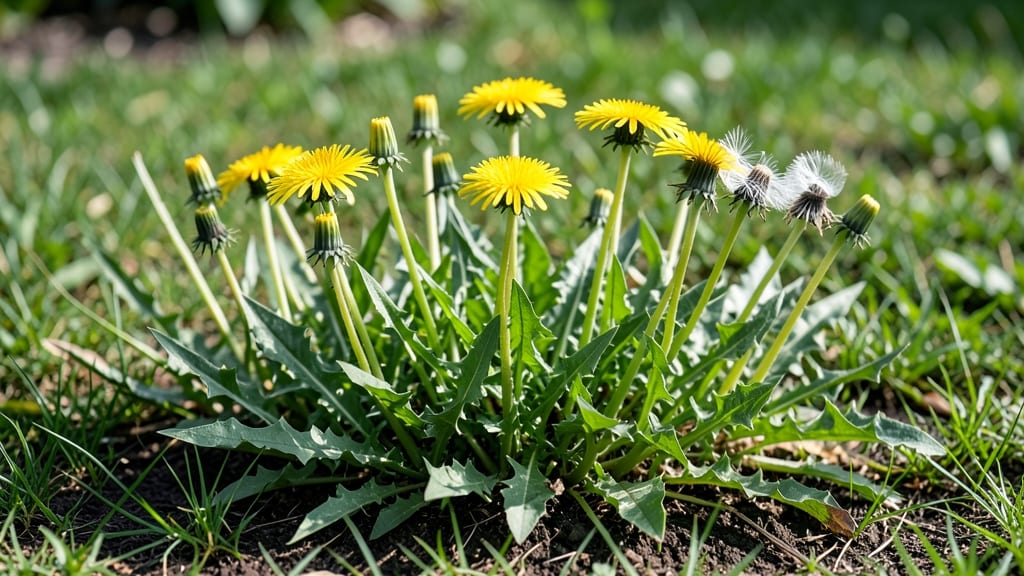
Dandelions bloom all summer in most climates, producing yellow flowers from early spring through fall, with peak blooming periods varying by region—typically March to November in temperate zones and year-round in mild coastal areas.
Dandelions thrive as perennial plants, meaning they regrow each year from deep roots that store energy. 🌱 This hardiness lets them bloom continuously when conditions are right—warm days and cool nights trigger new flower production.
In colder regions, they may pause in winter but rebound quickly with spring warmth, while coastal areas enjoy uninterrupted growth due to milder temperatures.
What makes them so resilient? Their shallow root systems absorb moisture efficiently, and they adapt to poor soil. This explains why you’ll spot dandelions popping up in lawns, cracks, and even sidewalk crevices—once established, they’re nearly impossible to eradicate without persistent effort.
💡 In This Article
- Dandelion Blooming Seasons by U.S. Climate Zones
- How to Encourage Nonstop Dandelion Flowers in Your Garden
Dandelion blooming seasons by u.s. climate zones
Dandelions thrive because of their perennial life cycle, which means they regrow annually from deep taproots that store energy like natural batteries. This root system lets them push through concrete and survive harsh conditions, producing flowers whenever temperatures hit their sweet spot: 50-75°F during the day with cooler nights.
In USDA Zone 5 (northern states), blooms typically appear from May to October, while Zone 9 (southern California, Florida) enjoys year-round flowering with peaks in January-March and September-November.
The key trigger is photoperiodism—dandelions detect day length changes. Shorter days in fall stimulate flower production, while longer summer days maintain continuous blooms. Coastal areas like Zone 8 (San Francisco, Charleston) rarely see winter dormancy because mild ocean breezes keep soil temperatures above 40°F.
In contrast, Zone 3 (Minnesota, Montana) may see only 2-3 months of flowering due to frozen ground and shorter growing seasons.
Dandelions also adapt to microclimates—urban heat islands can create 5-10°F warmer zones than surrounding areas, extending bloom seasons by 2-4 weeks. For example, a dandelion in Chicago's downtown might flower 3 weeks earlier than one in nearby suburbs.
This explains why you'll see them blooming in March in Phoenix but not until June in Boston.
What makes their blooming so reliable? Their shallow root system (only 12-18 inches deep) absorbs moisture quickly, while their deep taproot stores nutrients for regrowth. Even after mowing, they regenerate from 1-inch root segments.
This dual system lets them bounce back from drought or frost, ensuring flowers appear whenever conditions permit.
Consider these bloom windows by zone:
- Zone 3-4 (Cold Climates): June–September (short season due to snow cover)
- Zone 5-6 (Temperate): May–October (peak in July-August)
- Zone 7-8 (Mild): March–November (year-round in coastal areas)
- Zone 9-10 (Tropical): January–December (minimal winter slowdown)
One fascinating exception: Alpine dandelions (found above 10,000 feet) bloom only 2-3 weeks per year in late summer, triggered by 24-hour daylight conditions. This shows how dandelions adjust their biology to local conditions—whether urban sidewalk cracks or mountain peaks.
For gardeners, this means dandelions are low-maintenance indicators of soil health. If yours bloom continuously, your soil likely has good drainage and organic matter. If blooms fade quickly, it may signal nutrient deficiencies or poor water access. 🌿