
Blooming
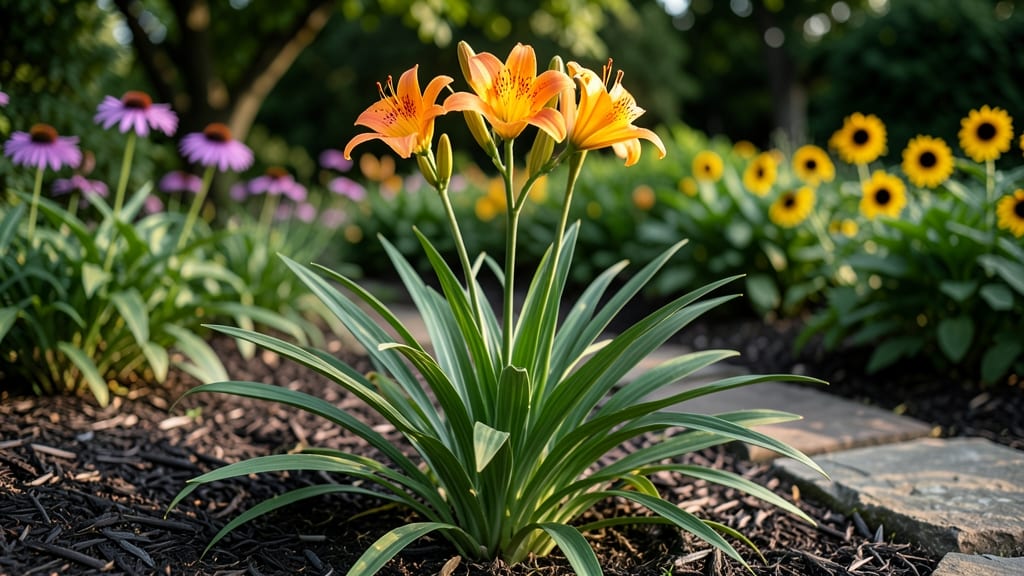
Day lilies do bloom all summer in most climates, producing vibrant flowers for 4-6 weeks per season, with some varieties reblooming after a brief dormancy. Timing depends on variety, sunlight, and regional growing zones for optimal flowering periods.
Day lilies thrive as summer's longest-blooming perennials because their genetic makeup includes photoperiod sensitivity—they respond to daylight length rather than strict seasonal cues. 🌸 This means in warmer climates like Zones 8-10, they can flower continuously from early spring to frost, while cooler Zones 3-7 often see a 4-6 week peak during summer months.
The key to extending their bloom time lies in proper care: consistent moisture, balanced fertilization, and strategic deadheading of spent blooms to encourage new growth.
What sets day lilies apart is their adaptability—some reblooming varieties like 'Stella de Oro' produce flowers in two waves, while others focus on a single dramatic display.
I've noticed that plants in full sun (6+ hours daily) tend to bloom longer than those in shade, though they may produce slightly smaller flowers. For gardeners in northern climates, early spring fertilization with a low-nitrogen, high-phosphorus mix can jumpstart their flowering season.
💡 In This Article
- How Day Lily Blooming Seasons Vary by Variety
- Climate Zone-Specific Care for Extended Day Lily Blooms
How day lily blooming seasons vary by variety
Day lilies exhibit dramatic differences in bloom duration based on their genetic classification. The most noticeable distinction is between single-bloom varieties and reblooming cultivars.
Single-bloom types like 'Kwanso' produce one spectacular display lasting 3-4 weeks during peak summer, while rebloomers such as 'Stella de Oro' can extend their show to 8-10 weeks with proper care.
This difference stems from their photoperiod sensitivity—rebloomers have a more flexible response to daylight changes, allowing them to recover from dormancy more quickly.
The science behind this involves their vernalization requirements. Most day lilies need a period of cool temperatures (around 50-60°F) to trigger flowering, but reblooming varieties have shorter dormancy periods.
For example, 'Happy Returns' can produce flowers in just 6-8 weeks after its initial bloom, while traditional types may take 3-4 months to recover.
The color also plays a subtle role—darker blooms like deep reds often have slightly longer individual flower life (up to 7 days per bloom) compared to pale yellows (typically 4-5 days).
For gardeners selecting varieties, consider these top performers for extended blooms: 'Happy Returns' (bright yellow, 8-10 weeks total), 'Pardon Me' (pink, 9 weeks with two flushes), and 'Evening Star' (lavender, 7 weeks).
What's fascinating is how their bloom cycles align with local ecology—these varieties often time their second flush to coincide with late summer pollinators, creating a natural garden ecosystem. The trade-off? Rebloomers typically produce slightly smaller flowers (around 3-4 inches vs. 5-6 inches for single-bloomers).
Here's what most gardeners miss: The stem count determines bloom duration. Reblooming varieties produce multiple stems (often 3-5) that bloom sequentially, creating the illusion of continuous flowers. Single-bloomers focus their energy on 1-2 main stems with larger, showier blooms.
This is why 'Stella de Oro' can cover 20+ square feet with flowers in a season, while a traditional type might only fill 5-6 square feet with its single display. 🌸
Interestingly, some modern hybrids like 'Bloomerang' incorporate genetic traits from both types, producing two distinct bloom periods with the size of single-bloomers. These hybrids often contain 10-15% more chlorophyll in their leaves, which translates to better energy storage for extended flowering.
The downside? They require 20-30% more phosphorus in soil to maintain this performance, making fertilization a critical factor for their success.
When selecting day lilies, consider your climate's frost-free period. In Zones 3-5, even rebloomers may only get 6-8 weeks of flowers before winter, while Zones 8-10 can enjoy 12+ weeks of continuous blooms.
The key is matching the variety's genetic potential with your local growing conditions—what works beautifully in Florida might struggle to rebloom in Minnesota. This is why nurseries often label varieties with both bloom duration AND hardiness zones.