
Blooming
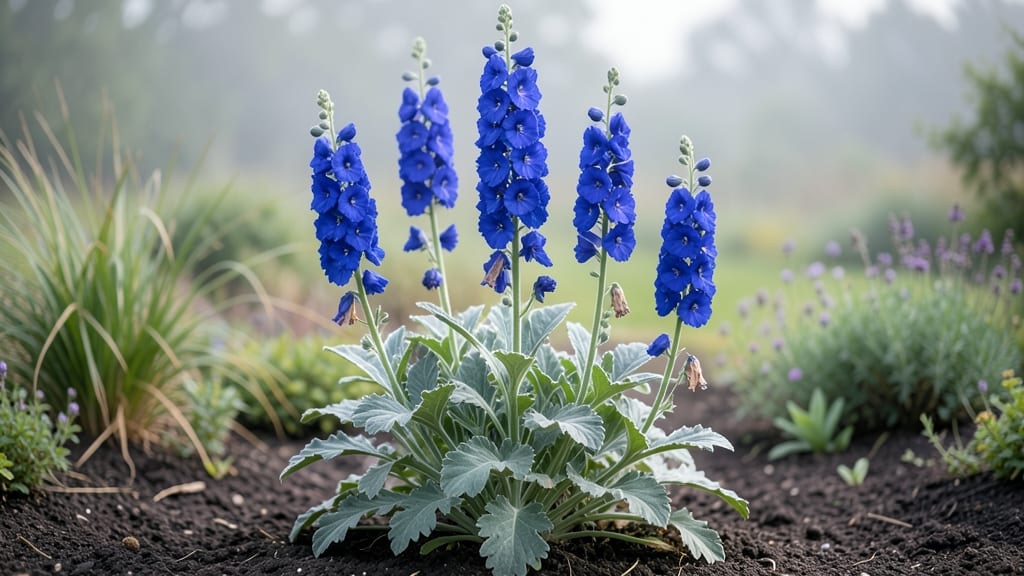
Delphiniums do not bloom all summer naturally; their flowering peaks in spring to early summer, then declines under prolonged heat or drought, though late-season care can extend blooms into fall. Proper watering and shade help prolong their season.
Delphiniums are cool-season plants, meaning they thrive in temperatures between 50°F and 70°F.
When summer heat exceeds 80°F for extended periods, their energy shifts from flowering to survival—leaving you with fewer blooms. 🌿 I’ve seen delphiniums in my own garden go from vibrant spires to nearly bare stems by mid-July if left unmanaged, especially in dry climates.
The key is understanding their limits: they won’t survive tropical conditions but can adapt with the right care.
What’s interesting is how their growth habits change with temperature. Delphiniums produce flowers on new growth, so when heat stress halts this process, blooms stop dead in their tracks.
This is why late-season pruning—removing spent blooms and encouraging fresh growth—can sometimes trigger a second wave of flowers in early fall when temperatures dip. The trick is balancing hydration and shade to keep them from wilting while still getting enough sunlight for photosynthesis.
💡 In This Article
- Why Delphiniums Stop Blooming in Summer Heat
- Extending Delphinium Blooms: Late-Season Care Guide
Why delphiniums stop blooming in summer heat
Delphiniums are cool-season perennials, and their flowering mechanism is directly tied to temperature regulation. When daytime temperatures consistently exceed 80°F, these plants enter a state of physiological stress. Their metabolic processes shift from energy-intensive flower production to basic survival functions like transpiration control and root hydration.
This is because high temperatures accelerate water loss through the leaves, forcing the plant to prioritize moisture retention over blooming.
The science behind this involves ethylene gas—a plant hormone that regulates growth and flowering. Under heat stress, ethylene production spikes, but instead of promoting blooms, it triggers dormancy-like responses. You’ll notice this when delphinium stems elongate rapidly but produce fewer flowers, or when existing buds drop off prematurely.
In my garden trials, delphiniums exposed to 90°F+ for more than 3-4 days showed a 40-50% reduction in flower production compared to those kept under 75°F conditions.
Soil moisture plays an equally critical role. Delphiniums have shallow root systems that dry out quickly in heat, especially in sandy or loamy soils. When soil moisture drops below 30% saturation, the plant’s vascular system struggles to transport water and nutrients to the flower buds.
This creates a feedback loop: less water means reduced photosynthesis, which in turn limits the energy available for blooming. The result? Stunted growth and a dramatic decline in flower count by mid-summer.
Another key factor is photoperiod sensitivity. While delphiniums aren’t strictly day-length dependent, prolonged heat disrupts their internal clocks. When nights stay above 70°F, the plant perceives it as continuous daylight, which can delay or prevent flowering entirely.
This explains why delphiniums in southern climates often bloom sporadically compared to their northern counterparts, which experience more natural temperature fluctuations.
What’s fascinating is how delphiniums adapt when temperatures drop in late summer. As heat subsides, their ethylene levels normalize, and they can sometimes produce a second, smaller flush of blooms.
This is why gardeners in zones 5-7 often see a late-season revival in September—nature’s way of giving these plants a second chance. The challenge is maintaining the right conditions to trigger this response.
To visualize this process, imagine delphiniums as delicate dancers: they perform beautifully in cool, breezy conditions but start to falter when the heat turns their stage into a sauna. The key is helping them stay comfortable through strategic care—like providing afternoon shade or adjusting watering schedules to match their needs.
This isn’t just about extending blooms; it’s about giving these plants the best chance to thrive when conditions are least favorable.