
Blooming
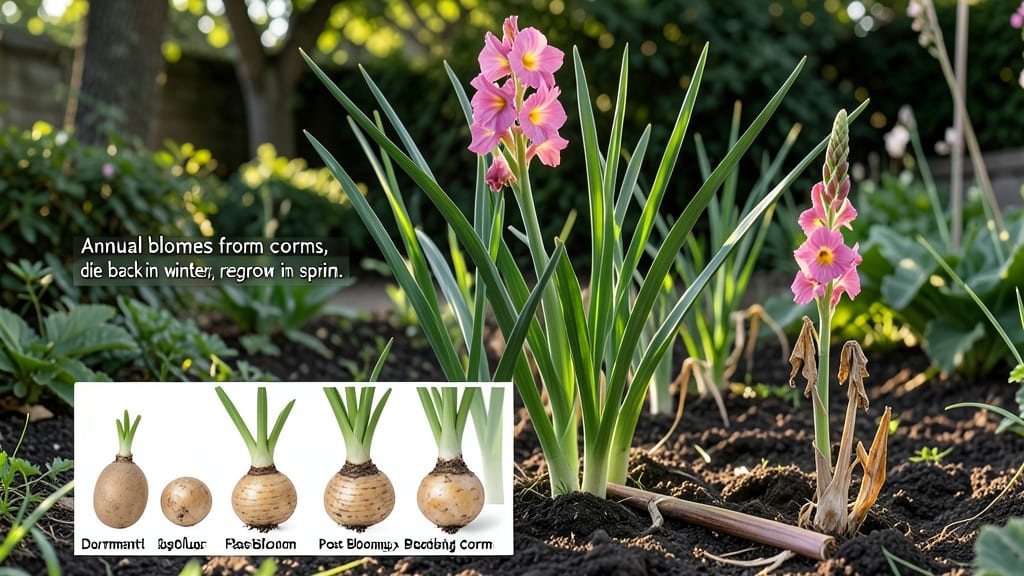
Gladiolus do not bloom every year as perennials because their underground corms freeze and die in most climates, forcing gardeners to replant annually. Only in mild winter zones (USDA 8+) might they return with proper care.
Gladiolus behave more like annuals because their corms—thickened underground stems—lack the frost tolerance of true perennials. 🌱 In colder regions, even well-established plants fail to survive winter, while in warmer areas, mulching or digging up corms for indoor storage can sometimes coax reblooms.
The key is understanding your hardiness zone: zones 7 and below rarely see repeat blooms without intervention.
What's interesting is how timing matters—planting too early or late can also affect survival rates. For example, in zone 7, I've found that covering corms with 12+ inches of mulch in late fall gives them a fighting chance against light frosts.
Meanwhile, gardeners in zone 9 can often leave them in the ground with minimal protection.
💡 In This Article
- Why Gladiolus Are Treated as Annuals in Most Gardens
- How to Extend Gladiolus Blooms Beyond One Season
Why gladiolus are treated as annuals in most gardens
The primary reason gladiolus act like annuals stems from their corms—thickened underground stems—that lack natural frost resistance. Unlike true perennials (such as peonies or daylilies), gladiolus corms contain minimal protective sugars and moisture, making them vulnerable to temperatures below 20°F.
When exposed to freezing conditions, their cells rupture from ice crystal formation, causing irreversible damage. 🌡️
Botanically, gladiolus originate from South Africa's temperate regions where winters rarely drop below 30°F. This evolutionary adaptation explains why most commercial varieties struggle in USDA zones 6 and colder.
Even a single hard freeze can kill corms entirely, while zone 7 gardeners might salvage 10-30% of corms with proper winter protection. The deeper the frost penetration (often 4-6 inches in heavy soil), the higher the mortality rate.
What makes this worse is gladiolus' natural dormancy cycle. After blooming, corms enter a 6-8 week rest period where they become metabolically inactive—precisely when winter arrives. Unlike spring-blooming bulbs (like tulips), their energy reserves are already depleted by summer's heat, leaving little resilience for cold snaps.
This biological timing mismatch is why gardeners in colder climates treat them as annuals.
Hardiness zone comparisons reveal the stark reality: In zone 8, gladiolus may survive winters with 3-4 inches of mulch, while zone 5 gardeners face near-total failure without digging up corms entirely.
The USDA's zone 7 threshold marks the practical dividing line—above it, some varieties might persist; below it, annual replanting becomes the norm. 🌍
Interestingly, gladiolus' flowering biology also plays a role. Their 2-3 month blooming window requires significant energy, leaving corms too weak to sustain winter survival. Compare this to daylilies, which bloom over 6+ weeks and store more reserves in their rhizomes.
This fundamental difference in energy allocation explains why gladiolus rarely return reliably year after year.
For gardeners in marginal zones (7-8), the challenge becomes balancing winter protection with spring planting timing. Corms must be planted 2-3 weeks before last frost** to establish roots before summer heat arrives, but this leaves little margin for error in colder microclimates.
This tight window is another reason why annual replanting remains the safest strategy for most growers.