
Blooming
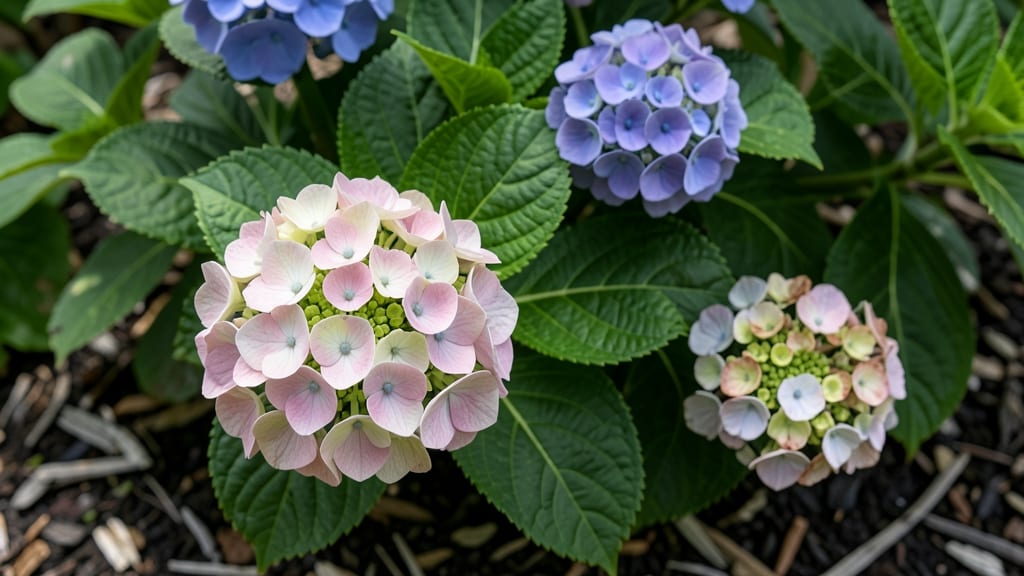
Some hydrangeas bloom more than once annually, particularly reblooming varieties like 'Endless Summer' or 'Limelight,' which produce two distinct flower flushes when you deadhead spent blooms and prune correctly. Proper seasonal care and soil conditions directly impact how often they rebloom.
Not all hydrangeas have this ability—it depends entirely on the variety. 🌸 Reblooming types form flower buds on both old and new wood, while traditional varieties only bloom once on previous year's growth.
The key to encouraging multiple blooms lies in consistent deadheading (removing faded flowers) and strategic pruning after the second flush appears. I've seen 'Annabelle' hydrangeas, for example, completely skip reblooming if pruned at the wrong time, so timing is everything.
Soil pH also matters: acidic conditions (around 5.5-6.0) help maximize color intensity and frequency.
For best results, I recommend monitoring your plants' growth patterns and adjusting care routines based on their response. 💫 Most rebloomers need a light pruning in late summer to shape the plant and remove dead flowers, while avoiding heavy cuts that could remove next year's buds.
Patience pays off—some varieties take 2-3 years to establish strong reblooming habits.
💡 In This Article
- How Reblooming Hydrangeas Differ from Seasonal Varieties
- Pruning and Care Tips to Maximize Hydrangea Reblooms
How reblooming hydrangeas differ from seasonal varieties
The core difference lies in where flower buds form. Reblooming hydrangeas like 'Endless Summer' develop buds on both old wood (last year's growth) AND new wood (current season's stems), while traditional varieties only produce buds on old wood.
This means rebloomers can produce two distinct flushes: one on last year's stems in spring, and another on new growth later in summer.
Botanically, this dual budding system creates a staggered bloom cycle.
The first flush typically appears in late spring or early summer, followed by a second, often smaller bloom in late summer or early fall. 🌸 The timing of these flushes depends on the variety—'Limelight' usually blooms in June and again in August, while 'Annabelle' may produce a single late-summer flush if conditions are right.
This biological flexibility makes rebloomers ideal for gardeners seeking extended color displays.
Seasonal varieties, like classic mophead or lacecap hydrangeas, rely entirely on buds formed the previous year. These buds develop in late summer/fall and bloom the following spring. If you prune too aggressively, you risk removing next year's flowers entirely.
This is why rebloomers are more forgiving—they can compensate with new growth if some old wood is lost.
The science behind this involves plant hormones called auxins and cytokinins. Auxins produced in growing tips inhibit flower bud formation, while cytokinins promote it. Reblooming varieties have a natural balance that allows buds to form even as new growth continues, creating the potential for multiple bloom cycles in one season.
Consider the 'Nikko Blue' hydrangea—a seasonal variety that produces stunning blue blooms in June but rarely reblooms. Its buds form exclusively on old wood, making it dependent on last year's growth.
In contrast, 'Little Lime' forms buds on both old and new wood, allowing it to produce lime-green flowers in June and again in September under ideal conditions.
Light exposure also plays a role. Rebloomers often need at least 6 hours of sunlight daily to trigger the second flush, while seasonal varieties may tolerate partial shade better.
The plant's energy allocation shifts dramatically between these two types—rebloomers must balance flower production with vegetative growth, while seasonal varieties can focus entirely on spring blooms.