
Blooming
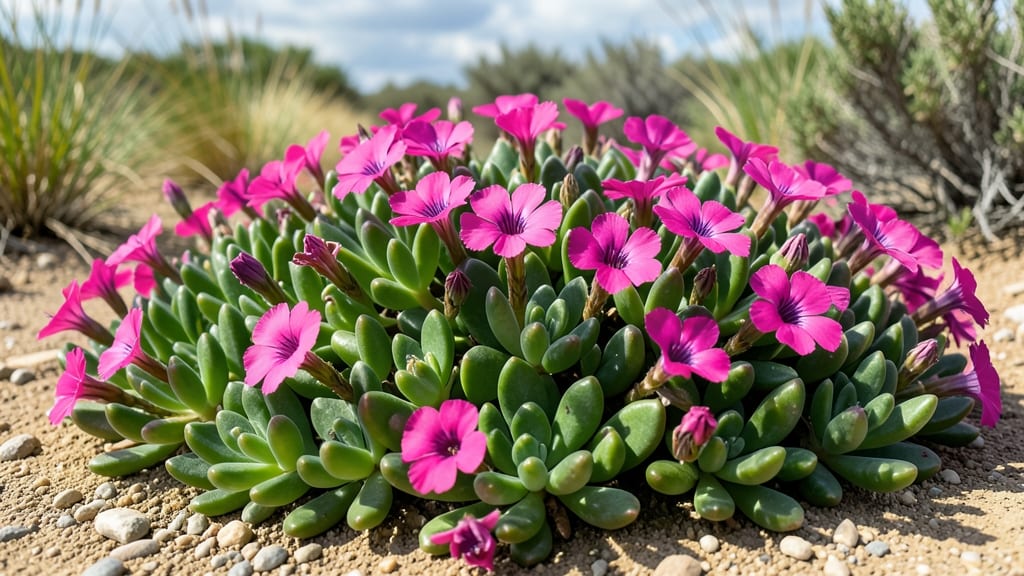
Ice plants do bloom all summer in warm climates, thriving from early spring through fall with bright sunlight and minimal watering, though extreme heat or drought may temporarily reduce flowering. Regular deadheading keeps them blooming continuously.
These succulent plants are heat-lovers that actually rebloom more vigorously when given just enough water to survive drought-like conditions. 🔥 The secret lies in their natural adaptation to arid environments—they store water in their thick leaves and burst into color when temperatures stay between 70°F and 90°F with full sun exposure.
What's fascinating is how some varieties, like Delosperma, even produce new flowers after rain showers, proving they're more resilient than many gardeners realize.
For best results, plant them in well-draining soil and avoid overwatering—most ice plants prefer dry conditions between waterings. I've found that mulching around the base helps maintain moisture without suffocating the roots, while pruning back leggy stems after flowering encourages bushier growth and more blooms.
The key is mimicking their native habitat where they naturally thrive in rocky, sunny slopes.
💡 In This Article
- How Heat and Sunlight Trigger Ice Plant Flowering Cycles
- Tips to Extend Ice Plant Blooms Through the Summer Season
How heat and sunlight trigger ice plant flowering cycles
Ice plants (Delosperma and Lampranthus species) thrive on heat and sunlight because their flowering is directly tied to photoperiodism—their internal response to daylight length. These succulents originate from arid regions where they evolved to bloom during the warmest months when water is scarce.
When temperatures hover between 70°F and 90°F and they receive at least 6 hours of direct sunlight daily, their cells produce more florigen, a hormone that triggers flower buds.
The brighter the light, the more vigorously they bloom, which is why they often produce their most vibrant flowers in full sun conditions.
Interestingly, ice plants exhibit a unique adaptation called "drought-induced flowering." Their thick, water-storing leaves allow them to survive prolonged dry spells, and this stress actually stimulates blooming. When soil moisture drops below 30% saturation, the plant perceives it as a signal to reproduce quickly before conditions worsen.
This is why many gardeners notice a flush of new flowers after a period of minimal watering—it's not just about heat, but the combination of warmth and dryness that triggers this response. 🌵 The flowers themselves often open in the morning when temperatures are cooler, closing by afternoon to conserve moisture.
The color intensity of ice plant blooms also depends on sunlight exposure. Plants grown in full sun develop deeper, more saturated hues because higher light levels boost anthocyanin production—the same pigments that give red wine its color. In shaded conditions, flowers may appear paler or less vibrant.
For example, Delosperma 'Fire Spinner' typically displays fiery orange blooms when fully sunlit, but these can dull to a muted peach if light levels drop below 4 hours of direct sun per day.
This phototropic response is why ice plants are often recommended for sunny, rocky slopes or containers on patios.
What most gardeners don't realize is that ice plants have a built-in "heat tolerance threshold." While they love warmth, prolonged exposure to temperatures above 95°F can cause flowers to wilt or buds to fail to open.
This is why they often take a brief "summer nap" during heatwaves—flowers may close or drop off temporarily until temperatures moderate. The plant's survival strategy ensures it conserves energy during extreme conditions, then rebounds with fresh blooms once cooler evenings return. 🌡️
Another fascinating mechanism is how ice plants regulate their blooming cycles through a process called "thermoperiodism." They require a daily temperature swing—warm days followed by cooler nights—to maintain continuous flowering. This diurnal rhythm keeps their metabolic processes balanced, allowing them to produce flowers for months without exhaustion.
In regions with stable high temperatures (like desert climates), ice plants may bloom nearly year-round, while in temperate zones, they typically take a shorter break in winter.
Consider the example of Lampranthus spectabilis, which often produces its first spring blooms when soil temperatures reach 55°F. As summer progresses and daytime highs climb, the plant enters its peak flowering phase, sometimes producing 2-3 flower cycles per season if deadheaded regularly.
The key to understanding their blooming patterns lies in observing how they respond to these environmental cues—heat triggers growth, but it's the combination of light, temperature fluctuations, and moisture stress that creates their spectacular displays.