
Blooming
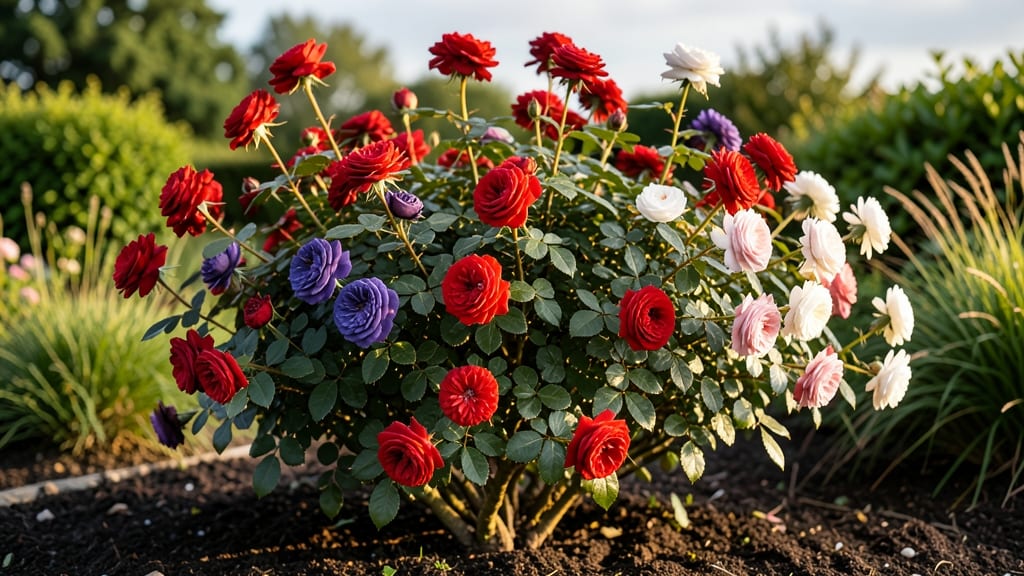
Knockout roses don’t just bloom all summer—they turn your garden into a purple explosion that refuses to quit. 🌸 While most roses take a midseason nap, these heat-resistant hybrids keep producing nonstop from spring until frost, with proper care.
The secret lies in their disease-resistant genetics and ability to thrive in hot, dry conditions that send other roses into early retirement.
What makes them different? Unlike traditional roses that bloom once and fade, Knockout roses rebloom continuously thanks to their vigorous growth habit. They handle humidity, drought, and even urban pollution better than most varieties, which is why they’re the go-to choice for city gardens and low-maintenance landscapes.
That said, they do need regular watering (1-2 inches per week) and occasional pruning to encourage new growth.
To keep them flowering strong, deadhead spent blooms every few weeks and fertilize lightly every 6-8 weeks with a balanced rose food. Prune lightly in early spring to remove dead wood, but avoid heavy cuts—they bloom on new growth, so less is more.
With this care, you’ll enjoy vibrant blooms from June through October, making them the ultimate no-fuss summer star.
Best of all, they’re disease-resistant, so you skip the fuss of spraying fungicides. Whether you’re a busy gardener or a beginner, these roses deliver effortless color that outlasts the heat. Plant one, and you’ll never look back at wilting summer blooms again.
Root Causes Of Summer Bloom Slumps
Even the hardiest roses—like the beloved Knockout® varieties—can hit a summer slump, leaving you wondering why those vibrant blooms aren’t putting on a show all season. The truth? Several scientific factors conspire to dim their performance.
Understanding these root causes isn’t just gardening trivia; it’s your first step toward reviving those purple spikes and keeping them blooming until frost. Let’s dig into the real culprits.
Knockout roses are bred for heat tolerance, but that doesn’t mean they’re immune to summer’s extreme conditions. When temperatures soar above 90°F (32°C), these roses face a double whammy: physiological drought stress and reduced photosynthesis.
Here’s how it breaks down:
- Evaporative Water Loss: High heat increases transpiration (water loss through leaves) at a rate roses can’t keep up with, even if the soil looks moist. Think of it like a plant sweating through a wool sweater—uncomfortable and inefficient.
- Root Zone Drying: Surface water evaporates quickly, leaving deep roots thirsty. Knockout roses have a shallow but extensive root system, meaning they rely on consistent moisture throughout the root zone, not just at the surface.
- Stunted Growth Hormones: Under heat stress, roses produce less auxin (a growth hormone) and more abscisic acid (ABA), which signals buds to abort instead of opening. This is nature’s way of conserving energy—but it’s not what you want in your garden!
Actionable Fix: Water deeply 2–3 times per week (early morning or late evening) to encourage roots to grow deeper. Mulch with 2–3 inches of organic matter (like shredded bark or straw) to retain moisture and regulate soil temperature.
Knockout roses thrive in full sun (6+ hours daily)**, but when summer sun becomes intense—especially in dry climates—they can suffer from sunburn on leaves and stems. This isn’t just cosmetic; damaged foliage reduces the plant’s ability to photosynthesize, directly impacting bloom production.
Watch for these signs:
- White or grayish patches on leaves (like a sunburn on human skin).
- Brittle, crispy leaf edges (a sign of desiccation).
- Stunted new growth or buds that fail to open.
Why It Happens: High UV exposure + low humidity = oxidative stress in plant cells. The waxy cuticle on leaves (their natural sunscreen) can’t always protect against prolonged exposure, especially if the plant is already water-stressed.
Actionable Fix:
- Provide afternoon shade (3–5 PM) during peak heat waves using shade cloth or a temporary structure.
- Apply a light foliar spray with seaweed extract or hydrogen peroxide (1 tsp per gallon of water) to boost cellular repair.
- Avoid overhead watering during the day—it magnifies sun damage by acting like a magnifying glass.
Knockout roses are heavy feeders, and summer is their peak demand season for nutrients—especially phosphorus (P) and potassium (K), which fuel blooming and stress resistance. But most garden soils deplete quickly in these nutrients under heat, leading to:
| Symptom | Cause | Impact on Blooms |
|---|---|---|
| Yellowing leaves (especially older ones) | Nitrogen (N) deficiency | Reduced energy for bud formation |
| Purple or reddish stems/leaves | Phosphorus (P) deficiency | Weak root development → fewer blooms |
| Weak, spindly growth | Potassium (K) deficiency | Poor drought tolerance → buds drop |
Why It Happens: Microbes in the soil that break down organic matter (like compost) become less active in extreme heat, slowing nutrient release. Plus, frequent watering leaches soluble nutrients (like nitrogen) out of the root zone.
Actionable Fix:
- Side-dress with a balanced fertilizer (10-10-10 or 5-10-10) in early summer, then switch to a low-nitrogen, high-phosphorus formula (e.g., 3-12-6) in late summer to encourage fall blooms.
- Add compost or worm castings to the top 2–3 inches of soil to feed beneficial microbes.
- Use slow-release granules or liquid seaweed fertilizer every 4–6 weeks to maintain steady nutrient levels.
Stressed roses are magnets for pests and pathogens, which can directly sabotage bloom production. While Knockout roses are disease-resistant, they’re not invincible—especially when heat weakens their defenses.
Common summer saboteurs:
- Japanese Beetles: These metallic-green invaders skeletonize leaves and devour buds, starving the plant of energy.
- Spider Mites: Tiny but destructive, they suffocate leaves with webbing and extract sap, leading to yellowing and dropped buds.
- Black Spot or Powdery Mildew: Fungal diseases thrive in hot, humid conditions, causing leaves to yellow and fall prematurely, which halts flowering.
Why It Happens: Heat stress reduces chlorophyll in leaves, making them more susceptible to fungal spores. Meanwhile, pests are more active in warm weather, and stressed plants can’t produce enough defensive compounds (like tannins) to repel them.
Actionable Fix:
- Handpick beetles early in the morning (they’re sluggish then) or use neem oil as a natural repellent.
- Spray leaves with water in the morning to wash off mites and deter fungal spores.
- Apply copper fungicide preventatively if humidity is high (follow label rates).
- Encourage beneficial insects like ladybugs and lacewings by planting marigolds or dill nearby.
Pro Tip: 💡 Don’t wait for symptoms! Monitor your roses weekly for early signs of stress (wilted leaves
Revitalize Your Roses Summer Show
Knockout roses are famous for their hardy, nonstop blooms—but even the toughest varieties can struggle to keep up their purple perfection when summer heat, pests, or poor care take over. The good news?
With the right fixes, you can bring back those vibrant spikes and keep them thriving until frost. Below, we’ve matched common causes to simple, actionable solutions—plus prevention tips to stop future fade-outs.
Signs: Wilting leaves, dry soil, buds dropping before opening, or a general "struggle" look despite watering.
How to Fix It: 🔥 Deep-Water Deeply
- Water slowly and deeply 2–3 times per week (early morning or evening) to encourage root growth. Aim for 1–1.5 inches of water per week, including rainfall.
- Use a soaker hose or drip irrigation to avoid wetting foliage (which attracts disease).
🌱 Mulch Like a Pro
- Apply 2–3 inches of mulch (wood chips, straw, or shredded bark) around the base—but keep it 2–3 inches away from the stem to prevent rot.
- Mulch retains moisture, regulates soil temp, and blocks weeds that steal nutrients.
💡 Pro Tip: If your roses look heat-stressed, trim back 1/3 of the plant in late summer to reduce water loss and encourage new growth before fall.
Signs: Yellowing leaves, chewed petals, black spots, or sticky residue (sap) on stems.
How to Fix It: 🔪 Prune & Clean Up
- Remove infected leaves or stems immediately (don’t compost them—trash or burn).
- Sterilize pruners with rubbing alcohol between cuts to prevent spreading disease.
🍳 DIY Pest Sprays (Safe & Effective) - Neem oil spray (1 tbsp neem oil + 1 tsp mild soap + 1 quart water): Spray early morning or evening to avoid burning leaves.
Reapply every 7–10 days. - Horticultural oil for scale insects: Apply when temps are above 50°F but below 90°F.
🌡️ Prevent Fungal Foes
- Water at the base (avoid overhead watering).
- Space plants for airflow (Knockout roses need 3–4 feet apart).
- Avoid late-season nitrogen (it encourages tender new growth that fungi love).
Signs: Slow growth, pale yellow leaves, or buds that open small and weak.
How to Fix It: 📊 Test Your Soil
- Grab a DIY soil test kit (or send a sample to your local extension office) to check pH and nutrient levels.
- Knockout roses thrive in slightly acidic soil (pH 6.0–6.5). Adjust with lime (to raise pH) or sulfur (to lower pH) if needed.
🥗 Feed the Right Way
- Spring: Use a balanced fertilizer (10-10-10) to kickstart growth.
- Summer: Switch to a low-nitrogen, high-phosphorus formula (5-10-10) to support blooming.
- Avoid synthetic fertilizers in extreme heat—they can burn roots. Instead, try compost tea or fish emulsion for a gentle boost.
✨ Boost Organic Matter
- Mix compost or aged manure into the top 6 inches of soil in early spring to improve drainage and nutrient retention.
Signs: Fewer blooms, leggy stems, or roses that look "bare" despite healthy growth.
How to Fix It: 👨🍳 Prune for Performance
- When to prune: Late winter (before buds swell) or early summer (after the first flush of blooms).
- How to prune:
- Cut back 1/3 of the oldest canes to the ground to rejuvenate the plant.
- Deadhead spent blooms regularly to encourage more flowers.
- Never top roses (cutting the top flat)—this stresses the plant.
💡 Pro Tip: Use clean, sharp pruners and make cuts at a 45-degree angle just above a leaf node (the bump where leaves grow).
Signs: Root rot (mushy stems, foul smell), or drought stress despite regular watering.
How to Fix It: 🌧️ Drainage Check
- If your soil stays soggy, amend with perlite or coarse sand to improve drainage.
- Raise beds if planting in heavy clay soil.
⏰ Adjust Watering for the Forecast
- After heavy rain: Skip watering for a few days to avoid over-saturation.
- During droughts: Use mulch + deep watering to protect roots.
- Plant in the right spot: Full sun (6+ hours) and well-draining soil are non-negotiable.
- Choose disease-resistant varieties: Knockout roses are already tough, but ‘Double Knock Out’ or ‘Rainbow Knock Out’ handle heat and humidity even better.
- Monitor regularly: Check leaves and stems weekly for early signs of stress.
- Fall prep: In late fall, add compost and lightly prune to clean up debris before winter.
With these fixes, your Knockout roses will bounce back stronger—and those purple spikes will dominate your summer garden like they’re supposed to. 🌸🔥
Frequently asked questions
How long do Knockout roses actually bloom in a season?
With proper care, Knockout roses can bloom continuously from late spring through frost—typically June to October in most climates. Their secret? They bloom on new growth, so regular deadheading and light pruning encourage nonstop production. Even in heat waves, they bounce back faster than traditional roses.
Why do my Knockout roses stop blooming in July?
July heat often triggers a "summer slump" due to water stress or nutrient burnout. Try deep watering 2-3 times weekly and switch to a low-nitrogen fertilizer (like 5-10-10) to support blooming. Mulch heavily to retain moisture—this usually revives them within 2-3 weeks.
Can Knockout roses bloom in partial shade?
They thrive best in full sun (6+ hours), but can still bloom in 4-6 hours of morning sun with afternoon shade. Expect fewer blooms—shade reduces photosynthesis, which powers flower production. If planting in shade, choose 'Rainbow Knock Out' (more shade-tolerant than standard varieties).
Do Knockout roses bloom better in pots than in ground?
Containers work well, but require more frequent watering—potted roses dry out faster. Use large pots (18"+ diameter) with drainage holes and a moisture-retaining mix (50% potting soil, 30% perlite, 20% compost). In-ground plants have deeper root access, so they typically bloom 20-30% more than container-grown.
Will Knockout roses bloom again after a hard freeze?
Yes! Their hardy roots survive down to 0°F (-18°C). After spring thaw, they'll produce new canes and rebloom within 6-8 weeks**. Prune back dead canes in early spring, then fertilize lightly to kickstart growth. Some varieties (like 'Double Knock Out') even bloom on new growth the same year after pruning.