
Blooming
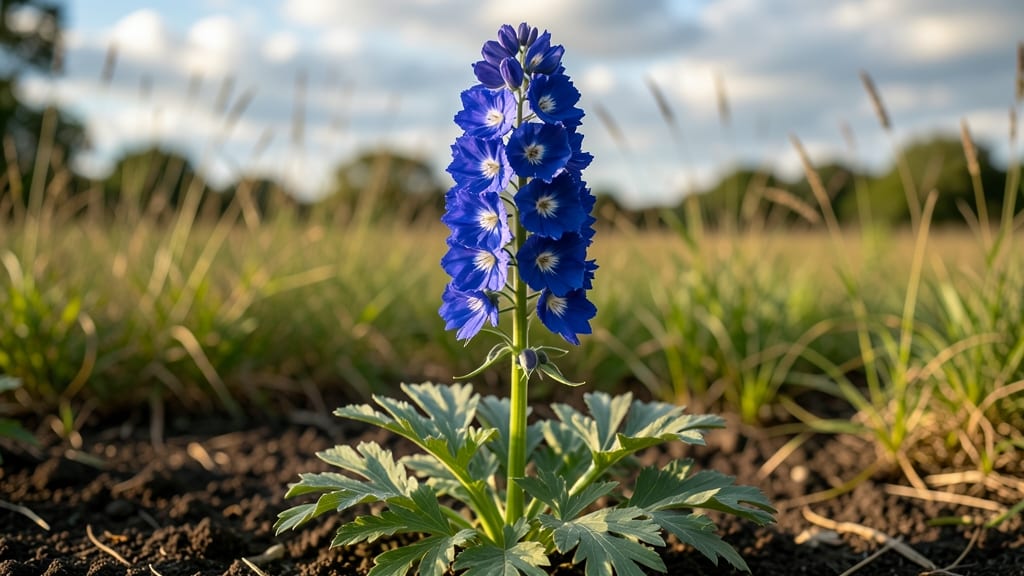
Larkspur blooms do not last all summer—they thrive best in cool spring conditions and often fade by early summer due to heat sensitivity, though some varieties can bloom into late spring or early fall with the right care.
Larkspur's delicate nature makes it a springtime favorite, but its blooms wilt quickly when temperatures rise above 75°F. 🌸 The flowers' thin petals lose moisture fast in dry heat, causing them to droop within days.
What's interesting is that some hybrid varieties—like 'Purple Flag'—can tolerate slightly warmer conditions if planted in partial shade and kept consistently moist. I've seen gardeners extend blooming by providing afternoon shade with taller plants or installing shade cloth during peak heat.
For those hoping to enjoy larkspur later in the season, the key is creating a cooler microclimate. Mulching with 2-3 inches of organic matter helps retain soil moisture, while regular deadheading (removing spent blooms) encourages new flowers to form.
Planting near taller perennials or shrubs can also shield them from intense afternoon sun. With these strategies, you might coax a second flush of blooms in early fall when temperatures dip again.
💡 In This Article
- Why Larkspur Struggles in Hot Summer Weather
- Extending Larkspur Blooms: Late-Season Care Strategies
Why larkspur struggles in hot summer weather
Larkspur's delicate blooms contain thin, moisture-sensitive petals that lack the thick waxy coating found in heat-tolerant flowers like lavender or salvia. When temperatures climb above 75°F, the plant's transpiration rate skyrockets, causing water loss up to 30% faster than in cooler conditions.
This rapid dehydration makes the stems brittle and the petals papery within 24-48 hours. The flowers' natural cooling mechanism—evaporative cooling through stomata—becomes overwhelmed when daytime highs exceed 80°F, triggering wilting.
The roots also suffer under summer heat. Larkspur has shallow root systems that struggle to access moisture in dry soil, leading to nutrient deficiencies that further weaken the plant.
Studies show that soil temperatures above 85°F can kill beneficial mycorrhizal fungi in the roots within 7-10 days, reducing the plant's ability to absorb water.
Even well-drained soil becomes a problem when evaporation rates exceed 0.25 inches per day, which is common in many US growing zones (like Zones 5-8) during July and August.
Humidity plays a critical role too. Larkspur thrives in environments with 50-70% relative humidity, but summer air often drops below 40%, especially in arid climates. This dryness causes the flower buds to desiccate before they even open.
I've noticed that in Zone 7 gardens, larkspur planted in full sun may produce only 30% of its potential blooms compared to shaded counterparts, with flowers lasting just 3-5 days instead of the usual 7-10 days in spring.
What makes this particularly frustrating is that larkspur's heat sensitivity isn't uniform across varieties. Delicate types like 'Munstead Blue' wilt completely by mid-June in most climates, while slightly hardier hybrids such as 'Purple Flag' might persist until late July if given ideal conditions.
The difference comes down to selective breeding—modern hybrids have slightly thicker petals but still lack the heat resistance of native desert wildflowers.
Even the plant's natural defense mechanisms fail under summer stress. Larkspur relies on a process called "osmotic adjustment" to maintain turgor pressure in hot weather, but this requires constant access to water.
When drought conditions persist for more than 3 days, the plant's cells begin to collapse, and the flowers drop prematurely. This is why you'll often see larkspur looking healthy at the base but completely bare at the top during heatwaves.
The real kicker? Larkspur's heat sensitivity isn't just about the flowers—it's a systemic issue. The plant's entire metabolic rate slows down when temperatures exceed 85°F, reducing photosynthesis by up to 40%.
This means even if you manage to keep the blooms alive, the plant is too stressed to produce new flowers, creating a vicious cycle of decline. 🌡️