
Blooming
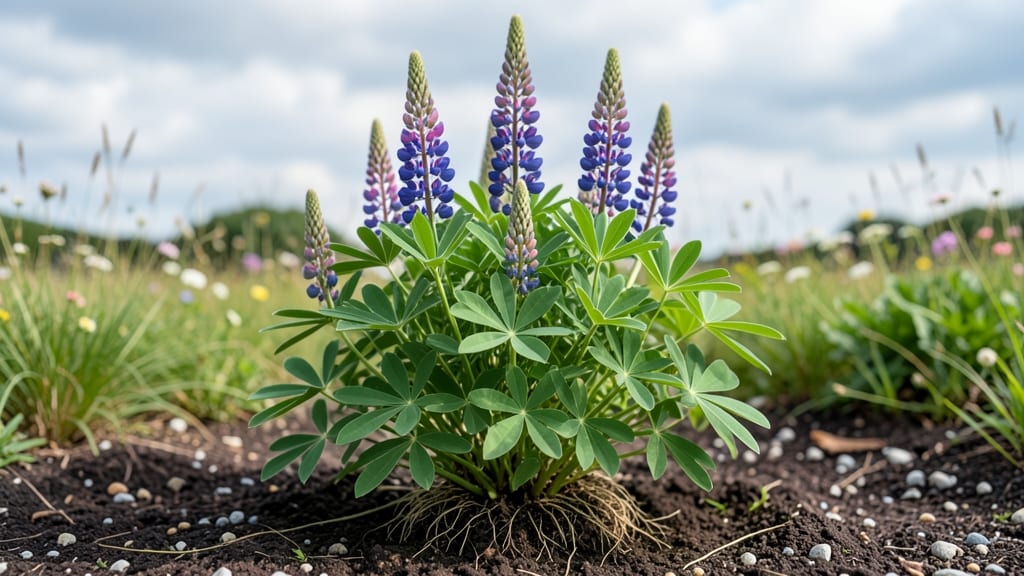
Lupines do not bloom all summer—they usually produce a single flush of flowers in spring or early summer, though some perennial types may show sporadic reblooming under perfect growing conditions. Encouraging extended blooms requires strategic deadheading and selecting the right varieties.
Most lupines are designed by nature to put their energy into seed production after their primary bloom, which is why you won't see continuous summer flowers. 🌸 However, perennials like 'Russell Hybrid' can surprise you with scattered reblooms if you maintain their health—think of it as a bonus rather than a guarantee.
The key lies in variety selection: annual lupines (like 'Blue Bonnet') focus all their energy on one spectacular spring show, while hardy perennials may reward you with a few late-summer surprises if you keep their soil rich and deadhead regularly.
What truly extends their blooming window is a combination of proper care and smart pruning. After the main flowers fade, snipping spent blooms redirects the plant's energy toward new growth rather than seed production.
Pair that with well-draining soil (pH 6.0-7.0) and balanced fertilizer (low nitrogen, high phosphorus), and you might coax a few more blooms—but don't expect a nonstop summer display.
For the best results, plant varieties known for their longevity, like Lupinus polyphyllus, and accept that lupines are more about seasonal drama than prolonged beauty.
💡 In This Article
- Lupine Bloom Cycles: Why Most Varieties Are One-Time Flowers
- Extending Lupine Blooms: Pruning, Fertilizing, and Soil Secrets
Lupine bloom cycles: why most varieties are one-time flowers
Lupines follow a biological strategy where their primary energy goes into producing seeds after their initial bloom.
This one-time flowering is an evolutionary trade-off: the plant invests heavily in vibrant, showy blooms to attract pollinators, then redirects all resources to seed production once pollination is complete. 🌸 This process is triggered by day length and temperature shifts—most lupines detect shorter summer days as a signal to shift from flowering to seed development, which explains why you rarely see continuous blooms.
The difference between annual and perennial lupines comes down to their life cycles. Annual varieties like Lupinus texensis (Texas Bluebonnet) complete their entire life cycle in one season, blooming spectacularly in spring before dying back.
Perennial types such as Lupinus polyphyllus (Russell Hybrid) store energy in their root systems, allowing them to potentially rebloom if conditions are ideal—but even these typically produce only scattered flowers later in the season. Temperature fluctuations below 50°F or above 85°F can further suppress reblooming by stressing the plant.
Soil quality plays a surprising role in this cycle. Lupines thrive in well-draining, slightly alkaline soil (pH 6.0-7.0), but they're sensitive to excess nitrogen.
Too much nitrogen promotes leafy growth at the expense of flowers, while balanced phosphorus supports root and bloom development. 🌱 This is why many gardeners report better reblooming when they use a 5-10-10 fertilizer ratio (low nitrogen, high phosphorus) rather than general-purpose blends.
The plant's natural tendency to prioritize seed production over prolonged flowering means even with perfect care, you won't get continuous summer blooms.
Light exposure also influences blooming patterns. Lupines need 6-8 hours of direct sunlight daily to set buds, but too much intense afternoon sun in hot climates can cause buds to drop before opening.
This is why coastal regions often see more reliable reblooming—the cooler maritime air helps maintain bud viability longer. The combination of these factors explains why lupines are more about seasonal impact than continuous display: their biology is wired for dramatic spring shows rather than prolonged summer color.
Consider the Lupinus perennis (wild blue lupine) as an example: this native species produces a single flush of blue-purple flowers in late spring, then focuses entirely on seed production. Even with perfect care, you won't see another bloom until the following spring.
This biological constraint is what makes lupines such reliable seasonal performers—they deliver their best show in one spectacular burst rather than spreading their energy thin over months.