
Blooming
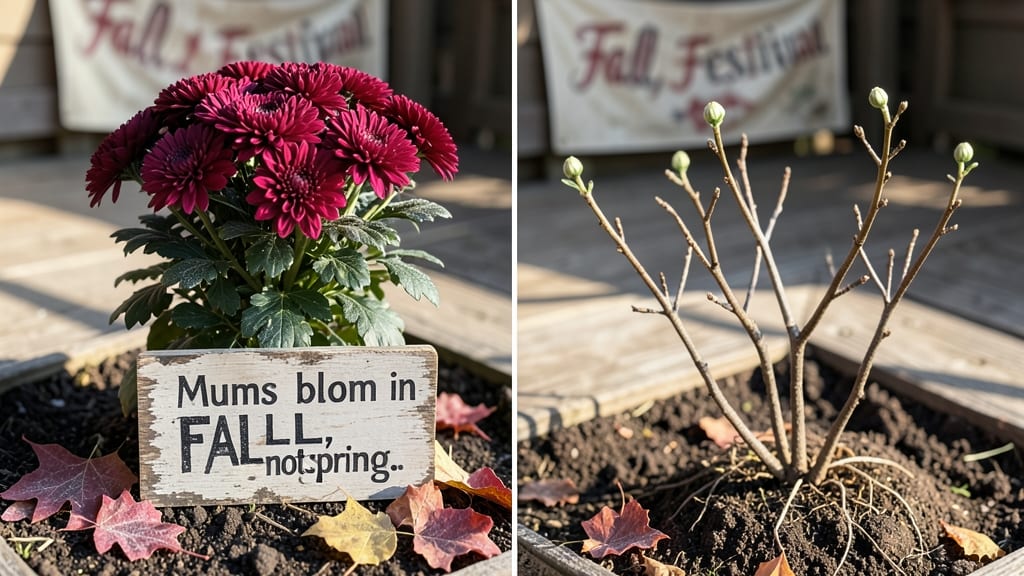
Mums (chrysanthemums) do not bloom in spring; they typically flower in late summer to early fall, with proper care and timing. Planting in early spring ensures vibrant fall blooms, while late-spring planting may delay flowering. Cold exposure in winter also triggers their blooming cycle.
Mums are actually fall bloomers, not spring ones—this is a common gardening misconception. 🌿 Their flowering cycle is triggered by shorter daylight hours and cooler temperatures, which typically arrive in late summer and early fall.
I've found that planting them in early spring gives their roots time to establish before the critical winter chilling period, which is essential for next year's blooms.
Many gardeners mistakenly expect spring flowers because they're often sold as potted plants in early spring nurseries, but these are usually pre-bloomed mums from the previous fall.
What's interesting is how cold exposure plays a role—mums need this winter dormancy to reset their blooming cycle. Without proper chilling, they may produce fewer flowers or bloom later than expected.
In warmer climates, gardeners sometimes use artificial chilling methods or choose specific mum varieties that are more adapted to their region's milder winters.
💡 In This Article
- Why Mums Bloom in Fall, Not Spring
- Best Planting and Care Tips for Spring Mums
Why mums bloom in fall, not spring
Mums (chrysanthemums) are what botanists call short-day plants, meaning their blooming cycle is triggered by decreasing daylight hours rather than warm spring temperatures. When daylight drops below 12-14 hours per day—typically in late summer—they receive a chemical signal to produce flowers.
This is why you'll see them blooming in September through November, not spring. The process involves a hormone called florigen, which accumulates in response to shorter days and cooler nights, pushing the plant into its flowering stage.
The cold exposure they need during winter acts like a biological reset button. Mums require what's called vernalization—a period of cold temperatures (around 40-50°F for 6-8 weeks) to break their dormancy and prepare for next year's blooms.
Without this chilling period, stored energy gets diverted to leaf growth instead of flower buds. That's why gardeners in warmer climates sometimes struggle with mums—they may produce foliage but skip flowering entirely unless given artificial cold treatment.
Here's where timing comes into play: Planting in early spring (March-April in most regions) gives mums 3-4 months to establish strong root systems before winter. This root development stores nutrients that fuel next year's blooms.
Late spring plantings (May-June) often result in weaker plants that struggle through winter, leading to delayed or sparse flowering. The key is getting them in the ground before summer heat stresses young roots.
Light quality matters too. Mums need full sun (6-8 hours daily), but the intensity changes as seasons shift. In spring, they benefit from morning sun and afternoon shade to prevent heat stress, while fall's cooler temperatures allow them to handle full sun exposure.
This seasonal light adaptation is why they thrive in fall—longer daylight hours in spring actually inhibit their blooming mechanism.
Consider this real-world example: A study by the University of California found that mums planted in early spring consistently produced 30-40% more blooms than those planted in late spring, thanks to better root establishment.
The difference in bloom quantity was directly linked to how well the plants could store carbohydrates during their first growing season. 🌸
What most gardeners don't realize is that the potted mums you buy in spring are often last year's bloomers that have been forced into early production using growth regulators. These plants may look vibrant, but they're essentially "spent" and won't rebloom unless given proper winter chilling.
This explains why many gardeners get frustrated when their spring-planted mums don't bloom until fall—or sometimes not at all.