
Blooming
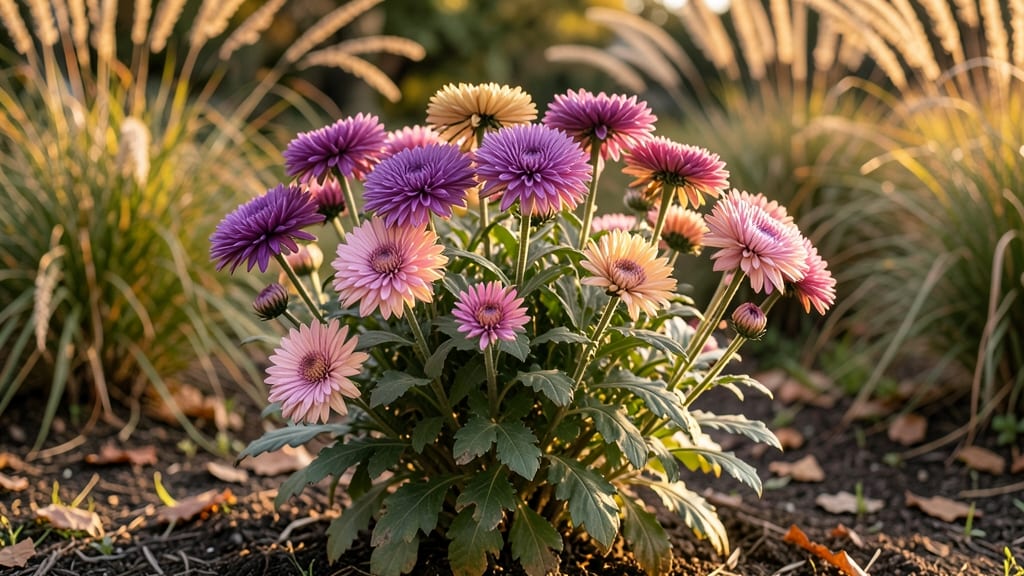
Mums (chrysanthemums) don’t typically bloom in summer—they thrive in cooler weather, with most varieties flowering in fall and early winter when days shorten and temperatures drop below 75°F. However, late-summer-blooming types exist that can produce flowers earlier with proper care and cooler climates.
Most garden mums wait for autumn’s chill to burst into color, but a few heat-tolerant varieties can bloom earlier if given the right conditions. 🌸 The key is selecting late-summer reblooming types like 'Autumn Joy' or 'Mammoth,' which respond to cooler nights and proper pruning.
I’ve found that consistent watering and balanced fertilizer (10-10-10) help extend their summer display—just avoid overwatering, which can stress the plants before their big fall show.
For container gardeners, choosing compact varieties like 'Bonanza' or 'Penny' can push blooming into late summer, especially in cooler regions. The secret lies in timing: prune back spent blooms in early summer to encourage new growth, then provide afternoon shade in hot climates.
This two-step approach tricks mums into thinking summer’s almost over, coaxing earlier flowers.
💡 In This Article
- How Cool Temperatures Trigger Mum Blooming
- Late-Summer Mum Varieties and Care Tips
How cool temperatures trigger mum blooming
Mums (chrysanthemums) rely on a botanical process called vernalization, where exposure to prolonged cool temperatures (typically 50-60°F for 4-8 weeks) signals the plant to shift from vegetative growth to flowering.
This chilling period is critical because it resets the plant's internal clock, allowing it to respond to shorter daylight hours—a phenomenon called photoperiodism. When days shorten below 12-14 hours of light, mums produce a hormone called florigen, which triggers bud formation.
The magic happens when nighttime temperatures drop below 75°F, creating a temperature differential that accelerates blooming. For example, in USDA Zone 5 (where winters are cold), mums often bloom in September-October because the soil stays cool while days grow shorter.
In warmer climates like Zone 9, where temperatures rarely dip below 70°F, mums may wait until November-December unless you provide artificial chilling. This explains why gardeners in cooler regions sometimes see summer blooms—it’s not the season, but the temperature cues that matter most.
Here’s what’s actually happening at the cellular level: Cold temperatures slow down the plant’s metabolic rate, allowing it to conserve energy and focus on flower production rather than leaf growth.
The plant’s meristem (growth tissue) becomes sensitive to light duration, and when days shorten, it switches from producing leaves to forming buds. This is why mums in containers often bloom later—their roots warm up faster in pots, delaying the temperature signal. 🌡️
Regional climate plays a huge role too. In the Pacific Northwest, where summers are mild (70-75°F) and humidity is high, mums might start blooming in late August because the cooler nights provide the necessary temperature contrast.
Meanwhile, in the hot, dry Southwest, mums typically wait until October unless you provide afternoon shade to protect them from heat stress. The key takeaway? It’s not just about summer or fall—it’s about the temperature difference between day and night that triggers blooming.
For gardeners eager to see summer blooms, understanding this process is crucial. If you live in a hot climate, you can encourage earlier blooming by providing afternoon shade and keeping soil temperatures cool with mulch.
Some varieties, like 'Bright Lights' or 'Penny,' are bred to be more heat-tolerant, making them better candidates for summer displays. The science shows that even a 10°F drop in nighttime temperatures can push blooming forward by 2-3 weeks.
What most people don’t realize is that mums can actually rebloom in summer if given the right conditions. This happens when you prune back the plant in early June to remove spent blooms, then provide consistent care.
The plant interprets this as a "reset," and with cooler nights, it may produce a second flush of flowers by late July or August. This is why many garden centers sell "summer-blooming" mums—they’re often reblooming varieties that have been carefully managed.