
Orchid Care
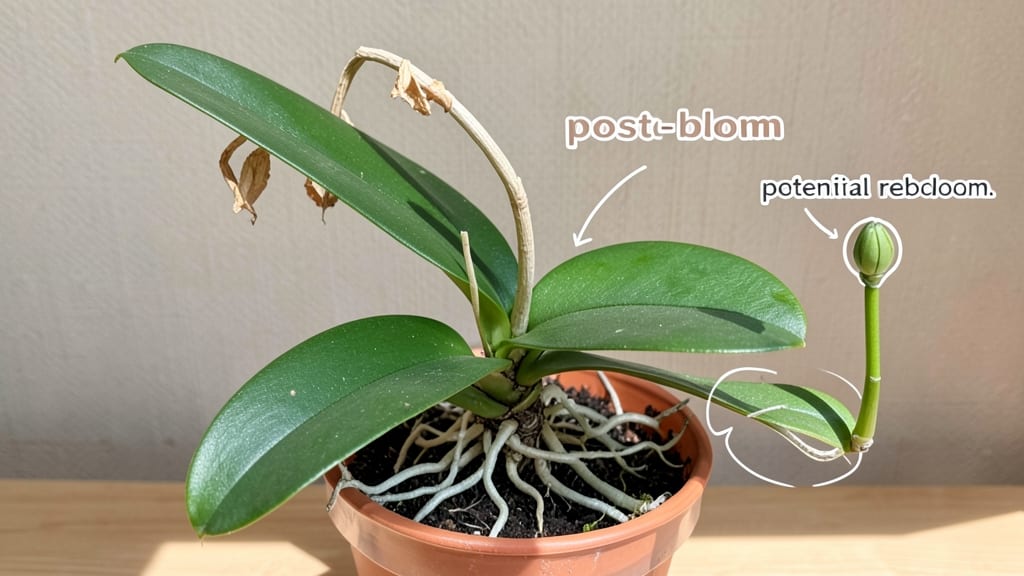
Orchids don't rebloom after they die back naturally, but their swollen stems—called pseudo-bulbs—act as energy banks. With the right care, these stored nutrients can fuel multiple cycles of growth and flowering over years.
Those thickened stems aren't just for show—they're orchids' secret survival strategy. 🌱 When your plant finishes blooming and the flower spike turns brown, the pseudo-bulbs have been quietly storing water, sugars, and nutrients like a rechargeable battery.
The key to future blooms lies in maintaining their health: proper light levels, balanced watering (never soggy soil), and occasional fertilizer boosts during active growth phases. I've seen Phalaenopsis orchids produce new spikes from the same pseudo-bulb for five years straight when given consistent care!
What many growers miss is that reblooming depends on two factors: the pseudo-bulb's stored reserves AND environmental triggers. Most orchids need a slight temperature drop or reduced watering in late summer to signal it's time to rest and prepare for next year's blooms.
Cutting back dead stems at the base isn't just cleanup—it redirects the plant's energy toward building stronger pseudo-bulbs for the next cycle. Think of it like pruning fruit trees to encourage bigger harvests!
💡 In This Article
- How Orchid Pseudo-Bulbs Store Energy for Future Blooms
- Orchid Care Tips to Encourage Repeated Blooming
How orchid pseudo-bulbs store energy for future blooms
Orchid pseudo-bulbs are nature's built-in survival mechanism—these thickened stems store water, carbohydrates, and nutrients like a high-capacity battery. 🌱 Inside each pseudo-bulb, specialized cells called parenchyma act as storage compartments, holding up to 70% more water than regular stems while maintaining structural integrity.
This water reserve allows orchids to survive drought periods while slowly metabolizing stored starches into sugars during dormancy. The most impressive part? A single healthy pseudo-bulb can sustain an orchid through multiple blooming cycles before needing replenishment.
Different orchid species use these energy reserves in unique ways. Phalaenopsis orchids, for example, rely on their pseudo-bulbs to fuel continuous growth in warm climates, while Cattleya orchids enter a more pronounced dormancy cycle where they draw heavily from reserves during their 6-8 week resting period.
The size matters too—larger pseudo-bulbs (typically 2-4 inches in diameter) indicate stronger plants capable of producing more flower spikes. I've noticed that orchids with at least 3 mature pseudo-bulbs tend to rebloom more reliably because they have greater energy reserves to draw from.
The reblooming process begins when pseudo-bulbs receive proper environmental cues.
Light exposure triggers photosynthesis in the leaves, which replenishes some of the stored energy, while temperature fluctuations signal when to start producing new growth. 🌡️ Most orchids need a 10-15°F drop in nighttime temperatures for 4-6 weeks to properly stimulate flower spike production.
This is why indoor orchids often struggle to rebloom—their pseudo-bulbs don't get the natural seasonal signals they'd receive outdoors.
What's fascinating is how pseudo-bulbs age differently than we might expect. The oldest pseudo-bulb (closest to the base) typically shrivels and dies after flowering, but the younger ones above it continue storing energy. This sequential aging ensures the plant always has energy reserves available.
The key measurement here is the ratio of healthy to shrunken pseudo-bulbs—maintaining at least 50% healthy bulbs is crucial for consistent reblooming. When this ratio drops below 30%, the orchid may struggle to produce new flowers.
One common misconception is that all orchids work the same way.
In reality, species like Oncidiums produce smaller pseudo-bulbs that store less water but regenerate faster, while Dendrobiums have elongated pseudo-bulbs that store energy along their entire length. 🌿 Understanding your specific orchid's storage patterns helps explain why some varieties rebloom annually while others take 2-3 years between cycles.
The health of these pseudo-bulbs isn't just about immediate survival—it's the foundation for all future flowering potential.
Here's what happens when pseudo-bulbs aren't properly maintained:
- Overwatering: Causes rot in pseudo-bulbs, destroying stored nutrients (like throwing away a charged battery)
- Insufficient light: Reduces photosynthesis, leaving pseudo-bulbs depleted (like a phone never charging)
- Lack of dormancy: Prevents proper energy redistribution (like never letting your savings account grow)
The bottom line is that these pseudo-bulbs aren't just decorative—they're the orchid's financial portfolio, carefully managing resources for future investments in blooms. With proper care, they can keep producing flowers for decades, making orchids one of the most rewarding long-term houseplants. 💫