
Blooming
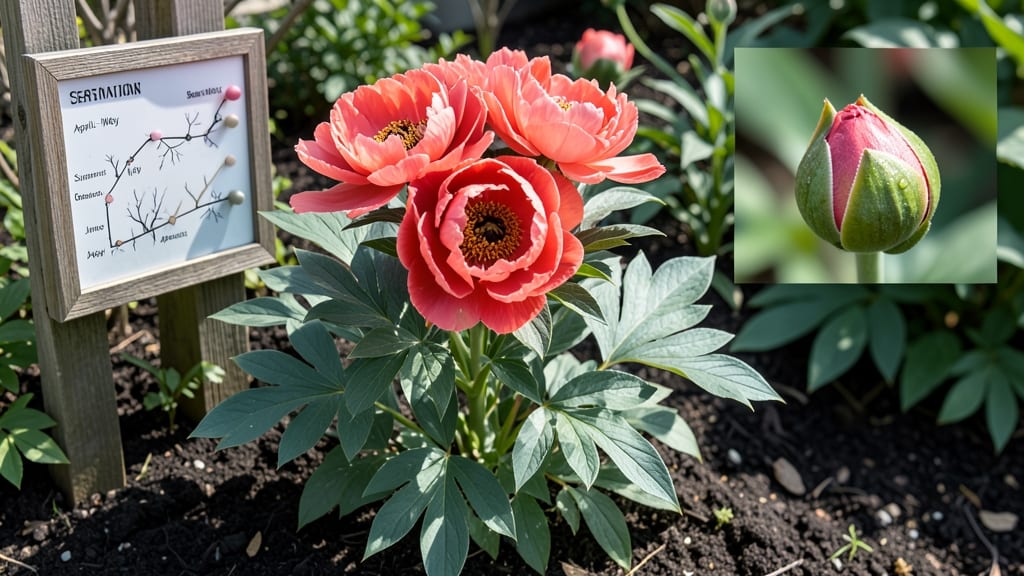
Peonies don't bloom all summer—their flowers open just once per season for 4 to 10 days each, with most varieties flowering between late spring and early summer (May to June). Late-blooming types may extend into July, while repeat-blooming peonies occasionally produce smaller flowers later in the season.
Peonies follow a strict seasonal rhythm tied to daylight and temperature shifts. 🌸 The majority of herbaceous peonies (like the classic Paeonia lactiflora) bloom in a single flush during late spring, while tree peonies (Paeonia suffruticosa) often bloom slightly later.
What makes this fascinating is how climate zones affect timing—northern gardens may see blooms in May, while southern regions might delay until June. Repeat-blooming varieties exist, but they typically produce smaller, less showy flowers in late summer, never matching their spring display.
For gardeners hoping to stretch the bloom season, the key lies in proper care. Pruning spent blooms promptly and maintaining balanced soil nutrients can encourage minimal reblooming, though it's never reliable.
Varieties like Sarah Bernhardt or Duchesse de Nemours sometimes surprise with sporadic late-season flowers, but don't expect a full summer display. The real magic happens in that brief spring window when peonies transform gardens into fragrant clouds of color.
💡 In This Article
- Peony Bloom Cycles by Variety: When and Why They Flower
- Extending Peony Blooms: Pruning, Care, and Late-Season Varieties
Peony bloom cycles by variety: when and why they flower
Peonies rely on a biological process called vernalization—a cold period that triggers their spring blooming cycle. Most varieties need 60-90 days of temperatures below 40°F (4°C) during winter to set flower buds for the following season.
This explains why peonies planted in warm climates (USDA zones 8-9) may bloom later or produce fewer flowers—they often miss adequate cold exposure.
Herbaceous peonies like Paeonia lactiflora typically bloom earliest (late April to May in cooler regions), while tree peonies (Paeonia suffruticosa) often follow a week or two later, thriving in zones 4-8 with their woody stems.
The flower's lifespan is governed by its genetic programming and environmental conditions. A single peony bloom lasts 4-10 days, with the most vibrant color and fragrance appearing during the first 3 days.
After that, petals begin to brown and fall, a process accelerated by high temperatures above 85°F (29°C) or strong winds. The reason most peonies bloom just once per season lies in their energy allocation—producing flowers requires significant resources, leaving little for subsequent blooms.
However, repeat-blooming varieties (like Sarah Bernhardt) develop smaller buds later in summer by redirecting some energy after their main flush.
Climate plays a dramatic role in bloom timing. In the Pacific Northwest, peonies often open in late May to early June due to cooler springs, while Southern gardens may see blooms as late as June to early July.
The USDA hardiness zone directly affects this: Zone 3 peonies might bloom 2-3 weeks earlier than Zone 7 counterparts. Even within the same zone, microclimates matter—peonies in sheltered garden spots bloom slightly later than those in exposed areas due to delayed warming.
This explains why some gardeners in the same region report different bloom windows for identical varieties.
What most gardeners don't realize is that peony blooms are highly sensitive to day length. As daylight hours increase past 14 hours (typically in June), most varieties enter a natural dormancy period, halting further blooming.
This photoperiod response is why you'll rarely see peonies flowering in August—even repeat-bloomers can't overcome this biological clock. The exception is intersectional hybrids, which combine traits from herbaceous and tree peonies to produce occasional late-season blooms, though these are typically 25-50% smaller than spring flowers.
For those hoping to extend the bloom season, understanding these triggers helps set realistic expectations.
While you can't force peonies to bloom all summer, proper care—like removing spent blooms promptly to prevent seed formation and maintaining well-draining soil with pH 6.5-7.0—can maximize the number of buds set for next year.
The most reliable way to enjoy peonies through summer is to plant multiple varieties with staggered bloom times, creating a cascading effect from May through July. This natural progression is what makes peony gardens so magical during their brief but spectacular display.
Consider this: a single peony plant can produce 50-100 buds in its prime, but only 10-30% typically open in the first flush. The rest remain dormant until the following year, demonstrating nature's efficient resource allocation.
This is why gardeners often see peonies "bloom all summer" in photos—it's actually a carefully curated sequence of varieties timed to overlap, not a single plant's prolonged flowering. 🌸