
Blooming
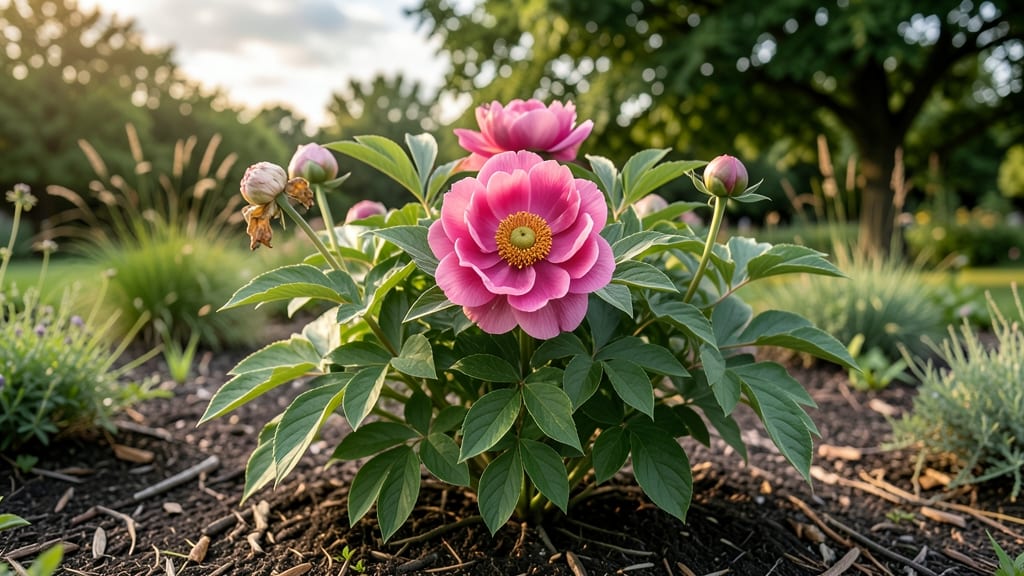
Most peonies do only bloom once per season, typically in late spring, because they allocate their energy to a single spectacular display rather than multiple smaller blooms. While traditional varieties follow this pattern, some modern hybrids and tree peonies can produce a second flush of flowers under ideal growing conditions.
Peonies prioritize root and foliage growth over repeated flowering, which is why their single bloom cycle is so dramatic. 🌸 This biological focus on energy conservation explains why even well-cared-for peonies often produce just one burst of flowers each year.
The two exceptions—Itoh hybrids and tree peonies—have genetic adaptations that allow for a second bloom, but they still require specific growing conditions like consistent moisture and balanced nutrients to encourage reblooming.
Understanding this natural cycle helps gardeners set realistic expectations while still maximizing their peony's potential. For instance, pruning spent blooms properly and providing rich, well-draining soil can sometimes coax a second bloom from these exceptions, but it's never guaranteed. The key is working with nature rather than against it.
💡 In This Article
- The Science Behind Peonies' Single-Bloom Cycle
- How to Encourage Reblooming in Peonies (And When It’s Impossible)
The science behind peonies' single-bloom cycle
Peonies follow a strict single-bloom cycle because their biological systems prioritize root and foliage development over repeated flowering. During dormancy in winter, these perennials store energy in their thick, tuberous roots—similar to how tulips or daffodils operate.
This stored energy fuels their dramatic late-spring bloom, which can produce 50-100 individual flowers per plant, depending on the variety. The trade-off? After this spectacular display, the plant redirects nearly all remaining energy toward strengthening its root system and building next year's foliage, leaving little for additional blooms.
The timing of this cycle is precisely regulated by photoperiodism—the plant's response to daylight length. Peonies detect shortening daylight in late summer, triggering a hormonal cascade that prepares them for dormancy.
This biological clock ensures they bloom when temperatures stabilize around 50-60°F and pollinators like bees are most active. 🌸 Traditional herbaceous peonies, which make up about 90% of cultivated varieties, have evolved this one-bloom strategy because it maximizes reproductive success through fewer, larger flowers that attract more pollinators than multiple smaller blooms would.
Compare this to reblooming varieties like Itoh hybrids, which combine herbaceous and tree peony genetics. These hybrids produce a second bloom in early fall because their genetic makeup includes traits from tree peonies, which naturally bloom on old wood (last year's growth) rather than just new shoots.
The key difference lies in their flower buds: while traditional peonies form all their buds in the previous growing season, rebloomers develop additional buds throughout the season, allowing for multiple flowering cycles.
Another critical factor is the peony's growth habit. Most varieties grow from a single crown, where all energy must be carefully allocated. When a peony blooms, it can divert up to 70% of its photosynthetic energy to flower production, leaving minimal resources for foliage maintenance or new bud formation.
This explains why even well-fertilized peonies often produce just one flush—unless they're one of the specialized reblooming types that have evolved to work around this energy limitation.
Consider this analogy: A peony's single bloom is like a supermodel's one-night-only runway show—all resources go into creating that perfect moment, rather than multiple smaller appearances.
The trade-off ensures each bloom is larger, more vibrant, and lasts longer (typically 7-10 days per flower), while the plant builds a stronger foundation for next year's performance.
The exceptions—like the Itoh hybrid 'Sarah Bernhardt'—demonstrate how plant breeding can tweak these natural cycles.
These hybrids produce a second bloom because their genetic makeup includes genes from tree peonies that allow for continuous bud formation, but even they require consistent moisture and balanced nutrients to maintain this energy-intensive habit. The science shows nature's preference for quality over quantity when it comes to flowering displays.