
Blooming
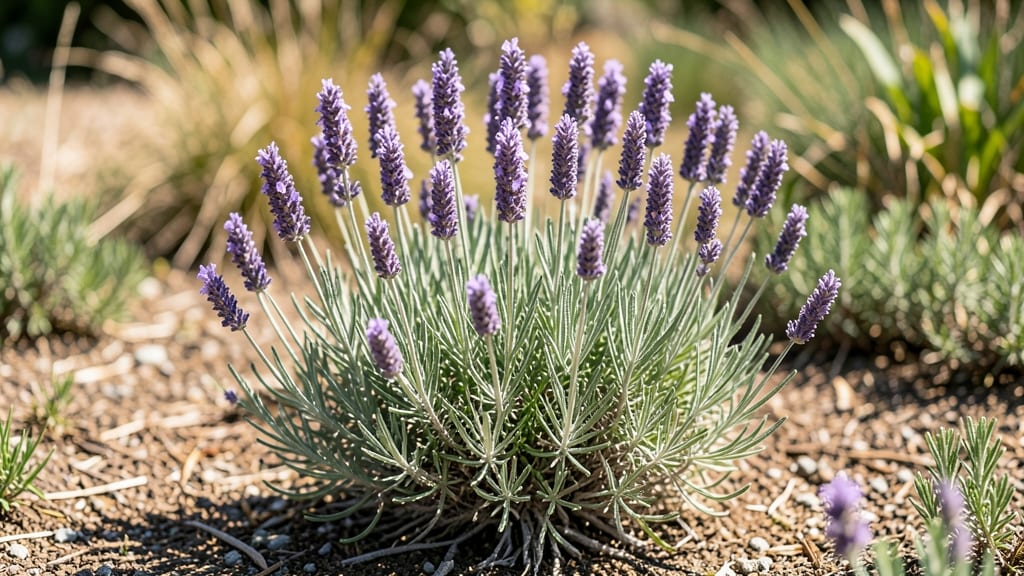
Lavender blooms all summer only under ideal conditions: most varieties produce a single flush of flowers in early summer, though some rebloom with proper pruning, heat tolerance, and consistent watering. Spanish lavender is the most reliable for extended blooming seasons.
Most lavender plants follow a natural cycle where they bloom just once in early summer, then enter dormancy. 🌸 However, certain varieties like Spanish lavender are bred to handle heat better and can produce multiple flower flushes if given the right care.
The key factors that influence this are pruning after the first bloom, maintaining well-draining soil, and avoiding overwatering—especially in hot climates where drought stress can trigger early dormancy. I've seen gardens where proper maintenance extended blooming periods by 4-6 weeks beyond the typical early-summer window.
What many gardeners don't realize is that lavender's reblooming ability depends heavily on photoperiodism—its response to daylight length. 🌞 Varieties like Provence lavender (a French type) often struggle in long summer days unless deadheaded regularly, while Spanish lavender adapts better to consistent heat.
The trade-off? Some extended-blooming varieties sacrifice slightly smaller flowers for longer seasons. For best results, I recommend testing different types in your climate zone—what works in dry Mediterranean regions may need adjustments for humid summers.
💡 In This Article
- Lavender Blooming Cycles Explained by Variety
- How to Extend Lavender Blooms Through Summer
Lavender blooming cycles explained by variety
Lavender's blooming patterns vary dramatically by variety, with English lavender typically producing just one 4-6 week flush of flowers in early summer.
This is because its natural cycle is tied to cooler spring temperatures and shorter daylight hours. 🌸 The buds form in response to temperature drops in late winter, and once they bloom, the plant shifts focus to seed production, signaling dormancy.
French lavender follows a similar pattern but often has slightly larger flowers—though it's less heat-tolerant, making extended summer blooms challenging in hot climates.
Spanish lavender stands out as the exception, thanks to its Mediterranean heritage. This variety thrives in consistent heat (85-95°F) and can produce 2-3 bloom cycles per season when properly cared for.
The secret lies in its genetic adaptation to drought and heat stress—it doesn't enter dormancy as quickly as other types. What's fascinating is how its stems remain woody and upright, supporting multiple flower spikes.
For example, 'Lavandula stoechas' varieties often rebloom in late summer if pruned correctly after the first flush.
The science behind this involves photoperiodism—the plant's response to daylight length. Most lavender varieties need 12-14 hours of daylight to trigger blooming, which happens naturally in spring. 🌞 However, Spanish lavender has a more flexible photoperiod response, allowing it to adapt to longer summer days.
This is why it's the top choice for gardeners in zones 7-10 who want continuous color. The trade-off? Its flowers are typically smaller (about 1/2 inch spikes) compared to English lavender's 2-3 inch stalks, but the volume makes up for it.
Heat waves and drought stress play critical roles in determining whether lavender will rebloom. When temperatures exceed 95°F for prolonged periods, most varieties go into survival mode, conserving water and halting flower production. This is why consistent watering—1 inch per week during dry spells—is crucial without over-saturating the soil.
I've noticed that mulching with gravel or pine needles helps maintain root-zone temperature stability, which can extend the blooming window by 3-4 weeks in hot climates.
Hybrid varieties like 'Grosso' or 'Hidcote' offer a middle ground, often producing partial reblooms if deadheaded regularly. The key is removing spent flowers before they form seed heads, which redirects the plant's energy toward new growth.
However, these hybrids typically require cooler evenings (below 75°F) to trigger secondary blooms, making them less reliable in consistently hot regions.
For gardeners in humid climates, the challenge is even greater—excess moisture can cause fungal issues that stress the plant. 🌧️ In these areas, I recommend planting lavender in raised beds with sandy, alkaline soil (pH 6.5-7.5) to mimic its natural Mediterranean habitat.
The combination of proper drainage and air circulation can make the difference between a single bloom and a prolonged display.