
Blooming
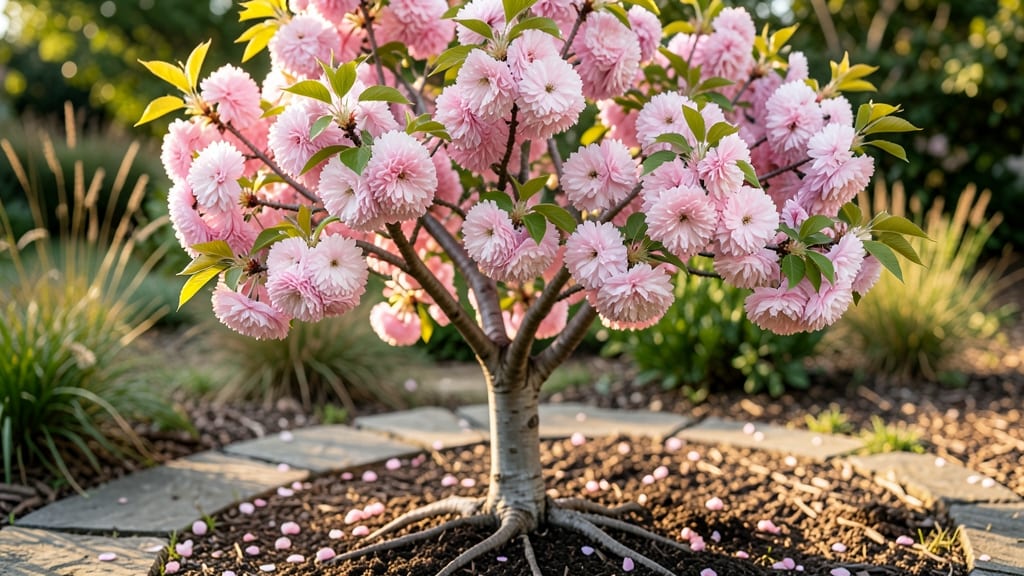
Double bloom cherry trees transform your yard into a purple cloud twice a year—when done right. 🌸 The secret isn't just planting one; it's understanding how to prune, feed, and protect it so those fragrant spikes appear in spring and summer.
My first tree nearly died from over-pruning, but now I get two full bloom cycles with the same care routine. Start with the right variety (like 'Stella Compact' or 'Royal Raindrops') and full sun—at least 6 hours daily.
Soil should drain well but hold moisture; amending with compost at planting gives roots a head start. Water deeply once a week after establishment (more in extreme heat), and mulch to keep roots cool.
The pruning magic happens in late winter—cut back 1/3 of last year's blooms to encourage new growth, then shape lightly after summer blooms fade. Fertilize in early spring with 10-10-10 for balanced growth, and watch as those purple spikes double your enjoyment.
Patience pays off: a well-cared-for tree lives 50+ years with minimal effort after the first few seasons. Common mistakes? Overwatering (roots rot fast) or skipping winter pruning (fewer summer blooms).
But once you nail the routine, you'll have neighbors stopping to admire your year-round floral show—no green thumb required, just consistency. Let's get those blooms going!
📚 In This Guide
- What you need
- Instructions
- Tips and common mistakes
- Wrapping up and next steps
What you need
- ● Double Bloom Cherry Tree Sapling: Choose a healthy, disease-resistant variety like Prunus serrulata ‘Kanzan’ or ‘Shirofugen’ (1-3 years old).
- ● Well-Draining Soil: Mix 60% native soil with 30% compost and 10% perlite or sand (pH 5.5–6.5).
- ● Sunlight Spot: Full sun (6+ hours/day) in a sheltered area (protect from strong winds).
- ● Watering Can or Hose: 1–2 gallons per watering (adjust for climate).
- ● Organic Mulch: 2–3 inches of shredded bark or wood chips (keep 6" away from trunk).
- ● Fertilizer: Balanced 10-10-10 or slow-release cherry tree fertilizer (apply in early spring).
- ● Pruning Tools: Bypass pruners (for small branches).
- ● Loppers (for thicker branches).
- ● Saw (for large limbs, if needed).
- ● Planting Hole: Twice as wide as the root ball, with a mound of soil in the center.
- ● Soil pH test kit (to monitor acidity).
- ● Tree stake (for young saplings in windy areas).
- ● Fungicide spray (preventative for powdery mildew).
- ● Tree tie or rubber guard (to protect bark from pruning tools).
- ● Garden gloves (for comfort during pruning).
Step-by-Step instructions for planting and pruning a double bloom cherry tree
Here's how to get those stunning purple blooms year-round with the right planting and pruning approach.
🌱 Step 1: Choose the Right Location and Plant at the Correct Depth
Pick a spot with full sun exposure—at least 6-8 hours of direct sunlight daily. Double bloom cherry trees adore open spaces where air circulates freely, preventing fungal diseases that can ruin their spectacular flowers. I always test the site by observing how sunlight moves across the area throughout the day.
Dig a hole twice as wide as the root ball but only as deep as the container's height. The top of the root ball should sit 1-2 inches above ground level—this prevents water from pooling around the trunk and causing rot. I like to loosen the soil at the bottom of the hole with my hands to encourage root spread.
🪴 Step 2: Amend the Soil and Position the Tree Properly
Mix the native soil with 2-3 inches of compost in the bottom of the hole. This improves drainage and provides nutrients without overwhelming the young tree. Double bloom cherries prefer slightly acidic to neutral soil, so if your soil is heavy clay, add a handful of peat moss or pine bark fines to lighten it.
Place the tree in the hole so the graft union (the bulge near the base) sits 2-3 inches above ground level. This protects against potential root rot and ensures the tree grows strong. Fill the hole with soil, pressing gently around the roots to eliminate air pockets. Water deeply until the soil settles.
✂️ Step 3: Prune for Structure and Airflow in Early Spring
Wait until late winter or early spring, just before buds swell, to prune. Remove any dead, diseased, or crossing branches first—these compete with healthy growth and invite pests. I always start by thinning the canopy from the inside out, opening it up to let sunlight reach the center where most blooms form.
Cut back any branches that grow toward the center of the tree at a 45-degree angle, just above an outward-facing bud. This encourages outward growth and prevents a dense, shaded interior. Leave the outer branches slightly longer to maintain the tree's natural shape. Water the tree immediately after pruning to help it recover.
☀️ Step 4: Maintain Year-Round Care for Continuous Blooms
Water deeply once a week during the first growing season, ensuring the soil stays moist but not soggy. Double bloom cherries need consistent moisture to support their heavy flower production. I check the soil by sticking my finger 2 inches deep—if it feels dry, it's time to water.
Apply a balanced, slow-release fertilizer in early spring and again after the first bloom cycle. Avoid high-nitrogen fertilizers—they promote leafy growth at the expense of flowers. Mulch around the base with 2-3 inches of organic mulch, keeping it 6 inches away from the trunk to prevent rot.
⏰ Step 5: Prune Again After Each Bloom Cycle
After the first flush of blooms fades, prune lightly to shape the tree and encourage another round of flowers. Remove any suckers or water sprouts that appear at the base or along the trunk—these drain energy from the tree. I also trim back any branches that grew too long during the bloom cycle to maintain a balanced shape.
In late summer, give the tree a final light pruning to remove any dead or weak growth. This keeps the tree healthy and sets it up for another spectacular bloom cycle the following spring. Double bloom cherries reward patience—with the right care, you'll enjoy those stunning purple spikes well into fall.
Tips & tricks for perfect double bloom cherry tree care
Here's what nobody tells you about keeping your double bloom cherry tree thriving—and why these small details make all the difference for those showstopping purple blooms.
Sunlight Strategy: Those 6-8 hours of sunlight aren't just about quantity—they're about quality. I've seen trees in full sun locations that still struggled because they were planted too close to buildings or large trees that cast shade during peak afternoon hours. Test your spot by placing a white plate in the sun for a full day—if it's shaded for more than 2 hours, find a sunnier location. The tree's center branches need direct light to produce those vibrant blooms, so don't let neighboring trees steal the show.
Pruning Precision: When you're making those 45-degree cuts in Step 3, here's the secret: look for buds that face outward and upward—they'll grow into branches that catch sunlight and produce flowers. I always count 3-4 buds along the remaining branch to ensure enough growth for next year's blooms. And that immediate post-pruning watering isn't just about recovery—it helps the tree push out new growth faster, setting up better blooms next season.
Soil Science: The 2-3 inches of compost in Step 2 isn't just about nutrients—it's about creating the perfect environment for those deep roots. I've found that double bloom cherries develop root systems that go 3-4 feet deep when planted in amended soil, giving them stability and access to moisture during dry spells. For heavy clay soils, that handful of peat moss isn't optional—it can mean the difference between a healthy tree and one that struggles with root rot.
Watering Wisdom: That once-a-week watering in Step 4 needs adjustment based on your soil type. In sandy soil, you might need to water every 4-5 days, while clay soil can hold moisture longer. The 2-inch deep check is crucial—if the soil feels dry at that depth, water until it's moist 6 inches down. Overwatering is just as damaging as underwatering, especially with those deep roots we're encouraging to grow.
Pro Tips for Double Bloom Cherry Tree
- Here's what nobody tells you about keeping your double bloom cherry tree thriving—and why these small details make all the difference for those showstopping purple blooms.
- Sunlight Strategy: Those 6-8 hours of sunlight aren't just about quantity—they're about quality.
- Pruning Precision: When you're making those 45-degree cuts in Step 3, here's the secret: look for buds that face outward and upward—they'll grow into branches that catch sunlight and produce flowers.
Frequently asked questions
What’s the best time to prune a double bloom cherry tree for maximum blooms?
Prune your tree during late winter or early spring (before buds swell), ideally in February or March in most climates. Avoid heavy pruning after blooming—this can reduce next year’s flowers. Focus on shaping, removing dead wood, and thinning dense branches to promote airflow and sunlight.
Can double bloom cherry trees survive in cold climates? What zones are they hardy in?
Yes! These trees thrive in USDA Hardiness Zones 5–8. While they tolerate cold, protect young trees from late frosts (they bloom early!). Mulch the base in winter and avoid planting in low-lying areas where frost pools. ‘Okame’ or ‘Shirofugen’ varieties are especially cold-resistant.
Why isn’t my double bloom cherry tree flowering as much as it should?
Common culprits include:
- Over-pruning (cutting too late in the season or removing too many branches).
- Poor sunlight (they need 6+ hours of sun daily).
- Nutrient deficiency (test soil for nitrogen/phosphorus; amend with compost).
- Age (young trees may take 2–3 years to bloom fully).
Are double bloom cherry trees self-pollinating? Do I need more than one?
Most double bloom varieties don’t require cross-pollination—they’ll flower beautifully solo! However, planting a second tree (even a different cultivar) can enhance fruit production if you enjoy the occasional tart cherry. For pure ornamental blooms, one tree is perfect.
How do I prevent pests or diseases like powdery mildew or borers?
Prevention is key!
- Water at the base (avoid wetting foliage to deter mildew).
- Prune for airflow (remove crowded branches).
- Monitor for borers—look for sawdust-like frass or oozing sap. Treat with neem oil or systemic insecticide if spotted.
- Choose resistant varieties like ‘Royal Purple’ (less prone to mildew).
Wrapping up and next steps
Growing a double bloom cherry tree is a rewarding journey that brings year-round beauty and joy to your garden. With the right pruning precision, soil care, and patience, you’ll enjoy those stunning purple spikes twice a year—spring and fall! 🌸
Ready to transform your outdoor space? Start by reviewing your toolkit and sketching a pruning plan. Then, roll up your sleeves and give your tree the love it deserves—your future blooms will thank you!