
Blooming
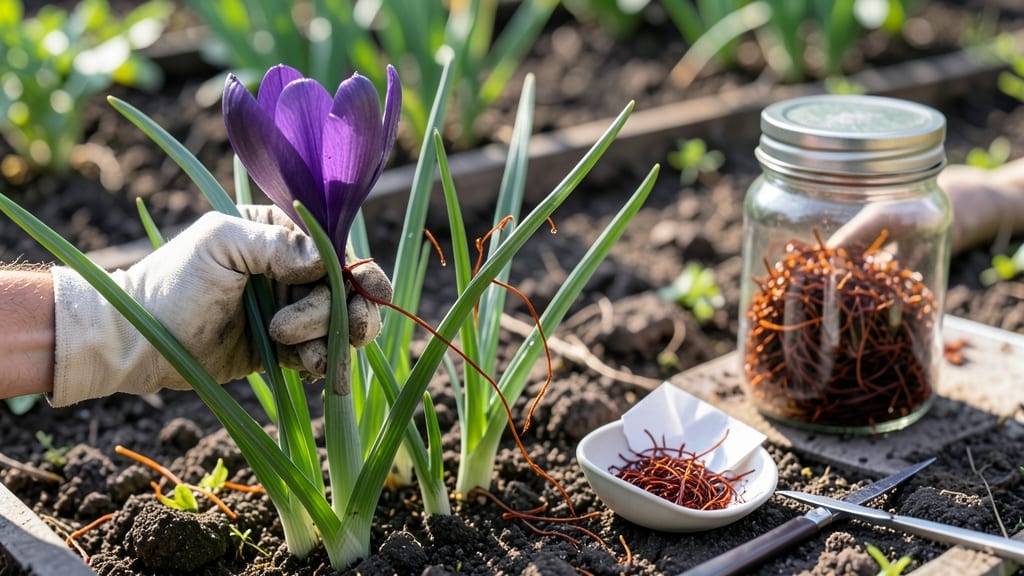
Blooming saffron threads starts with patience and the right timing—those delicate purple blooms only appear after months of dormancy. 🌸 I’ve grown saffron for years, and the key is mimicking its Mediterranean climate: cool winters, hot summers, and absolutely zero interference during its 9-month sleep.
Most gardeners quit here, but the payoff is worth it—just one plant yields enough threads for 50+ recipes.
The secret lies in soil and sunlight: well-draining, sandy loam with full sun (6+ hours daily) is non-negotiable. Plant corms in early fall, 3-4 inches deep, and water lightly until spring. Overwatering now is the fastest way to rot them before they even bloom.
Once established, saffron thrives on neglect—just pull weeds and wait for those signature crocus spikes to emerge in late autumn.
When the time comes, you’ll know it’s harvest day: the deep purple blooms open just before dawn, revealing the three crimson threads per flower. Snip them carefully (never pull—they’ll break), then dry them in a dark, airy space.
A single pound of dried saffron can cost $1,000+ at markets, so growing your own turns every harvest into a goldmine. The aroma alone—warm, honeyed, with a hint of hay—is worth the effort.
Here’s the catch: saffron needs a cold snap to trigger blooming, so zones 6-8 are ideal. If you’re in warmer climates, mimic winter with a fridge trick (6 weeks at 40°F). And yes, squirrels and voles will try to dig up your corms—bury them deeper or use hardware cloth.
The first harvest might take 2-3 years, but once it blooms? You’ll never buy saffron again.
📚 In This Guide
- What you need
- Instructions
- Tips and common mistakes
- Wrapping up and next steps
What you need
- ● Saffron threads: 1/4 to 1/2 teaspoon (about 0.3–0.6 grams)—high-quality, pure saffron (look for deep red stigmas with no yellow styles).
- ● Warm liquid: 2–4 tablespoons of water, milk, broth, or oil (depending on your recipe). Temperature: 160–180°F (70–80°C)—just warm enough to steam slightly but not boiling.
- ● Small bowl or cup (for blooming).
- ● Fine-mesh strainer or cheesecloth (to filter out threads after blooming).
- ● Whisk or spoon (for gentle stirring).
- ● Timer (saffron blooms in just 5–10 minutes—don’t overdo it!).
- ○ Optional: Pinch of sugar or salt (enhances flavor if blooming in water).
- ○ Optional: Food processor or mortar & pestle (for crushing threads into a powder after blooming, if desired).
How to bloom saffron threads for maximum flavor
Here's the simple method I use to release saffron's vibrant color and deep aroma every time.
🌿 Step 1: Prepare the Saffron Threads
Start with ¼ teaspoon of saffron threads—that's about 4-5 threads for 4 servings. Remove the threads from their container and place them on a clean, dry plate or small bowl. Avoid touching them directly with your fingers as their delicate filaments can break easily.
I like to separate the threads slightly with a clean toothpick to prevent clumping. This ensures each filament blooms evenly. If your saffron comes in a glass vial, gently tap the vial to dislodge any threads stuck to the sides before transferring them.
💧 Step 2: Bloom in Warm Liquid
Pour ¼ cup of warm water (around 160°F) over the threads. The water should be hot enough to open the filaments but not boiling—boiling water will destroy their delicate flavor and color. I use a small saucepan or microwave-safe cup to heat the water just until it steams gently.
Let the threads soak for 5-10 minutes until the liquid turns a beautiful golden hue. You'll see the filaments unfurl completely and release their vibrant color. Stir gently once or twice during this time to ensure even blooming. If you're short on time, 5 minutes will still give you good results, but 10 minutes maximizes flavor extraction.
☀️ Step 3: Infuse Into Your Dish
After blooming, strain the golden liquid through a fine-mesh sieve or cheesecloth into your recipe. I like to press the threads lightly with a spoon to extract every last drop of flavor—don't worry, the threads will dissolve completely when cooked. Discard the spent threads unless you're using them for garnish.
Add the infused liquid to your dish during the last 5-10 minutes of cooking to preserve its delicate aroma. Saffron works beautifully in risottos, paellas, soups, and even desserts. For maximum impact, use the bloomed saffron in warm dishes where its aroma can fully develop.
⏰ Step 4: Store for Future Use
If you have leftover bloomed saffron liquid, store it in an airtight container in the refrigerator for up to 3 days. For longer storage, freeze the liquid in ice cube trays—each cube contains enough saffron for one serving. When ready to use, simply add a cube to your dish and let it melt during cooking.
For whole saffron threads, keep them in their original container in a cool, dark place. Properly stored, saffron will maintain its potency for 1-2 years. I like to label my saffron container with the purchase date to track freshness—older saffron loses its vibrant color and complex flavor over time.
Tips & tricks for perfect saffron infusion
These little-known details make all the difference when working with saffron—trust me, your dishes will thank you.
Handle with Care: Saffron threads are delicate, so avoid crushing them when separating. I learned this the hard way after ruining a batch by handling them too roughly. Use a clean toothpick to gently tease them apart—this prevents clumping and ensures each filament blooms evenly. If your saffron comes in a glass vial, give it a gentle tap first to release any threads stuck to the sides.
Temperature Matters: The 160°F water temperature is crucial—too hot and you'll destroy the delicate compounds that give saffron its signature flavor and color. I use a microwave-safe cup and heat the water until it just steams gently. A thermometer helps, but you can also test by touching the water with your wrist: it should feel warm but not scalding. If you don't have a thermometer, wait until small bubbles form around the edges before pouring over the threads.
Blooming Time Secret: The full 5-10 minutes blooming time is where the magic happens. While 5 minutes works in a pinch, the extra 5 minutes extracts significantly more flavor and color. I set a timer and stir gently once halfway through to ensure even saturation. For maximum impact, especially in dishes like paella or risotto, don't rush this step—patience here pays off in vibrant color and complex aroma.
Storage Wisdom: Once bloomed, store the golden liquid in an airtight container in the fridge for up to 3 days—but here's the trick: press a piece of plastic wrap directly onto the surface before sealing the container. This creates a barrier that prevents oxidation and keeps that beautiful golden hue. For longer storage, freeze in ice cube trays—each cube contains just the right amount for one serving, ready to melt directly into your dish.
Pro Tips for Bloom Saffron Threads
- These little-known details make all the difference when working with saffron—trust me, your dishes will thank you.
- Handle with Care: Saffron threads are delicate, so avoid crushing them when separating.
- Temperature Matters: The 160°F water temperature is crucial—too hot and you'll destroy the delicate compounds that give saffron its signature flavor and color.
Frequently asked questions
Got questions about blooming saffron? You’re not alone!
Here are answers to the most common queries—from timing to troubleshooting—so you can extract every drop of flavor from your threads.
How long do I need to bloom saffron threads?
For maximum flavor, bloom saffron threads for 10–15 minutes in warm (not boiling) water. This releases their vibrant color and aromatic compounds. If you’re short on time, a quick 5-minute soak still works but may be less potent. Pro tip: Use a small jar or cup—this concentrates the liquid for better infusion!
Can I bloom saffron ahead of time and store it?
Yes! Bloom your saffron in 1–2 tablespoons of warm water and store it in the fridge for up to 3–4 days. Stir before using to redistribute the flavor. For longer storage, freeze the bloomed liquid in ice cube trays—just thaw before adding to dishes. Label it! Saffron water looks like golden tea!
What if my bloomed saffron water looks weak or pale?
Pale saffron water often means low-quality threads or insufficient blooming time. Try these fixes:
- Use more threads: 1 teaspoon of high-quality saffron yields ~1 cup of water.
- Bloom longer: Extend to 20 minutes in warm water.
- Check heat: Water should be lukewarm (100–120°F)—hot water can destroy flavors.
Can I use bloomed saffron in cold dishes like salads or cocktails?
Bloomed saffron adds depth to cold dishes, but adjust the ratio. For salads, use ½ teaspoon of bloomed saffron per 2 cups of dressing. In cocktails, add 1–2 teaspoons to sweet or savory drinks (like a saffron margarita or gin spritz). Strain carefully to avoid sediment—use a fine-mesh sieve or coffee filter.
Is blooming saffron worth it compared to just crumbling it?
Yes—blooming extracts 3x more flavor than dry crumbling! Crumbled saffron releases color but misses aromatic oils trapped in the threads. Blooming also:
- Works better in liquids (soups, risottos, teas).
- Reduces bitterness in dishes.
- Makes it easier to measure and distribute.
Wrapping up and next steps
Growing your own saffron threads is a rewarding journey that transforms a simple spice into a luxurious, golden treasure—right in your kitchen! With patience and precision, you’ve learned how to harvest, bloom, and infuse this prized spice for richer flavors in dishes.
Every step, from selecting high-quality stigmas to mastering the blooming technique, ensures you unlock saffron’s full potential.
Now that you’re equipped with these tips, go ahead and experiment! Start with small batches, then scale up as your confidence grows. Whether you’re enhancing risotto, baking pastries, or crafting cocktails, your homemade saffron will elevate every creation. Happy blooming—and savor the magic! 🌟