
Blooming
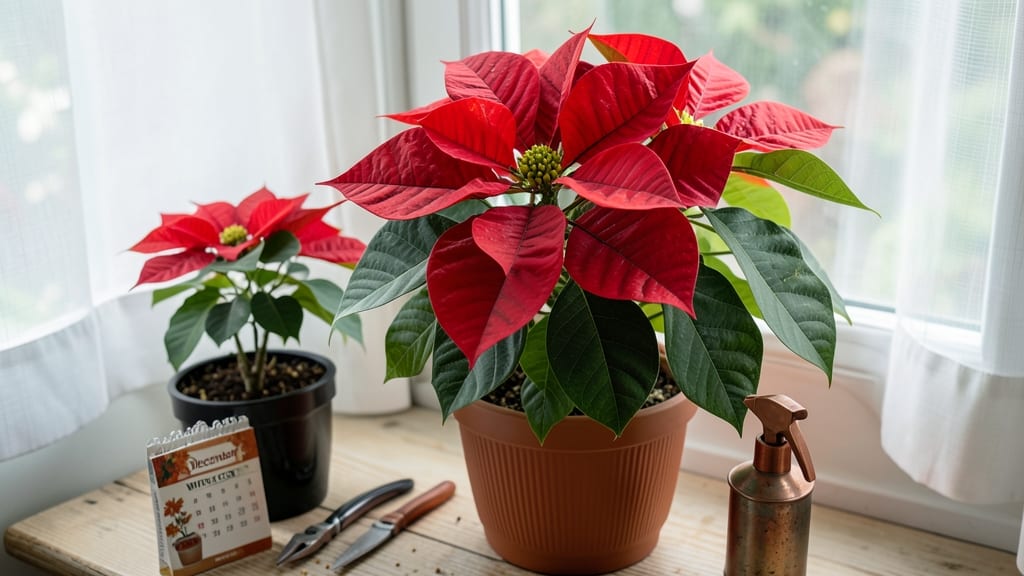
Getting your poinsettia to bloom again isn’t magic—it’s all about foolproof light control. 🌟 I’ve turned my holiday plant into a year-round showstopper by mastering the 14-hour trick that tricks the plant into thinking it’s fall, its natural blooming season.
The secret? Darkness at the right time, consistent care, and a little patience.
First, you’ll need a dark space for 14 hours straight—no peeking!—starting in late September. Keep your plant in bright light the other 10 hours, and maintain temperatures between 60-70°F. Water only when the top inch of soil feels dry, and avoid drafts.
Most people mess up by letting the plant get too dry or too cold, which kills the blooming signal.
By December, you’ll see those signature red bracts forming, but the magic continues. Prune back leggy stems in early spring to encourage bushier growth, and repeat the light cycle next fall. The result? A poinsettia that blooms reliably, year after year, without the holiday stress.
Works for every variety—even the white or pink ones—and adapts to apartments or sunrooms. Here’s how to keep it thriving through every season without guessing.
📚 In This Guide
- What you need
- Instructions
- Tips and common mistakes
- Wrapping up and next steps
What you need
- ● Healthy Poinsettia plant – Choose one that’s currently blooming (or has bloomed before) for best results.
- ● 6–8 hour uninterrupted darkness – A dark closet, box, or even a plant cover works (more on this later!).
- ● Bright, indirect light – A south- or east-facing window (or a grow light) for 14–16 hours daily.
- ● Well-draining soil mix – A blend of potting soil + perlite or sand (1:1 ratio) to prevent root rot.
- ● 6–8 inch pot – Slightly larger than the current root ball to allow growth.
- ● Balanced liquid fertilizer – 10-10-10 or 20-20-20, diluted to half-strength (e.g., 1 tbsp per gallon of water).
- ● Spray bottle – For gentle misting (Poinsettias love humidity!).
- ● Pruning shears – Sharp, clean scissors to trim leggy stems (sterilize with rubbing alcohol!).
- ● Plant cover or black plastic sheet – For DIY darkness control (e.g., a cardboard box with a small vent).
- ● Grow light (LED or fluorescent) – If natural light is insufficient (12–16 hours/day).
- ○ Thermometer/hygrometer – Optional but helpful for tracking ideal temps (65–75°F / 18–24°C) and humidity (40–50%).
- ● Peat moss or coconut coir – For top-dressing to retain moisture.
Step-by-Step instructions for reviving your poinsettia's blooms
Here's the light-controlled method that actually works—no guesswork, just science-backed timing.
🌱 Step 1: Understand the Light Trick That Makes It Bloom
Poinsettias bloom because of short days and long nights. They need 12 hours of complete darkness every night for 55-60 days before they'll produce those showy bracts. The key is starting this cycle at the right time—usually in early October for Christmas blooms, but you can adjust for other seasons.
I know it seems counterintuitive, but even a tiny bit of light during those dark hours will prevent blooming. That means no nightlights, streetlights, or even TV glow near your plant. If you have a curious pet or roommate, move the plant to a closet or covered area during the critical nighttime period.
⏰ Step 2: Start the 12-Hour Darkness Cycle Now
Begin your 55-60 day countdown by giving your poinsettia 14 hours of bright light and 10 hours of complete darkness each day. Place it in a spot with 6+ hours of direct sunlight or under grow lights if natural light is limited. South-facing windows work best, but east or west exposures can work with supplemental lighting.
Here's the thing—you'll need to cover the plant completely during the dark period. I use a dark box or even a black plastic bag (with holes for airflow) to block all light. Remove the cover in the morning right after sunrise to start the light cycle. Watch for the first signs of bud formation—tiny clusters of green at the leaf joints—after about 4-6 weeks of this routine.
☀️ Step 3: Maintain Perfect Light and Water Conditions
Once buds form, keep your poinsettia in bright, indirect light (no harsh midday sun now). Water when the top inch of soil feels dry, but never let it sit in soggy soil—root rot will kill buds before they open. I water from the bottom by placing the pot in a saucer of water for 10-15 minutes, then draining excess, to keep moisture even without overwatering.
Temperature matters too—keep it between 65-75°F during the day and no lower than 55°F at night. Drafts from windows or doors will stress the plant and cause buds to drop. If you notice leaves curling or wilting, move the plant away from temperature fluctuations immediately.
🌿 Step 4: Encourage Full Bloom and Post-Bloom Care
When those vibrant bracts fully open, your poinsettia is ready to be admired! Keep it in bright light to prolong the bloom period, but don't be surprised if the flowers start fading after 6-8 weeks. That's normal—the plant is done for this cycle. Here's where most people make the mistake of tossing it, but with proper care, you can get next year's blooms too.
After blooming, trim the plant back by half its height to encourage bushier growth. Move it to a brighter spot and continue watering when the top inch of soil dries. In late summer, you can start the light cycle again for another round of color. The secret is patience—it takes 10-12 weeks from the first dark treatment to full bloom, but the results are worth it.
Tips & tricks for reviving poinsettia blooms
Real talk: The light schedule is where most people stumble. Here's how to nail it without the guesswork.
The Darkness Factor: That 12-hour complete darkness in Step 1 isn't negotiable. I once left my poinsettia under a dim nightlight for just 30 minutes during that period—no buds formed. Use a timer to cover the plant at exactly the same time every evening (like 7 PM) and uncover it precisely 12 hours later. Even a streetlamp shining through a window can ruin the process.
Visual Cues for Bud Formation: After about 4-6 weeks of the 14/10 light cycle (Step 2), look for tiny green clusters at the leaf joints—these are your first buds. They'll look like miniature green bumps about the size of a pea. If you don't see these by week 6, your light conditions might need adjustment. Move to a sunnier window or supplement with grow lights for those critical 6+ hours of direct light.
Temperature Troubleshooting: The 65-75°F day/55°F night range in Step 3 is crucial. If your home gets chilly at night (below 55°F), move the plant away from drafty windows or use a small space heater nearby. I've seen buds drop when plants sit near AC vents or cold glass panes. A simple laser thermometer helps monitor these temps without disturbing the plant.
Watering Wisdom: That 10-15 minute bottom-watering method in Step 3 prevents root rot while keeping the soil evenly moist. Here's what I do: Place the pot in a saucer with 1 inch of water, then remove after 10 minutes. The soil should feel damp but not soggy. Overwatering is the #1 reason buds fail to open—always check the top inch before watering again.
Pro Tips for Get A Poinsettia To Bloom Again
- Real talk: The light schedule is where most people stumble. Here's how to nail it without the guesswork.
- The Darkness Factor: That 12-hour complete darkness in Step 1 isn't negotiable.
- Visual Cues for Bud Formation: After about 4-6 weeks of the 14/10 light cycle (Step 2), look for tiny green clusters at the leaf joints—these are your first buds.
Frequently asked questions
about reviving your poinsettia’s blooms—because even the most patient plant parents have questions! Here are answers to the most common ones to keep your holiday favorite thriving.Why won’t my poinsettia bloom after the holidays?
Poinsettias need 12+ hours of darkness daily for 6–8 weeks to trigger blooming. If your plant gets too much light (even from indoor bulbs or streetlights), it won’t set buds. Start your light schedule early—October or November—for next year’s color!
How long does it take for a poinsettia to rebloom?
With the right care, you’ll see buds forming in 8–10 weeks after starting your light schedule. Patience is key! Keep up the darkness routine, and you’ll reward yourself with vibrant blooms by December.
Can I use artificial lights for the 12-hour darkness trick?
Yes! Cover the plant with a black box, blanket, or even a dark closet for 12 hours. Avoid any light leaks—even a nightlight can disrupt the process. Consistency is everything!
What if my poinsettia’s leaves turn yellow or drop?
Yellow leaves often mean overwatering or underwatering. Let the top inch of soil dry out between waterings, and ensure good drainage. Drooping leaves? Check for pests (like spider mites) or root rot—adjust care and trim damaged foliage.
Can I keep a poinsettia as a houseplant year-round?
Many growers treat them as perennial houseplants. Just prune in spring, fertilize lightly, and repeat the light schedule annually. With love (and a little darkness magic), they’ll bloom for years!
What’s the best time to start the blooming process?
For December blooms, begin the 12-hour darkness routine in early October. If you’re late, adjust expectations—starting in November may yield smaller blooms, but it’s still worth a try!
Wrapping up and next steps
Getting your poinsettia to bloom again is totally doable with a little patience and consistency! 🌟 By mastering light control, providing the right care, and troubleshooting early, you’ll enjoy vibrant blooms year after year.
Remember, poinsettias thrive on routine—once you’ve set up your light schedule and care plan, it’s just a matter of time before those festive colors return.
Ready to see your poinsettia shine? Start today by adjusting your lighting and monitoring its progress—your future blooms will thank you! For extra tips, bookmark this guide or share it with fellow plant lovers. Happy blooming! 🌸