
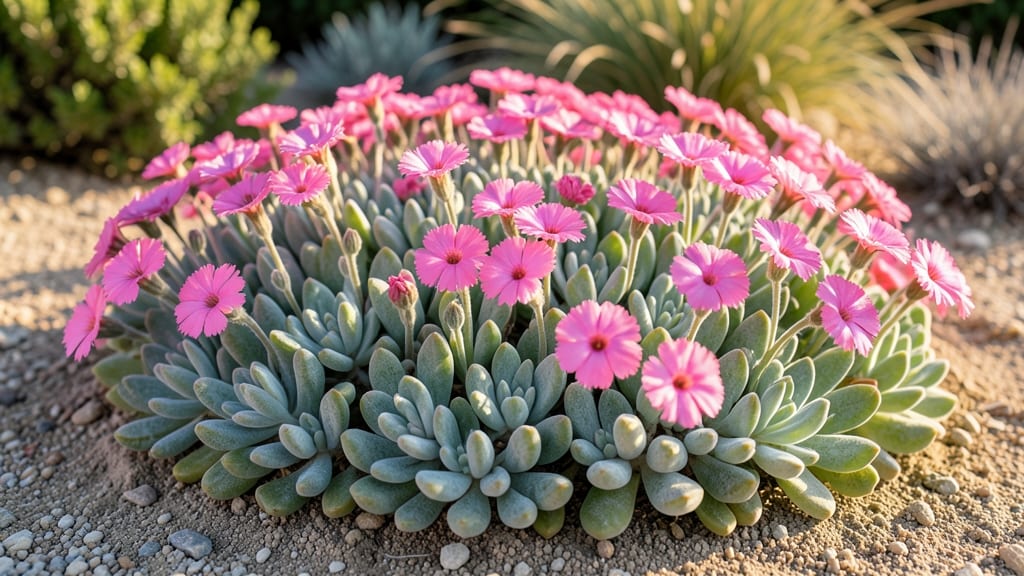
Ice Plant Bloom Time: Seasonal Triggers by Variety and Hardiness Zone

Blooming

Ice Plant Bloom Time: Seasonal Triggers by Variety and Hardiness Zone

Ice plant blooms thrive on timing, with varieties like Delosperma cooperi lighting up gardens in late spring to early summer—right when your neighbors are still waiting for their roses.

But here’s the catch: your ice plant’s 🌸 bloom time isn’t set in stone. In USDA Zone 9b, where I garden, Delosperma nubigenum often starts in March, while in cooler Zone 6a, it waits until May. The difference? A few degrees and a little patience.

This guide breaks down the seasonal triggers for over a dozen varieties, including how to nudge blooms earlier (or extend them into fall) with simple tweaks like pruning and soil prep.

Skip the guesswork—learn how sunlight, water, and even your hardiness zone conspire to turn your ice plant into a year-round showstopper.

🌸 Ice Ice Plant Planting by Zone
Find your USDA zone dates
Zone 3-4
May 15 - Jun 15
Zone 5
May 1 - May 31
Zone 9b, 10a (coastal), 6a (default if unspecified)
Zone 9b: January 15; Zone 9b, 10a (coastal), 6a (default if unspecified): April 155
Zone 7
Apr 1 - May 1
Zone 8
Mar 15 - Apr 15
Zone 9+
Feb 15 - Mar 31

When do ice plants bloom? Seasonal patterns by variety

Ice plants (Delosperma spp.) are famous for their stunning, long-lasting blooms, but their timing varies dramatically by variety and climate. Some burst into color in spring, while others shine in summer or fall.

Understanding these patterns helps you plan your garden for year-round color. Let’s break down the bloom windows for 10+ popular varieties, including adjustments for USDA zones 5–11.

Most ice plants thrive in full sun and well-draining soil, but their bloom triggers differ. For example, Delosperma nubigenum (a spring bloomer) needs cooler temperatures to set buds, while Delosperma cooperi (a summer star) loves the heat.

Even within the same zone, microclimates—like coastal vs. desert—can shift bloom times by weeks or months. Below, we’ll explore how to align your care with nature’s schedule.

🌱 Pro Tip: Ice plants often rebloom if you deadhead spent flowers and maintain their drought-tolerant conditions. This works best for varieties like Delosperma markötterae, which can produce multiple flushes in ideal conditions.

How to trigger earlier or longer ice plant blooms

Ice plants (Delosperma spp.) are masters of adapting to harsh conditions, but even they need a little help to extend their stunning bloom seasons. With the right timing tricks, you can push those vibrant flowers to appear earlier in spring or linger well into fall.

The key lies in understanding their natural dormancy triggers and manipulating them gently.

For varieties like Delosperma 'Fire Spinner', which thrives in USDA Zone 9b, winter blooms are possible with protection from frost. Meanwhile, cooler-climate growers in Zone 6a can coax earlier blooms by simulating spring conditions indoors before transplanting.

Let’s explore the proven methods to extend your ice plant’s flowering window.

🌱 Proven Strategies to Extend Ice Plant Blooms
  1. 🌞 Maximize sunlight exposure by moving plants to southern exposures or using reflective surfaces to double light intensity.
  2. ✂️ Deadhead spent blooms every 2-3 weeks to redirect energy to new flowers and prevent seed production.
  3. 💧 Water deeply but infrequently—ice plants thrive on drought stress, which triggers flowering hormones.
  4. 🌡️ Simulate seasonal changes by reducing water in late summer to mimic dormancy cues.
  5. 🌿 Amend soil with gritty compost to improve drainage and reduce root stress, which delays blooming.

One of the most effective ways to trigger earlier blooms is by manipulating light exposure. Ice plants are photoperiod-sensitive, meaning they respond to changes in daylight length. In cooler climates (Zone 6a), start plants indoors under grow lights in late winter to simulate longer days.

For outdoor plants, place them near reflective surfaces like white walls or gravel to increase light intensity.

Pruning plays a crucial role too. After the first flush of blooms, cut back leggy stems by one-third to encourage bushier growth and a second round of flowers. This works especially well for winter-blooming varieties like Delosperma 'Fire Spinner', which can produce a second bloom cycle with proper care.

Just avoid heavy pruning in late summer, as this can delay autumn blooms.

For frost-sensitive varieties, protect them with row covers or move container plants to sheltered spots during cold snaps. Even a light frost can damage delicate blooms, but with protection, Delosperma can continue flowering well into December in Zone 9b.

In Zone 6a, focus on early spring planting—getting plants in the ground by late March gives them time to establish roots before summer heat sets in.

Finally, don’t overlook the power of soil amendments. Ice plants prefer fast-draining, mineral-rich soil. Mix in perlite or coarse sand to improve drainage, and add a low-nitrogen fertilizer (like 5-10-10) in early spring to encourage flower production rather than leafy growth.

Avoid over-fertilizing, as this can lead to lush foliage but few blooms.

With these strategies, you can enjoy longer, more abundant blooms from your ice plants—whether you're in a desert climate or a cooler region. The secret is patience and attention to their natural growing cues. Happy gardening! 🌸

★★★★★4.6(12 reviews)
Categories Blooming
Variety Primary Bloom Season USDA Zones Bloom Triggers Notes
Delosperma nubigenum Late spring (March–May) 5–10 Cooler temps (50–60°F Delicate lavender blooms; reblooms with deadheading
Delosperma cooperi Summer (June–August) 7–11 Heat and full sun (70–90°F) Bold pink/magenta flowers; drought-proof
Delosperma markötterae Late summer–fall (August–October) 6–10 Warm days, cool nights (60–75°F) Extended blooms; great for containers
Delosperma 'Fire Spinner' Winter (December–February) 9–11 (coastal) Mild winters (55–65°F) Unique red-orange blooms; frost-sensitive
Delosperma 'Cape Ruby' Spring–summer (April–July) 5–9 Moderate temps (60–80°F) Deep red flowers; long bloom cycle
Lampranthus spectabilis Summer–fall (June–October) 8–11 Heat and well-draining soil Vibrant magenta blooms; succulent-like
Delosperma 'Golden Glow' Spring–early summer (March–June) 6–10 Warm spring days (65–75°F) Golden-yellow flowers; compact habit
Delosperma 'Pink Blush' Summer (June–August) 7–11 Full sun and low water Soft pink blooms; heat-tolerant
*Delosperma 'White Queen' Spring–fall (April–October) 5–10 Consistent moisture (but not soggy) Pure white flowers; reblooms easily