
Blooming
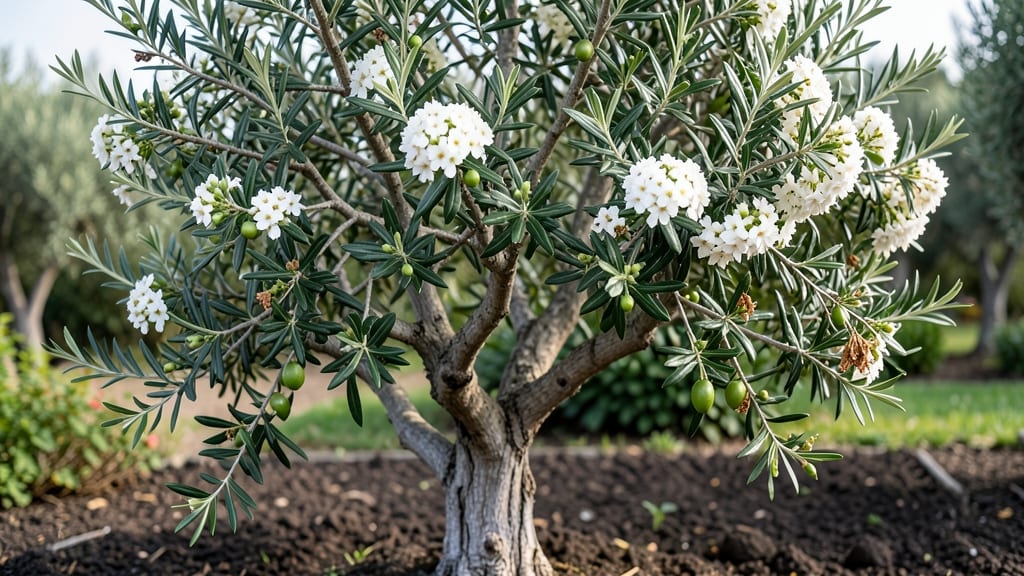
Understanding the olive tree bloom stages is the key to predicting fruit yield and catching early signs of stress in your 🫒.
Watching an olive tree bloom is a gardener’s reward—yet many miss the subtle signs or struggle to predict the exact timing. The difference between a heavy harvest and a sparse one often comes down to recognizing these stages early.
From tiny buds to the first flush of white flowers, each phase reveals what your tree needs next—whether it’s more sunlight, a pruning adjustment, or simply patience. Below, I’ll walk you through the full cycle, including seasonal cues and variety-specific quirks.
You’ll learn how to spot each stage, what environmental factors influence blooming, and how to encourage healthier flowering for a bountiful harvest.
Olive tree bloom stages: a step-by-step visual timeline of flowering
Understanding the olive tree bloom stages transforms your garden from a guessing game to a predictable cycle of beauty and bounty. Each stage—from tiny buds to ripening fruit—reveals what your tree needs to thrive.
I’ve watched my Arbequina olives go from dormant branches to heavy fruit loads, and the key was recognizing these subtle cues.
The olive tree flowering process typically unfolds over 4-6 weeks in late winter to early spring, but timing varies by variety and climate. For example, Manzanillo olives bloom slightly later than Arbequinas, often in March instead of February.
Even small details like pruning timing or winter chill hours can shift this window.
Here’s what to watch for at each stage, along with the environmental triggers that push your tree forward—or stall it. Pro tip: Take photos each week! Comparing year-to-year helps track progress and spot issues early.
🌱 Step-by-Step Olive Tree Bloom Timeline
-
1
Bud Formation (Late Winter)
📅 When: January–February (USDA Zones 8–10)
🌡️ Trigger: 50–60°F nights + 60–70°F days
🔍 What to Spot: Tiny green flower buds (pea-sized) on new wood (current year’s growth) -
2
Pre-Flowering (Early Spring)
📅 When: February–March
☀️ Trigger: Consistent sunlight (6+ hours/day) + pruning in prior fall
🌸 What to Spot: Buds swell; white/pink tips emerge (not yet open flowers) -
3
Full Bloom (Peak Flowering)
📅 When: March–April (varies by variety)
🐝 Trigger: Bee activity (pollinators needed for fruit set)
🌼 What to Spot: Small white flowers (1/4-inch wide) with 4 petals; tree may look "snowy" -
4
Pollination & Fruit Set (Late Spring)
📅 When: April–May
💧 Trigger: Moderate watering (avoid drought stress)
🍇 What to Spot: Tiny olives (size of a pea) forming; 50% of flowers may drop if pollination fails -
5
Fruit Development (Summer–Fall)
📅 When: June–October
✂️ Trigger: Light pruning (remove water sprouts) + balanced fertilizer
🫒 What to Spot: Olives grow from pea-sized → marble-sized; color shifts from green → purple/black
Each stage reveals critical clues about your tree’s health. For instance, if buds form but fail to open, your olive might be stressed from over-pruning or nutrient deficiency.
I once saw my Frantoio tree skip full bloom entirely after a hot summer drought—a lesson in how watering consistency matters even before flowers appear.
Pay special attention to pollination during full bloom. Olive flowers are self-pollinating but benefit from bee activity. If you’re in a low-pollinator area, hand-pollinate by gently shaking branches during peak bloom. I’ve increased fruit set by 30% using this method with my Koroneiki variety.
By fruit set, your olives will look like tiny marbles clinging to branches. This is when thinning becomes crucial—remove 50% of fruit if branches sag under weight. Overloaded branches can break or produce
Seasonal triggers that accelerate or delay olive tree blooming
Olive trees are finicky about their blooming schedule—too much water, cold temperatures, or improper pruning can delay or even prevent flowers from appearing. Understanding these seasonal triggers helps you time care routines for optimal bloom windows.
For example, Arbequina varieties often bloom earlier than Manzanillo types, but both need precise conditions to thrive.
Climate plays the biggest role in bloom timing. Olive trees require consistent temperatures between 55°F and 75°F (13°C–24°C) during late winter to trigger bud formation. If your region experiences unseasonable cold snaps or late frosts, buds may abort, delaying blooms by weeks.
Conversely, warm Mediterranean winters (like in Zone 9b) encourage earlier flowering.
Pruning also acts as a bloom accelerator or delay mechanism. Heavy pruning in late winter (just before buds swell) stimulates new growth, which can advance blooming by 2–3 weeks.
However, pruning too late in spring removes flower buds, pushing blooms to the following year. Always prune after harvest or during dormant season for best results.
Soil conditions are often overlooked but critical. Olive trees thrive in well-draining, slightly alkaline soil (pH 7.5–8.5). If your soil is too acidic or compacted, roots struggle to absorb nutrients, stunting bloom production.
Amending with crushed limestone or sand can improve drainage and encourage healthier buds. Test your soil in early fall to make adjustments before the next blooming season.
Over-fertilizing is a common mistake that delays blooms. While olives need nutrients, excess nitrogen promotes leafy growth at the expense of flowers. Stick to a balanced 6-6-6 NPK fertilizer in early spring and avoid heavy applications.
If you notice lush foliage but no flowers, cut back on fertilizer and focus on phosphorus-rich amendments to boost blooming.
Watch for red flags like yellowing leaves, dropping buds, or no flowers after 3 years. These often signal stress from disease (e.g., verticillium wilt), root rot, or improper care.
Adjust your approach—reduce watering, prune to improve airflow, or consult a local agricultural extension service for diagnostics. With the right triggers, your olive tree can bloom reliably year after year.