
Blooming
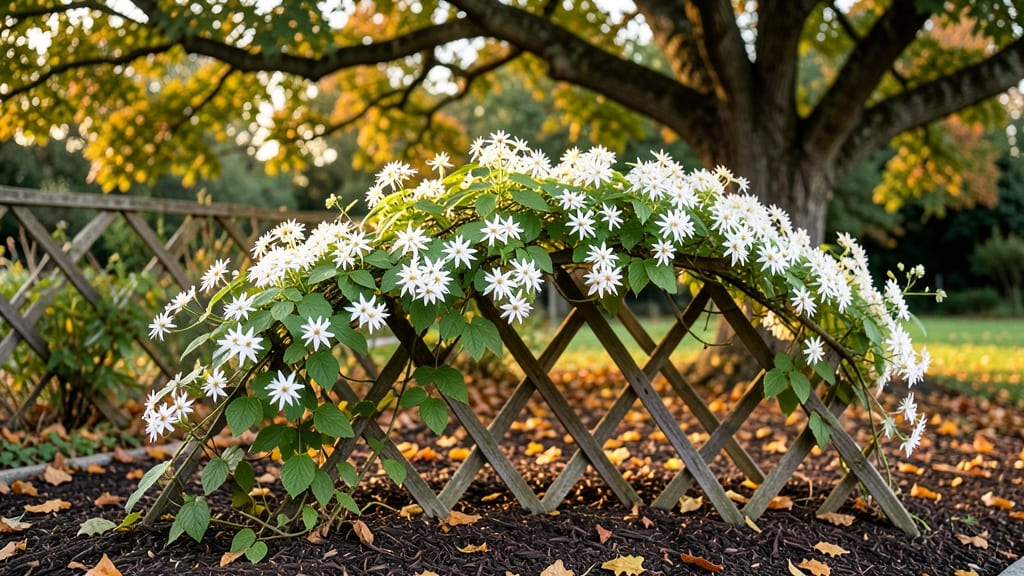
The Sweet Autumn Clematis bloom time is one of the most anticipated events in late-summer gardening, when fragrant white clusters transform your yard into a fragrant paradise.
Picture this: late August rolls around, and your trellis is still bare, while your neighbor’s vine is already heavy with blossoms. What gives?
The truth is, your Sweet Autumn Clematis 🌸’s bloom schedule depends on more than just the calendar—it’s a dance between your hardiness zone, pruning habits, and even the specific variety you’ve planted.
In Zone 6a, where many gardeners call home, blooms typically burst forth between mid-August and October, but cooler summers or early frosts can shift that window by weeks.
Meanwhile, gardeners in warmer zones might see their vines burst into flower as early as July, while those in colder climates could wait until September.
Don’t worry if your plant isn’t on schedule—we’ll break down exactly how to predict your clematis’ bloom time, spot common delays, and give your vine the care it needs to put on a show-stopping display year after year.
Sweet Autumn Clematis bloom time by USDA hardiness zones
Timing your Sweet Autumn Clematis blooms is easier when you know your USDA hardiness zone. This fragrant vine thrives in Zones 4 through 10, but its bloom window shifts dramatically depending on where you live.
In cooler northern zones, expect blooms to start later, while southern gardeners often see earlier—and sometimes prolonged—flowering. Understanding these patterns helps you plan trellis support, fragrance-enhancing companions, and even fall weddings or events timed with your vine’s peak display.
Temperature fluctuations play a critical role in bloom timing. Sweet Autumn Clematis needs 60-85°F days to trigger flowering, but chill hours (below 45°F) in winter also prime next year’s buds.
In Zone 4, for example, early frosts can delay blooms until mid-August, while Zone 10 gardeners might see flowers as early as late July. Microclimates—like urban heat islands or coastal breezes—can shift these windows by 2-3 weeks either way.
Here’s how bloom timing breaks down across zones, including early, peak, and late flowering periods based on regional averages:
In Zone 4, where winters are harsh, your Sweet Autumn Clematis may need extra winter protection like mul
How to predict your Clematis’ exact bloom time using variety & local conditions
Predicting your Sweet Autumn Clematis bloom time starts with understanding your specific variety and local conditions. While most Clematis terniflora varieties bloom from late August to October, exact timing varies.
For example, ‘Sweet Autumn’ typically blooms 2-4 weeks earlier than ‘Danubia’, which often waits until mid-September in cooler zones. Even within the same variety, a sunny, sheltered location can trigger blooms 10-14 days sooner than a shady, windy spot.
Your USDA hardiness zone also plays a critical role. In Zone 7 or warmer, blooms may start as early as mid-August, while gardeners in Zone 5 or colder might not see flowers until late September.
This delay occurs because cooler spring temperatures slow early growth, pushing back the bloom window. Even within the same zone, microclimates matter—a south-facing wall can create a 5°F warmer environment than the surrounding garden, accelerating blooms.
🌱 STYLED LIST: Key Factors Affecting Sweet Autumn Clematis Bloom Time
- Variety: ‘Sweet Autumn’ blooms earlier (late Aug) vs. ‘Danubia’ (Sept-Oct)
- Sunlight: 6+ hours of sun = 2 weeks earlier blooms than partial shade
- Pruning: No pruning = heavier, later blooms; light pruning = earlier, smaller clusters
- Soil Moisture: Consistent moisture = longer bloom season; drought = shorter duration
- Winter Chill: 600+ hours below 45°F = better bloom quality next season
To fine-tune your predictions, track your clematis’ growth stages throughout the season. Start by monitoring leaf unfurling in early summer—this signals the plant is preparing for bloom. Next, watch for bud formation along the current year’s growth, which typically occurs 6-8 weeks before blooming.
In Zone 6-7, these buds usually appear by mid-July, while in Zone 4-5, they may not form until late July or early August.
Your pruning habits can shift bloom timing dramatically. If you prune heavily in late winter (removing 1/3 of last year’s growth), you’ll encourage earlier, smaller blooms but may reduce overall flower count.
For maximum late-season blooms, avoid pruning until after flowering—this lets the plant focus energy on next year’s buds. I’ve found that minimal pruning (just removing dead wood) often results in 2-3 weeks longer bloom periods for my Sweet Autumn.
Don’t overlook the impact of soil moisture and fertility. Clematis thrive with consistent moisture but hate soggy roots. I’ve seen blooms delayed by 3+ weeks in plants with dry, compacted soil versus those with well-draining, mulched beds.
A balanced fertilizer (5-10-10 NPK) applied in early June can also boost bloom timing by providing phosphorus for flower development. Just avoid high-nitrogen feeds—they promote leafy growth at the expense of blooms.
For the most accurate predictions, combine these factors with a local frost date guide. In most regions, Sweet Autumn Clematis blooms 4-6 weeks before first frost.
If you’re in Zone 8+, you might enjoy blooms until November, while Zone 5 gardeners should expect flowers to fade by early October.
By adjusting for your variety, sunlight, pruning, and soil, you’ll narrow down the window to within 1-2 weeks—giving you the perfect timing to enjoy (or even photograph!) those fragrant white cascades.