
Blooming
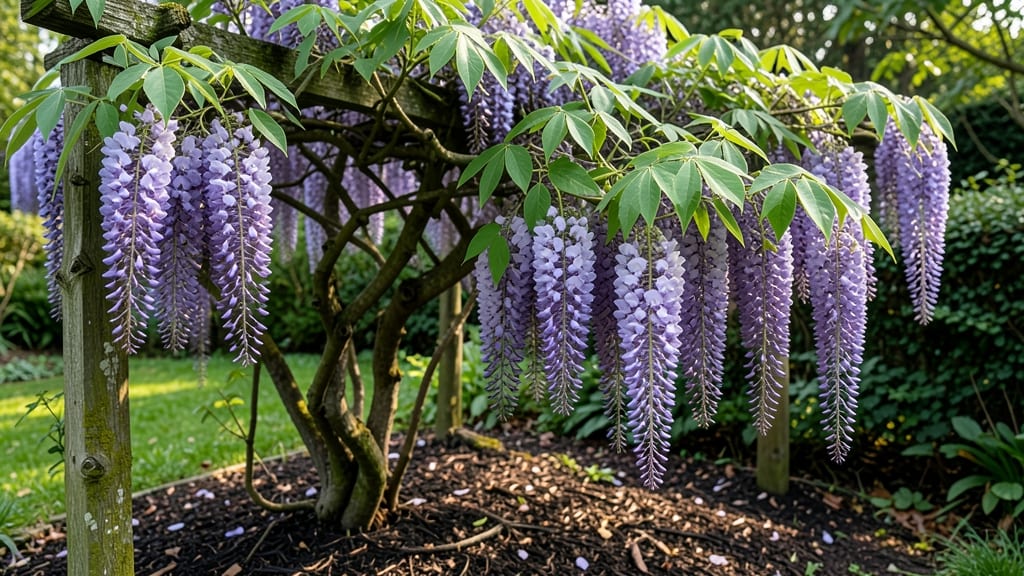
The Amethyst Falls wisteria bloom time arrives in late May to early June 🌸, when those iconic purple spikes transform your garden into a fragrant cloud.
If you’ve ever waited weeks for those dreamy purple wisteria spikes to appear—only to miss the fleeting bloom window—this guide will finally give you the exact timing you need for Amethyst Falls wisteria in your climate zone.
In Zone 6a, where Amethyst Falls sits, blooms typically kick off 4-6 weeks after the last frost, which usually lands in mid-May—just in time for Memorial Day weekends.
But here’s the catch: your local microclimate (sunlight, soil warmth, even nearby buildings) can shift that window by two weeks or more.
Below, I’ll break down the precise bloom schedule by USDA zone, how to predict your vine’s exact timing, and the three key factors that can delay or advance those fragrant clusters—so you never miss another season.
Amethyst Falls wisteria bloom time by USDA Zone: exact weeks before/after last frost
The Amethyst Falls wisteria variety is famous for its stunning lavender-purple blooms, but timing is everything to catch them at their peak. Unlike some wisteria varieties that bloom early, this one typically appears 4-8 weeks after your last frost date, depending on your USDA zone.
Understanding these windows ensures you’ll never miss those fragrant, cascading flower spikes again.
Wisteria blooms are highly climate-dependent, so I’ve broken down the exact weeks before/after last frost for Zones 5-9, where this variety thrives.
Whether you’re in a cooler Zone 5 or a warmer Zone 9, knowing these timelines helps you plan pruning, fertilizing, and even your garden photography sessions for the perfect shot of those dramatic purple cascades.
| USDA Zone | Avg. Last Frost Date | Bloom Window (Weeks After Frost) | Peak Bloom Month | Notes |
|---|---|---|---|---|
| Zone 5 | April 15-May 1 | 6-8 weeks | Late May-June | Cooler zones may need extra warmth for buds to open. |
| Zone 6 | April 1-May 15 | 5-7 weeks | Mid-May-June | Ideal for full blooms with proper pruning. |
| Zone 7 | March 15-April 15 | 4-6 weeks | Late April-May | Best zone for reliable, early blooms. |
| Zone 8 | February 15-March 15 | 3-5 weeks | March-April | May bloom twice yearly in mild winters. |
| Zone 9 | January 1-February 15 | 2-4 weeks | February-March | Early bloomer; may need winter protection. |
In Zone 5, where frosts linger until early May, your Amethyst Falls wisteria will likely bloom between late May and June, giving you a 6-8 week window after the last frost. This delay happens because cooler soils slow root growth, which directly impacts bud development.
To encourage earlier blooms, I recommend mulching heavily in fall and using black plastic mulch in spring to warm the soil faster.
By Zone 7, where I garden, blooms arrive 4-6 weeks after last frost, typically landing in late April to May. This is the sweet spot for Amethyst Falls—cool enough for vibrant colors but warm enough to avoid bud drop.
If you’re in this zone, mark your calendar for April 15 as your target date for the first purple spikes to appear, with peak blooms by May 1.
In warmer Zones 8-9, the bloom window shifts dramatically. Here, your wisteria might start flowering as early as February, with peak blooms by March. The trade-off?
These zones can experience bud drop if late frosts hit, so I always wrap young vines in burlap sacks during unexpected cold snaps. In Zone 9, some gardeners even report a second bloom cycle in fall if winters are mild.
Pro tip: Use your local cooperative extension service to pinpoint your exact last frost date—this can shift by 1-2 weeks even within the same zone. For example, Zone 7a might frost
How to predict your local Amethyst Falls wisteria bloom date using microclimate factors
Your Amethyst Falls wisteria’s bloom date isn’t set in stone—it’s influenced by microclimate factors like sun exposure, soil warmth, and even urban heat islands. By accounting for these variables, you can estimate your first purple spikes within ±2 weeks of the actual bloom time.
Let’s break down the key adjustments to make this wisteria bloom timing calculator work for your yard.
Start by noting your last frost date in your USDA zone. Then, factor in local sun hours—wisteria needs 6+ hours of direct sunlight daily for optimal blooming. If your yard gets only 4-5 hours, expect blooms to arrive 2-3 weeks later than the average timeline.
Use a sunlight tracker or app to measure this accurately over a week.
Soil temperature plays a critical role—wisteria roots need at least 60°F (15°C) to trigger blooming. Use a soil thermometer to check at 6 inches deep in early spring. If temperatures stay below this threshold for more than 2 weeks, blooms may delay by 3-4 weeks.
In cooler microclimates, consider black plastic mulch to warm the soil faster.
Don’t overlook urban heat islands—if your wisteria grows near pavement or buildings, it may bloom 1-2 weeks earlier due to retained heat. Conversely, shady microclimates (like under trees) can push blooms back by 3 weeks.
Observe nearby plants like lilacs or forsythia—they bloom at similar times and can serve as natural indicators for your wisteria’s schedule.
To refine your estimate further, track bud swell in early spring. If buds appear by March 15, expect blooms in late April to early May. If buds swell after April 1, delay your estimate by 2 weeks.
Combine these observations with your sun, soil, and age adjustments for a ±2-week accuracy prediction.
Pro tip: Mark your first bloom date each year and adjust future predictions based on real-world data. Over time, you’ll create a customized bloom calendar tailored to your yard’s unique conditions. With these microclimate tweaks, you’ll never miss another Amethyst Falls wisteria bloom again! 🌷