
Blooming
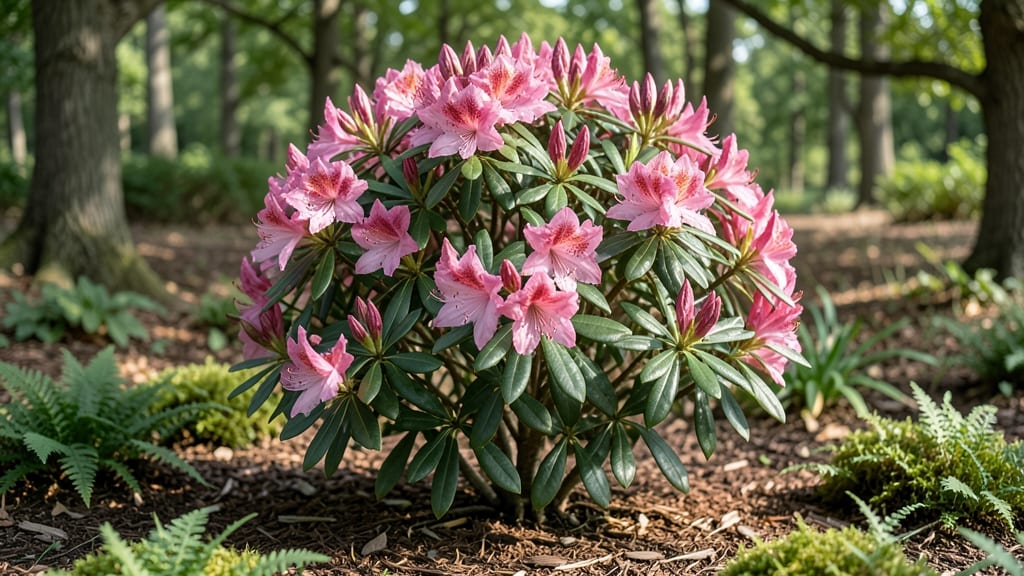
Azaleas bloom when temperatures finally climb into the 60s—and the exact timing depends entirely on your zone and variety. 🌸 I’ve watched my late-season ‘Birit’ azaleas push out pink buds in early June while my ‘Girard’s Pink’ cousins bloom in April, all within a few hundred feet of each other.
The secret lies in understanding how heat triggers their cycles, not just the calendar.
In cooler zones (5-7), most azaleas bloom in late spring, often aligning with the last frost. But in warmer climates (8-10), they might flower in winter or early spring when temperatures dip slightly before warming again.
Early bloomers like ‘Hershey’s Red’ start as soon as soil warms to 55°F, while late varieties like ‘Southern Indica’ wait until 70°F+—and that’s why your neighbor’s azaleas might look like they’re on a different schedule.
What you’ll notice is azaleas that bloom earlier in the season produce more robust flowers because they’ve had time to store energy over winter. Late bloomers often have fewer but larger blossoms.
The key to encouraging healthy blooms? Prune right after flowering and fertilize in early spring with acid-loving plant food—this ensures next year’s buds form strong and plentiful.
Regional variations mean your bloom time could shift by weeks if you move just a few zones. For example, Florida azaleas might flower in December, while Pacific Northwest varieties wait until May. Pay attention to your local microclimate—shady spots bloom later, while sunny areas can trigger earlier blooms.
Plan your garden tasks around these cycles, and you’ll always have azaleas in peak form when they matter most.
📚 In This Guide
- What you need
- Instructions
- Tips and common mistakes
- Wrapping up and next steps
What you need
- ● Azalea Variety Guide: Printed or digital list of your azalea types (e.g., Rhododendron ‘Girard’s’, ‘Hino Crimson’, or ‘Bowl of Beauty’) with their blank">USDA Zone compatibility.
- ● Thermometer: A digital outdoor thermometer (range: 20°F to 120°F / -7°C to 49°C) for precise temperature tracking.
- ● Bloom Calendar: A dry-erase board or digital calendar app (e.g., Google Calendar) to log bloom triggers.
- ● Sunlight Tracker: A sunlight meter or shade cloth (30–50% coverage) for zones with intense summer sun.
- ● Soil pH Kit: A digital pH meter (ideal range: 4.5–6.0) to test acidity.
- ● Watering Can or Hose: With a fine mist nozzle for gentle hydration (azaleas hate soggy roots!).
- ● Heat Stress Monitor: A soil thermometer (max 100°F / 38°C) to check root zone temps in hot zones.
- ● Mulch: Pine bark or peat moss (2–3 inches deep) to retain moisture and cool roots.
- ● Fertilizer: Slow-release acid-loving plant fertilizer (e.g., 10-10-10 or 8-3-9) for post-bloom feeding.
- ● Pruning Shears: Bypass pruners (sterilized with rubbing alcohol) for shaping after blooms fade.
- ● Bloom Trigger Journal: A notebook to record temperature spikes, rainfall, and bloom start dates for patterns.
How to time azalea blooms by variety and growing zone
Azaleas bloom on a strict schedule—here's how to predict their showstopping seasons.
🌿 Step 1: Identify Your Azalea Type and Native Range
Azaleas fall into two main categories: evergreen (bloom in spring) and deciduous (bloom in late spring to summer). Evergreens like Rhododendron 'Girard's Pink' thrive in Zones 6-9, while deciduous types such as Rhododendron 'Hershey's Red' prefer Zones 4-8. Check your plant's tag or leaf shape—evergreens keep foliage year-round, while deciduous types shed leaves in winter.
Here's the thing—your local climate matters more than the zone label. In Zone 7, evergreens may bloom in late April to early May, but in Zone 9, they often wait until mid-May. Deciduous azaleas in cooler zones (like Zone 5) might not bloom until June, while warmer zones (like Zone 8) see flowers as early as May. Write down your zone and variety to narrow it down.
☀️ Step 2: Track Temperature Cues for Bloom Trigger
Azaleas need 60-80°F days to set buds, but they also require cool winter chilling (30-50°F for 600-900 hours). If your winters stay above 45°F, your azalea may skip blooming entirely. Use a minimum-maximum thermometer near the plant to log nighttime lows—most azaleas need at least 100 hours below 45°F to break dormancy.
Watch for leaf buds in late winter—these are your first sign of spring. Once buds form, count back 8-12 weeks to estimate bloom time. For example, if buds appear in February, expect flowers in late April. If your azalea blooms later than expected, it might need more winter chill or better drainage to reset its cycle.
🌱 Step 3: Adjust Care to Extend Bloom Duration
Once flowers appear, water deeply 2-3 times per week (until top 6 inches of soil feel moist). Avoid overhead watering—wet blossoms attract fungal diseases like powdery mildew. Instead, use a soaker hose at the base. Mulch with 2-3 inches of pine bark to retain moisture and regulate soil temperature, which helps buds last longer.
Fertilize lightly after blooming with an acid-loving plant formula (like 10-10-10 with sulfur) to replenish nutrients. Too much nitrogen now will push leaf growth over flowers. I swear by fish emulsion in early spring—it’s gentle but effective. Stop fertilizing by mid-summer to let the plant focus on next year’s buds.
⏰ Step 4: Plan for Next Year’s Bloom Based on This Season
Take notes on when buds formed, when flowers opened, and how long they lasted. If blooms were sparse, your azalea may need more sunlight (most prefer morning sun + afternoon shade) or better drainage (they hate soggy roots). In Zones 7-9, prune immediately after blooming to shape the plant—never cut back old wood, as next year’s buds form on last year’s growth.
For Zones 4-6, wait until late June to prune, as late bloomers (like deciduous types) set buds later. If your azalea blooms later than neighbors, it might be a late-season variety—check with your local nursery for zone-specific recommendations. The key is patience: azaleas reward consistent care with years of reliable blooms.
Tips & tricks for perfect azalea bloom timing
Real talk: Understanding these seasonal cues turns guesswork into a predictable garden showstopper.
Chill Hours Are Non-Negotiable: Those 600-900 hours below 50°F aren't just numbers—they're the biological reset button for azaleas. If your winters stay above 45°F, your plant might skip blooming entirely. I've seen this happen in mild coastal climates where winter highs never drop below 50°F. Consider a winter blanket or move potted azaleas to a cooler garage during mild winters to trick them into dormancy.
Bud Formation is Your First Clue: When you spot those tiny leaf buds in late winter, mark your calendar and count back 8-12 weeks—that's your bloom window. I track this with a garden journal and color-code by variety. Evergreens typically form buds earlier than deciduous types, which is why they bloom first in spring. Pro tip: Use a magnifying glass to check for bud formation if you're unsure—you'll see tiny green nubs where next year's flowers will emerge.
Watering Strategy Matters: The 2-3 times per week guideline assumes average spring rainfall. In drought-prone areas, you might need to water daily during bloom time. I test soil moisture by sticking my finger 2 inches deep—if it feels dry, that's your watering cue. Overhead watering? Big no-no—it promotes powdery mildew. I've lost count of azaleas ruined by this common mistake. Use a soaker hose at the base instead.
Fertilizer Timing is Critical: That mid-summer cutoff for fertilizing isn't arbitrary—it's when your azalea needs to focus on next year's buds. I've seen gardeners add nitrogen-rich fertilizers too late, resulting in lush foliage but no flowers the following spring. After blooming, switch to an acid-loving formula like 10-10-10 with sulfur—it replenishes nutrients without encouraging leaf growth over flower production.
Pro Tips for Azalea Bloom Time
- Real talk: Understanding these seasonal cues turns guesswork into a predictable garden showstopper.
- Chill Hours Are Non-Negotiable: Those 600-900 hours below 50°F aren't just numbers—they're the biological reset button for azaleas.
- Bud Formation is Your First Clue: When you spot those tiny leaf buds in late winter, mark your calendar and count back 8-12 weeks—that's your bloom window.
Frequently asked questions
Got questions about when your azaleas will burst into color? Here are some of the most common ones—and their answers—to help you plan your garden’s most vibrant moments!
When do azaleas typically bloom?
Azalea bloom time depends on the variety and your climate zone. Most bloom in spring (March–May), but some late-season types (like Encore azaleas) may rebloom in fall. In warmer zones (7–9), blooms often start earlier, while cooler zones (4–6) may see later, shorter seasons.
Why did my azaleas bloom late this year?
Late blooming can happen due to cold winters, late frosts, or overly hot summers the prior year. Azaleas need a period of cool dormancy (below 50°F) to trigger buds. If your area had an unusually warm winter, blooms may delay. Pro tip: Mulch heavily in fall to protect roots!
Can I force azaleas to bloom earlier?
Unfortunately, you can’t rush azaleas to bloom—they’re heat-triggered, not light-dependent like some plants. However, you can extend their season by choosing repeat-blooming varieties (like Kaleidoscope or Southern Indica) or providing consistent moisture and partial shade to reduce stress.
What if my azaleas don’t bloom at all?
No blooms? Check for these issues:
- Age: Young plants (under 3 years) may not bloom yet.
- Sunlight: Too much sun (or too little) can stress them.
- Soil pH: Azaleas thrive in acidic soil (pH 4.5–6.0). Test and amend with sulfur or peat moss if needed.
- Pruning: Cutting back after blooming removes next year’s buds.
Are there azalea varieties that bloom in fall?
Yes! Fall-blooming azaleas (like Encore or Oconee series) are bred to rebloom in September–November, extending your color palette. These thrive in zones 6–9 and often produce larger, more abundant flowers than spring-only types.
Wrapping up and next steps
Understanding your azalea’s bloom time is the first step to enjoying their stunning spring or fall displays! Whether you’re in Zone 7 or Zone 9, knowing your variety—like early-blooming Knaphill hybrids or late-season Girard’s varieties—helps you plan for the best care and timing.
With the right conditions, your azaleas will reward you with vibrant, heat-triggered blooms year after year.
Ready to transform your garden? Start by selecting the perfect azalea variety for your zone, then give them the love they deserve—proper pruning, mulching, and watering. Your blooming oasis awaits! 🌸