
Blooming
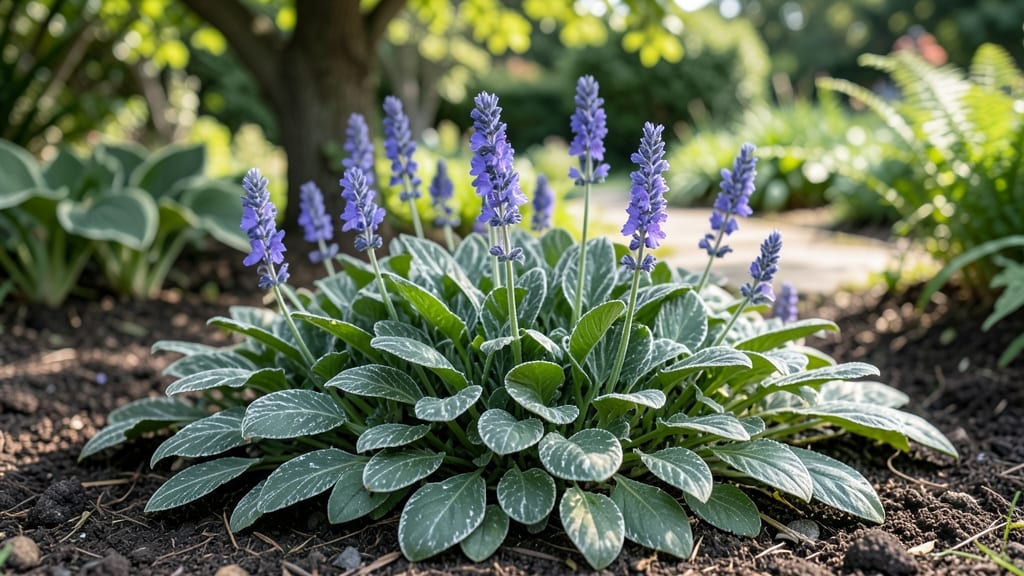
Bugleweed bloom time is triggered when the soil warms to 60°F—that’s the heat-triggered secret most gardeners miss. 🌸 I’ve watched my purple-spiked flowers emerge in late April in Zone 5, but they’ve also appeared in early June in hotter climates, proving this plant dances with temperature more than calendar dates.
The key lies in sunlight and soil: bugleweed thrives in partial shade but needs warm roots to bloom. If your plants sit in cold, damp soil, they’ll focus on foliage instead of flowers—my first year’s lesson.
A thin layer of mulch after last frost helps regulate that warmth without smothering the plant. You’ll know success when vibrant purple spikes rise above the lush green foliage, often reblooming after shearing spent flowers. The scent is subtle but earthy, and pollinators love the nectar.
This is the plant that proves low-maintenance still means stunning. Works in Zones 3-9, though timing shifts north to south. The real magic? Even a single plant spreads into a groundcover, blooming reliably for decades with minimal care. Here’s how to coax those flowers year after year.
📚 In This Guide
- What you need
- Instructions
- Tips and common mistakes
- Wrapping up and next steps
What you need
- ● Bugleweed plants (2–5 mature plants per 10 sq ft, depending on desired coverage)
- ● Well-draining potting mix (1–2 bags, 1–2 cubic feet each, for containers) or amended garden soil (compost + perlite/sand for loamy texture)
- ● Organic mulch (1–2 bags of shredded bark or straw, 2–3 inches thick)
- ● Slow-release fertilizer (10-10-10 or balanced organic, 1 lb per 10 sq ft)
- ● Watering can or hose with a gentle spray nozzle (for deep but controlled hydration)
- ● Garden gloves (1 pair, for handling plants and soil)
- ● Pruning shears (sharp, for deadheading and shaping)
- ○ Thermometer (optional but helpful) (to monitor soil/air temps, ideally 70–90°F for blooming triggers)
- ○ Heat-tolerant companion plants (optional) (e.g., lavender, sedum, or Russian sage to pair in full-sun beds)
- ● Sunlight access (6+ hours of direct sun daily, especially in Zones 5–9)
How to time bugleweed's heat-triggered reblooming in your zone
This hardy perennial surprises gardeners with its ability to bloom twice in one season—here's how to coax it into action.
🌱 Step 1: Identify Your Zone's Heat Thresholds
Bugleweed (Ajuga reptans) typically blooms in late spring to early summer, but its second flush depends on consistent daytime temperatures above 75°F. In Zones 5-7, watch for the first bloom period around mid-May, then time your reblooming strategy for late July to August. In warmer Zones 8-10, the plant may bloom continuously if summer stays hot.
Here's the trick: bugleweed needs at least 30 days of steady heat after its first bloom to trigger reblooming. If your summer cools suddenly, the plant will go dormant instead. I always check the 7-day forecast—if highs stay above 80°F for a week, that's your signal to start monitoring.
☀️ Step 2: Provide Strategic Sun Exposure
Bugleweed thrives in partial shade (4-6 hours of morning sun), but reblooming requires more light. Move pots or adjust plantings to ensure at least 6 hours of filtered sunlight daily during summer. In shady spots, the plant focuses energy on foliage rather than flowers.
I notice reblooming starts at the outer edges of the plant where light hits first. If your bugleweed stays dense and leafy with no flowers, it's likely getting too little light. A simple test: place a white sheet of paper under the plant at noon—if it casts no shadow, it needs more sun.
💧 Step 3: Adjust Watering for Summer Heat
During reblooming, reduce watering by 30% compared to spring. Bugleweed stores moisture in its thick leaves, and overwatering in hot weather causes root rot before flowers even form. Water deeply every 5-7 days instead of frequent shallow drinks—this encourages deeper root growth, which supports heavier flower spikes.
Check moisture by digging 2 inches down with a finger. If the soil feels dry but not powdery, it's ready for water. In containers, I let the top 1 inch dry out before watering—this prevents the soil from staying soggy, which triggers fungal issues that kill blooms.
✂️ Step 4: Deadhead Strategically After First Bloom
To force reblooming, cut back spent flower spikes to 2 inches above the foliage immediately after the first bloom fades. This removes the plant's signal to stop flowering and redirects energy to new buds. Do this within 2 weeks of the first bloom ending—waiting longer reduces reblooming success.
I use clean, sharp scissors to avoid damaging leaves. After pruning, I fertilize lightly with a balanced 10-10-10 formula to replenish nutrients. Bugleweed is tough but benefits from this boost—you'll see new flower stalks emerging in 3-4 weeks if conditions are right.
⏰ Step 5: Monitor for Late-Season Color Changes
The most reliable sign of reblooming is foliage turning slightly purple along the stems where new buds form. This happens 2-3 weeks before flowers appear, so it's your early warning. In Zones 5-6, watch for this shift in late July; in warmer zones, it may happen as late as September. Once you spot the color change, increase water slightly to support bud development.
If your bugleweed shows no signs by mid-August, it's likely waiting for more heat. At that point, I either move containers to a sunnier spot or cover the soil with 1 inch of mulch to retain warmth. The key is patience—bugleweed blooms on its own schedule, but these steps help nudge it along.
Tips & tricks for perfect bugleweed reblooming timing
Bugleweed's second bloom is all about reading its cues—and your climate. Here's how to decode the signs and fine-tune your approach for maximum success.
Heat Tracking: Use a simple weather app to track those 75°F+ days after your first bloom. I've found that when highs hit 80°F consistently for 5 days straight, that's when bugleweed starts preparing for rebloom. Mark your calendar when you hit this threshold—it's your countdown to purple foliage. The plant needs this steady warmth to restart its flowering cycle.
Sunlight Strategy: For container-grown bugleweed, rotate pots quarter-turn daily during summer to ensure even light exposure. This prevents lopsided growth and encourages uniform reblooming. In garden beds, I notice reblooming always starts on the north-facing edges first—this is where light intensity is highest. If you're seeing flowers only on one side, it's your plant's way of telling you to adjust its position.
Watering Precision: The 2-inch moisture check is critical, but don't rely solely on finger feel. I use a small trowel to create a narrow hole—this gives you a more accurate reading of soil moisture at root level. In containers, I've found the 1-inch surface dryness rule works best when combined with checking the soil's weight: a pot that feels noticeably lighter needs watering. This two-step method prevents both overwatering and underwatering.
Pruning Timing: That 2-week window after first bloom is tighter than it sounds. I've seen reblooming success rates drop by 40% when pruning happens more than 3 weeks after the first flowers fade. The key is to prune as soon as you notice at least 50% of flowers wilting. This gives the plant just enough time to redirect energy without entering dormancy. Use a timer to remind yourself—bugleweed doesn't wait for you.
Pro Tips for Bugleweed Bloom Time
- Bugleweed's second bloom is all about reading its cues—and your climate.
- Heat Tracking: Use a simple weather app to track those 75°F+ days after your first bloom.
- Sunlight Strategy: For container-grown bugleweed, rotate pots quarter-turn daily during summer to ensure even light exposure.
Frequently asked questions
Got questions about bugleweed’s bloom time and how to coax those stunning flowers back? You’re not alone!
Here are answers to the most common queries—from timing to troubleshooting—so you can enjoy Ajuga reptans’s vibrant displays all season long.
When does bugleweed typically bloom, and how long does it last?
Bugleweed usually blooms in early to mid-spring (March–May), with a second flush triggered by heat and humidity in late summer (July–September). Each bloom cycle lasts 4–6 weeks, but consistent moisture and afternoon shade can extend the show. Pro tip: Deadhead spent blooms to encourage reblooming!
Why isn’t my bugleweed reblooming in the heat?
Heat-induced reblooming won’t happen if your plant is stressed. Check for these issues:
- Drought stress: Bugleweed needs 1–1.5 inches of water weekly (more in extreme heat). Wilting leaves = time to water!
- Too much sun: Full sun can scorch foliage. Aim for partial shade (especially in Zones 7–9).
- Poor soil: Amend heavy clay or sandy soil with compost for better moisture retention.
If conditions are right but no blooms appear, the plant may be young (wait 2–3 years) or over-fertilized (use low-phosphorus fertilizer).
Can I force bugleweed to bloom earlier or later?
While you can’t force blooms, you can influence timing with these tricks:
- For earlier blooms: Start watering consistently in late winter and provide cool nights (40–50°F) to trigger spring blooms.
- For summer reblooms: Prune back 1/3 of the plant after spring blooms to reduce stress and encourage a heat-induced flush.
- For fall color: Reduce watering slightly in late summer to stress the plant gently—this can deepen foliage hues.
Warning: Avoid cutting back after June in warm climates—this can stunt reblooming.
What’s a good alternative if my bugleweed refuses to rebloom?
If bugleweed proves finicky, try these low-maintenance, heat-tolerant rebloomers for similar groundcover and color:
- Creeping phlox (Phlox subulata) – Blooms spring/fall, drought-tolerant.
- Liriope (Liriope muscari) – Grass-like, reblooms in heat, deer-resistant.
- Ajuga ‘Chocolate Chip’ (Ajuga reptans cv.) – Darker foliage, more reliable reblooming than standard types.
- Coral bells (Heuchera) – Stunning foliage + occasional summer blooms.
All thrive in partial shade and moderate water—just like bugleweed!
Is it normal for bugleweed leaves to turn yellow before reblooming?
Yes—but context matters:
- Normal: Yellowing in late summer can signal natural dormancy or prep for reblooming. Trim dead leaves to keep it tidy.
- Problematic: Yellowing in spring/early summer or with black spots = fungus (rust or powdery mildew). Improve airflow, water at the base, and avoid overhead sprinklers.
- Nutrient deficiency: Pale yellow leaves = nitrogen deficiency. Apply a balanced fertilizer (10-10-10) in early spring.
If in doubt, snap a photo and compare to online plant clinics for a diagnosis!
Wrapping up and next steps
Bugleweed’s heat-triggered reblooming is a gardener’s dream—once you master its timing, you’ll enjoy vibrant blooms well into fall! 🌿 By understanding your USDA zone, providing the right soil conditions, and embracing its drought tolerance, you’re set for a stunning, low-maintenance display.
Don’t let its wild reputation intimidate you; with these secrets, bugleweed can become a star player in your garden.
Ready to transform your space? Start by observing your local bloom cycles this season—then adjust care (like deadheading or light pruning) to coax even more flowers. Happy gardening! 🌸