
Blooming
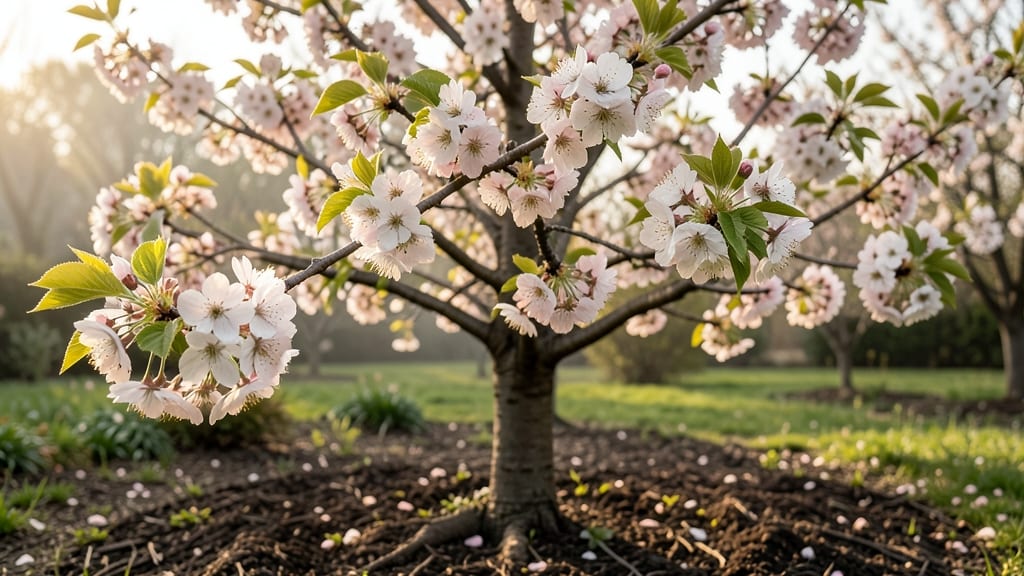
Cherry trees bloom in spring 🌸, with their exact timing depending on variety, climate, and tree age—some burst into color as early as late March, while others wait until June.
Timing your cherry tree bloom season correctly ensures you’ll enjoy vibrant spring blossoms—and delicious fruit—every year. But did you know different varieties flower at wildly different times, some even in late winter or early summer?
If you’ve ever wondered why your neighbor’s tree is already in full bloom while yours is still bare, it’s likely due to factors like chilling hours, sunlight exposure, or even last year’s care routine.
In this guide, I’ll break down bloom times by variety, share tips to encourage healthy blooms, and help you predict when your own tree will burst into color.
Cherry tree bloom time by variety: full seasonal timeline
Planning your garden around cherry tree bloom times means you’ll never miss those stunning pink and white blossoms or the sweet-tart fruit that follows. But with over 12 popular varieties, bloom windows vary dramatically—from late winter to early summer.
Let’s break down the exact timing for each, adjusted for USDA zones 5-9, so you can anticipate nature’s showstopper.
First, know that tart cherries (like Montmorency) often bloom earlier than sweet cherries, while ornamental varieties like Kwanzan may flower in late spring. Regional differences also matter: trees in zone 9 may bloom 2-4 weeks earlier than those in zone 5.
Use this guide to align your expectations with your local climate.
Below is a seasonal timeline for 12+ varieties, including early bloomers (late March) and late bloomers (June). Adjust for your zone by subtracting 1-2 weeks for warmer climates or adding 1-2 weeks for cooler ones.
For sweet cherries, varieties like Bing and Rainier bloom in late April, making them ideal for zone 5 gardeners who want early fruit. Meanwhile, Montmorency tart cherries are the earliest bloomers, often opening in early April, perfect for cold climates where frost is still a risk.
How to predict your cherry tree’s bloom time accurately
Predicting when your cherry tree will bloom isn’t just about checking a calendar—it’s a science! Understanding chilling hours, soil temperature, and sunlight exposure lets you forecast bloom time with surprising accuracy.
Last year’s blooming date is your best starting point, but local climate shifts can throw off even the most reliable trees. Let’s break down how to turn guesswork into a precise prediction.
First, know that cherry trees need 400–1,000 hours of temperatures between 32–45°F (0–7°C) to trigger blooming. This is called chilling hours, and it’s the #1 factor in bloom timing.
For example, a Stella® cherry tree in USDA Zone 6 might bloom in mid-April, while the same tree in Zone 9 could wait until May if chilling hours are insufficient. Use a chilling hour calculator (like the one from Orchard People) to estimate your tree’s needs.
- 🌡️ Chilling Hours: 400–1,000 hours below 45°F (0–7°C) required for blooming. Track your local winter lows!
- ☀️ Sunlight Exposure: 6+ hours of full sun daily speeds up bloom timing by 1–2 weeks compared to partial shade.
- 🌱 Soil Temperature: Warmer soils (50–60°F or 10–15°C) trigger root activity, which signals blooming. Use a soil thermometer!
- 📅 Last Year’s Data: Subtract 7–14 days from last year’s bloom date as a baseline. Adjust for warmer winters (+7 days) or colder ones (–7 days).
- 🌳 Tree Age/Maturity: Young trees (<5 years) may bloom 2–4 weeks later than mature trees due to energy demands.
Your last year’s bloom date is your secret weapon. If your Tartarian cherry bloomed on April 5th last year, start monitoring buds around March 20th–25th this year. However, adjust for temperature anomalies: a warmer-than-average winter might delay blooms by 1–2 weeks, while a cold snap can advance them.
For example, if your area had 500 chilling hours last winter but typically gets 800, expect blooms to push back by 10–14 days.
Don’t overlook soil temperature—it’s often overlooked but critical. Cherry trees need soil temps to reach 50°F (10°C) before roots activate and signal blooming. Test your soil with a thermometer in early spring.
If temps lag behind air temps (common in clay soils), mulch with straw or wood chips to insulate roots. Pro tip: Black plastic mulch can warm soil by 5–10°F, accelerating bloom timing in cooler climates.
Finally, sunlight exposure plays a sneaky role. Trees in full sun (6+ hours/day) often bloom 1–2 weeks earlier than those in partial shade. If your tree is in a north-facing yard or under tall shade trees, expect delays.
Prune nearby branches now to maximize light—just avoid heavy pruning in late winter, which can stress the tree and delay blooming. A simple sunlight audit (track shadows with a stake) can reveal hidden light deficits.
Putting it all together: combine your chilling hour total, last year’s bloom date, and soil/sun adjustments to narrow bloom time to a 3–5 day window.
For instance, if your Rainier cherry bloomed April 10th last year in a 600-hour chilling zone with full sun, aim for April 3rd–7th this year. Happy predicting—and enjoy that spring spectacle! 🌸