
Blooming
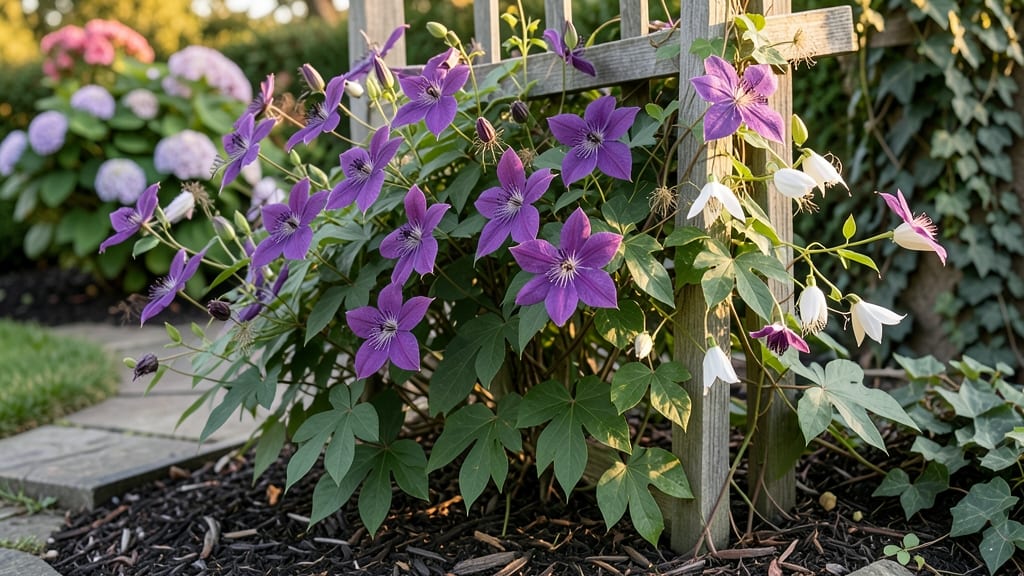
Your clematis bloom time depends entirely on its pruning group — and getting it wrong means missing out on months of vibrant 🌸 color.
Picture this: You’ve waited all winter for those first spring blooms, only to realize you pruned at the wrong time, sending your plant into a summer slumber instead. The good news?
With the right timing, you can stretch clematis blooms from early spring to late fall — but it starts with knowing which group your variety belongs to and when to prune it.
Group 1 clematis (like 'Jackmanii') bloom on last year’s growth, while Group 3 (such as 'Nelly Moser') need aggressive pruning to rebloom. Group 2 varieties fall somewhere in between.
This guide breaks down the exact bloom windows for each, so you can plan your pruning schedule like a pro and enjoy year-round flowers without the guesswork.
Ready to transform your garden into a nonstop floral show? We’ll cover pruning deadlines, seasonal care tips, and the best varieties for extended blooms — so you never miss a single 🌸 again.
Clematis bloom time by pruning Group: when to expect flowers
Understanding clematis bloom time starts with recognizing the three pruning groups, each with distinct flowering cycles. Group 1 blooms on previous year's growth, Group 2 blooms on both old and new wood, and Group 3 relies on current year's growth for flowers.
This distinction determines your pruning schedule and bloom windows.
Group 1 clematis varieties, like 'Alionush' and 'Wyatt's Blue', produce flowers in late spring on stems from last year. Group 2 varieties, such as 'Nelly Moser' and 'Comtesse de Bouchard', bloom twice—once in early summer and again in late summer/fall.
Group 3 varieties, including 'Jackmanii' and 'Perle d'Azur', bloom exclusively in mid to late summer.
Pruning timing directly impacts bloom windows. Cutting too early or late can delay or even eliminate flowers. For example, pruning Group 1 clematis in early spring risks removing next year's blooms. Meanwhile, Group 3 varieties need aggressive pruning in late winter to encourage new growth and summer flowers.
Visual cues help identify bloom times. Early bloomers like 'Group 1 varieties often have larger, more delicate flowers in shades of white, pink, or blue. Mid-season bloomers like 'Group 2 varieties may show two distinct flower types—one on old wood and another on new growth. Late-season bloomers like 'Group 3 varieties typically feature bold, compact flowers in vibrant colors.
| Pruning Group | Bloom Time | Pruning Time | Key Varieties | Visual Cues |
|---|---|---|---|---|
| Group 1 | Late Spring | Early Spring (after blooms fade) | Alionush, Wyatt's Blue | Large, delicate flowers |
| Group 2 | Early Summer & Late Summer/Fall | Late Spring (after first bloom) | Nelly Moser, Comtesse de Bouchard | Two flower types on same vine |
| Group 3 | Mid to Late Summer | Late Winter (aggressive prune) | Jackmanii, Perle d'Azur | Bold, compact flowers |
For Group 1 clematis, prune right after blooming (typically June or July) to avoid cutting off next year’s flowers. These varieties bloom on last year's growth, so late pruning can result in missed blooms.
Look for woody stems and buds forming at the base—these are your clues to wait.
Group 2 clematis require a two-step pruning approach. First, prune lightly in early spring to shape the plant and encourage early blooms. Then, prune again in late spring after the first flush of flowers to promote late-season blooms. This group’s dual blooming makes it ideal for extending your garden’s color palette.
If you’re growing Group 3 clematis, prune aggressively in late winter (just as new growth begins). Cut back to 2-3 healthy buds above the ground to stimulate vigorous new growth and summer blooms.
These varieties are the most forgiving if pruned late, but early pruning ensures the longest bloom period.
Regional climate plays a role in bloom timing. In warmer climates (Zones 8-10), Group 1 clematis may bloom earlier, while Group 3 varieties might flower later into fall.
In cooler climates (Zones 3-6), blooms may shift slightly later, especially for early-season varieties. Adjust pruning times by 1-2 weeks based on your local frost dates.
To extend bloom seasons, deadhead spent flowers regularly, especially for Group 2 and 3 varieties. This encourages reblooming and keeps your clematis looking fresh. For Group 1, avoid deadheading until after blooms fade, as it won’t stimulate additional flowers on last year’s growth.
Pro tip: Mark your pruning schedule with colored flags on stakes near your clematis. This visual reminder ensures you prune at the right time for each pruning group and variety. With the right timing, you can enjoy clematis blooms from spring to fall!
Pruning calendar for year-round clematis blooms: month-by-month guide
Clematis plants reward precise pruning with longer bloom seasons and healthier vines. The key is aligning your cuts with each variety's natural bloom cycle. Early bloomers (Group 1) need minimal pruning, while late bloomers (Group 3) thrive with aggressive cuts.
Let's map out your month-by-month pruning schedule to keep flowers appearing from spring through fall.
First, identify your clematis group—this determines your entire pruning strategy. Group 1 blooms on previous year's wood in early spring, Group 2 blooms twice (spring and summer) on both old and new growth, and Group 3 produces all flowers on current year's growth in summer/fall.
Knowing this helps you time cuts perfectly to avoid missing blooms.
🌸 Clematis Bloom Time & Pruning Highlights
- Spring (March-May): Prune Group 1 after blooms fade; Group 3 gets minimal cuts now. Deadhead all spent blooms immediately.
- Summer (June-August): Group 2 & 3 need regular deadheading. Prune Group 3 back by 1/3 after summer blooms.
- Fall (September-November): Light pruning for Group 1; remove dead/diseased stems. Stop fertilizing by October.
- Winter (December-February): No pruning—let vines rest. Plan next year's support structure if needed.
📌 Pro Tip: Always prune above a leaf node and use sterilized shears to prevent disease.
Let's start with spring pruning (March-May), the foundation for summer blooms. For Group 1 clematis, wait until after their first flush of flowers fades—usually late April to early May.
Cut back any dead stems and shape the plant, but avoid heavy pruning. Group 2 varieties get light pruning to remove dead wood, while Group 3 should only have dead stems removed now. Deadhead any spent blooms immediately to encourage more flowers.
Summer (June-August) is when Group 2 and 3 clematis really shine.
For Group 2, deadhead regularly to prolong blooms—cut stems back to the nearest healthy leaf after flowers fade. Group 3 varieties need more aggressive action: after their summer blooms finish (usually by August), prune back by one-third to encourage new growth for potential late-season flowers.
Water deeply during dry spells to support this regrowth.
As fall approaches (September-November), shift to light maintenance. Remove any dead or diseased stems from all groups, but avoid heavy pruning. Stop fertilizing by mid-October to let plants prepare for dormancy.
For Group 1, you can do a light shape-up now, but avoid removing more than 20% of the plant. Mulch around the base to protect roots from winter frost.
Winter (December-February) is your clematis's resting period. No pruning should occur—this is when plants set buds for next year's blooms. Use this time to plan next year's support structure if needed, and check for any winter damage in late winter.
In Zone 6a and colder, add extra mulch if temperatures drop below 20°F.
By following this month-by-month schedule, you'll enjoy continuous clematis blooms from early spring through late fall. The secret is matching your pruning to each group's natural bloom cycle—patience and precision pay off with stunning, long-lasting flowers! 🌷