
Blooming
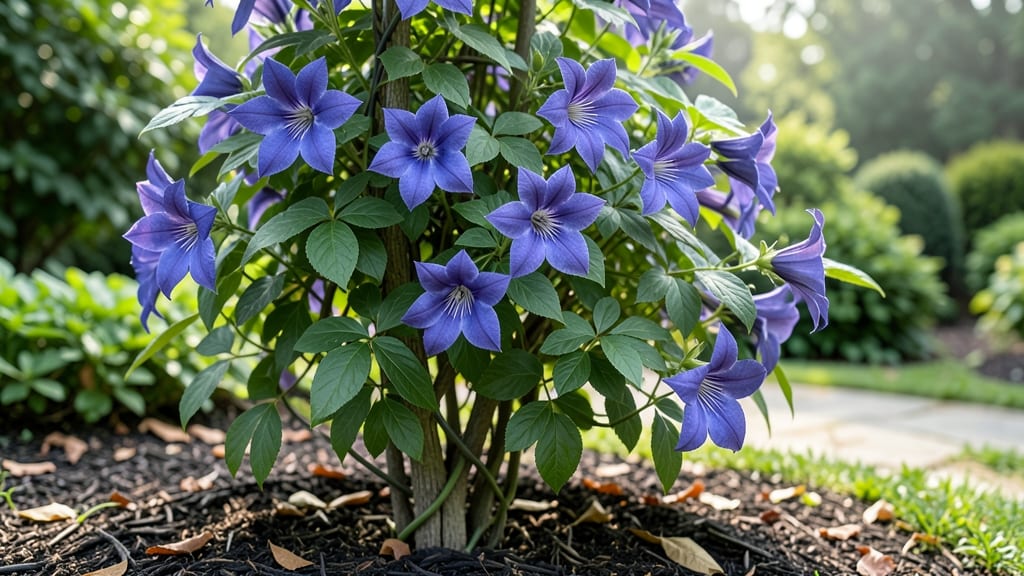
The Jackmanii clematis blooms in late spring to summer 🌸, but its timing can be unpredictable unless you know the right tricks.
If your Jackmanii clematis blooms later than you'd like—leaving your garden bare through early summer—these pruning secrets could transform its flowering schedule and extend your season of stunning purple blooms.
This vine thrives in USDA Zone 6a and beyond, but cooler climates often push blooms earlier, while hotter regions may delay them. Understanding these patterns helps you plan your garden layout and support structures before planting.
Below, I’ll share how to time your pruning for earlier blooms, pair it with complementary plants, and avoid common mistakes that rob you of summer color.
Understanding Jackmanii clematis bloom time and natural growth cycles
If you've ever wondered why your Jackmanii clematis seems to skip early summer blooms, the answer lies in its natural growth cycle. Unlike early-season varieties, this late-blooming clematis typically produces its stunning purple flowers from mid-summer to fall, aligning with its Group 3 pruning type.
This timing often leaves gardeners with bare vines during the peak spring display season, but understanding its rhythm can help you adjust expectations and plan better.
The Jackmanii clematis follows a two-year growth pattern where it focuses on vine development in its first year, storing energy for flower production in subsequent years.
This explains why young plants may appear lush but flowerless during their first growing season. Patience is key—mature vines (typically 3+ years old) deliver the abundant blooms we all love.
| Growth Stage | Bloom Period | Key Characteristics | Pruning Needs |
|---|---|---|---|
| Year 1 | None | Focuses on root/vine growth | Minimal pruning |
| Year 2+ | Late July-October | Produces 6-8" purple blooms | Hard prune in late winter |
| Early Spring | No blooms | New growth emerges | Light maintenance cuts |
| Post-Bloom | None | Prepares for next season | Deadhead spent flowers |
One common misconception is that Jackmanii clematis should bloom in early summer, but its natural timing is actually 3-4 weeks later than many popular varieties. This late-season performance makes it perfect for fall garden displays and pairs beautifully with autumn foliage.
However, if you're craving earlier blooms, strategic pruning techniques can shift the timeline slightly—though you'll still miss the peak spring window.
The Group 3 pruning classification of Jackmanii clematis means it blooms on current year's growth, unlike Group 1 or 2 varieties that flower on old wood.
This growth habit explains why late winter pruning (typically February-March) is critical—it removes last year's spent stems and encourages new flowering shoots. Without this hard pruning, your plant may produce fewer, weaker blooms later in the season.
Climate plays a surprising role in Jackmanii bloom timing. In cooler regions (USDA Zones 4-6), these clematis often bloom earlier (as early as July) because the shorter growing season triggers flowering sooner.
Meanwhile, in warmer climates (Zones 7-9), blooms may appear later (August-September) as the plant takes longer to mature. Heat stress can also delay flowering, so providing afternoon shade in hot areas can help maintain bloom quality and timing.
If you're comparing Jackmanii clematis to early-blooming varieties like Clematis montana or Clematis viticella, the differences become clear. While those varieties produce spring flowers on old wood, Jackmanii focuses on late-season spectacle.
This makes it an excellent sequential bloomer when paired with spring-flowering clematis—creating a continuous display from May through October.
For gardeners eager to extend the bloom season, deadheading spent flowers can encourage secondary blooms—though these will be smaller and less abundant than the main flush. The key is to remove faded blooms promptly while leaving some seed heads for winter interest.
This balance between flower production and plant health is what keeps your Jackmanii clematis thriving year after year.
Understanding these natural cycles helps you manage expectations while still enjoying your clematis's season-long performance. With the right pruning schedule and growing conditions, you can transform what might seem like a late bloomer into a garden showstopper that steals the show when other plants begin to fade.
Remember, the Jackmanii clematis isn't trying to disappoint—it's simply following its evolutionary timeline. By working with its natural growth patterns rather than against them, you'll create a garden that blooms beautifully from summer through fall, providing color and texture when many other plants are winding down.
Step-by-step pruning schedule to force early summer Jackmanii blooms
If your Jackmanii clematis typically blooms in late summer, you can trick it into flowering earlier with a strategic pruning plan.
The key is understanding its growth cycle—this variety produces flowers on new wood, meaning aggressive pruning in winter or early spring encourages robust early-season growth that will bear blooms sooner. Let’s break down the exact timing and techniques to maximize those purple blooms by June.
Start by cutting back your clematis to just 12-18 inches above the ground in late winter (just before new growth begins). This hard pruning removes old, woody stems and forces the plant to focus energy on new, vigorous shoots that will flower earlier.
Pair this with a balanced fertilizer (like 5-10-10) in early spring to support the rush of growth.
Cut back all stems to 12-18 inches above ground. Remove dead or weak growth first, then prune healthy stems to encourage new, flower-bearing shoots.
Apply balanced fertilizer (5-10-10) and mulch heavily to retain moisture. Monitor for new shoots—once they reach 6 inches, they’re ready for light pruning to shape the vine.
Pinch back tips of new growth to encourage branching. Remove any suckers at the base (non-flowering stems) to redirect energy to flowering shoots.
After first flush of blooms fades, cut back spent flowers to first healthy leaf. This promotes a second flush of blooms in late summer and keeps the vine tidy.
Lightly prune to remove dead or crossing stems. Avoid heavy cuts—save hard pruning for late winter to prevent winter dieback.
After the first flush of blooms in early summer, don’t stop there! Deadhead spent flowers regularly to encourage continuous blooming throughout the season. I’ve found that Jackmanii clematis responds well to this technique, often producing a second wave of blooms in late summer if given the right care.
Pair this with regular watering (deep soaks once a week) and morning sunlight to keep the vine thriving.
For cooler climates (USDA zones 3-6), advance your pruning by 2-3 weeks to account for slower spring growth. In warmer zones, delay until March to avoid heat stress on new shoots.
The goal is to time your pruning so that new growth is 6-8 inches tall by late May, ensuring blooms arrive by early June.
Pro tip: Use sharp, clean pruners and make cuts at a 45-degree angle just above a leaf node. This minimizes damage and encourages healthier regrowth. With this schedule, you’ll transform your Jackmanii clematis from a late-summer bloomer to an early-summer star in your garden. 🌸