
Blooming
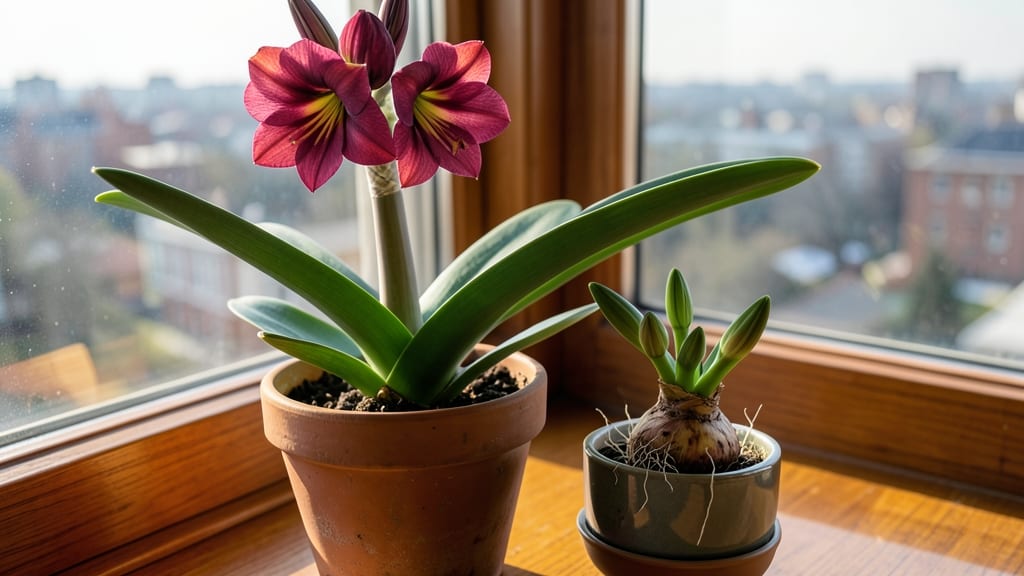
Amaryllis do bloom more than once when you provide them with bright light for 6-8 hours daily and a 6-8 week rest period after flowering. Proper watering and light exposure prevent reblooming issues.
Amaryllis bulbs store energy during their growth phase, and that energy fuels their spectacular blooms.
When they receive bright, indirect sunlight consistently, they build up enough reserves to produce multiple flower spikes over time. 🌿 The key is mimicking their natural seasonal cycles—giving them a period of reduced watering and cooler temperatures after blooming helps reset their internal clock for the next cycle.
Without this rest, the plant focuses all its energy on leaf growth rather than flower production.
Think of it like training for a marathon: you need recovery time to perform at your best. Many growers mistakenly keep their amaryllis in constant bloom mode, but this actually exhausts the bulb.
I've found that patience pays off—waiting for the leaves to yellow naturally before resuming regular care often results in even more dramatic second blooms the following year.
💡 In This Article
- How Light Exposure Triggers Amaryllis Reblooming
- Step-by-Step Guide to Encouraging Second Amaryllis Blooms
How light exposure triggers amaryllis reblooming
Amaryllis bulbs rely on a process called photoperiodism—their internal response to daylight duration—to trigger blooming. These plants originate from South America, where they experience distinct seasons with long daylight hours in summer and shorter days in winter.
When your amaryllis receives 6-8 hours of bright, indirect light daily, it signals the bulb to store energy through photosynthesis in its leaves and stem. This stored energy, primarily in the form of starches, fuels the development of flower buds.
The intensity matters just as much as duration. Amaryllis thrive near east- or west-facing windows where they get gentle morning or afternoon sun without harsh midday rays.
In my experience, bulbs placed under grow lights (12,000-15,000 lux) for 10-12 hours daily can even outperform natural light conditions, especially in low-light winter months.
The key is replicating the 12+ hour daylight their native habitat provides during growing seasons—anything less forces the bulb into survival mode, diverting energy to leaf growth instead of blooms.
Here's the science: chlorophyll in amaryllis leaves captures sunlight, converting it into glucose through photosynthesis. This glucose then converts to starch and stores in the bulb's scales. When the bulb receives consistent light for 8+ weeks, it accumulates enough reserves to produce a flower stalk.
Without sufficient light, the plant becomes "light-starved," and even if it produces leaves, it won't have the energy to form buds. 🌱 I've seen amaryllis with lush green foliage but no blooms because they were kept in dim corners—light is the #1 factor controlling reblooming potential.
Winter dormancy is where the magic happens. After flowering, amaryllis need a 6-8 week rest period with reduced watering and cooler temperatures (50-60°F). This mimics their natural dry season, allowing the bulb to fully recharge.
During dormancy, the plant converts stored starches back into energy compounds, preparing for next year's growth. Skipping this rest period is like trying to run a marathon without training—you'll burn out quickly. The bulb needs this downtime to reset its biological clock and rebuild energy reserves for future blooms.
Light quality also plays a subtle role. Amaryllis prefer full-spectrum light that includes blue and red wavelengths—these are crucial for photosynthesis and flower initiation.
Fluorescent bulbs (especially daylight spectrum) or LED grow lights can supplement natural light, but they should be placed within 6-12 inches of the plant to ensure adequate intensity.
I've noticed that amaryllis under cool-white LEDs often produce smaller blooms compared to those getting natural sunlight, suggesting that the full spectrum of sunlight contains additional signals the plant responds to.
One common misconception is that amaryllis need darkness to bloom. Actually, it's the contrast between light and rest periods that triggers flowering. Think of it like a battery: you need to charge it fully (light phase) before it can power a new cycle (blooming).
When growers keep their plants in constant light, the bulb never gets the signal to switch from vegetative growth to reproductive growth.
This is why many amaryllis enthusiasts report better second blooms when they move their plants outdoors in summer—the natural light cycle provides both long days and seasonal rest periods.
For maximum reblooming success, aim for this light cycle: 8+ hours of bright light daily for 8-12 weeks during the growing season, followed by 6-8 weeks of reduced light and cooler temps after flowering.
This pattern mimics their natural environment and gives you the best chance of seeing those stunning trumpet-shaped blooms return year after year. 💫