
How To
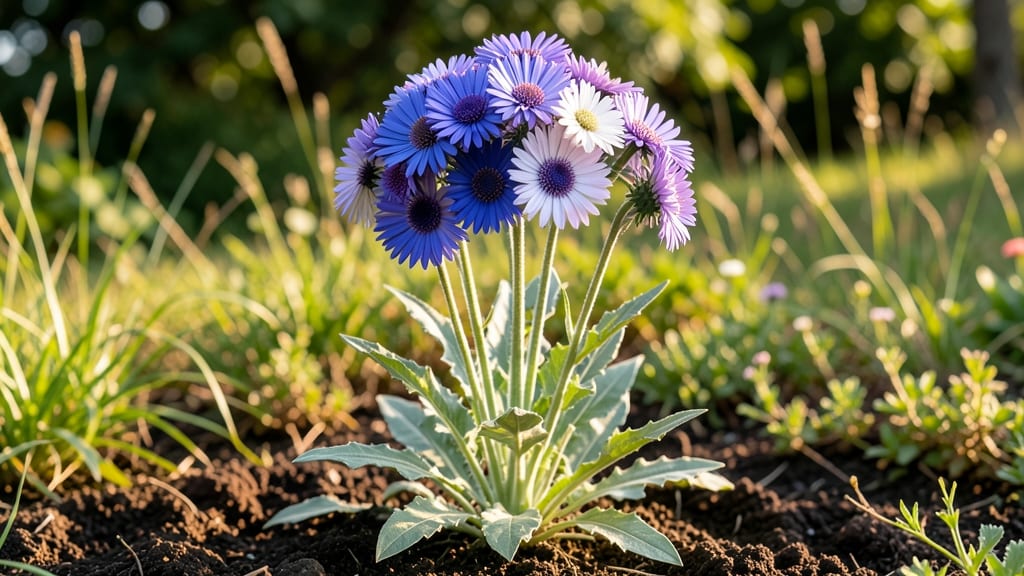
Bachelor buttons bloom all summer when given full sun exposure and regular deadheading, typically flowering from early June through September with vibrant purple blooms, though their production may slow during extreme heat or drought.
These cheerful flowers thrive in warm climates where temperatures stay between 65°F and 85°F, with their longest blooming periods occurring in regions like the Southeast U.S. where summer humidity supports continuous growth. 🌸 The key to their prolonged flowering lies in their resilience—once established, bachelor buttons develop deep root systems that help them withstand occasional dry spells, though consistent moisture keeps them at peak performance.
Varieties like 'Blue Butterflies' often outperform others in heat tolerance, making them excellent choices for extended summer color.
What sets bachelor buttons apart is their ability to self-seed prolifically, which means you'll often see new plants popping up each year without extra effort. This natural propagation helps maintain your garden's purple display season after season.
For gardeners in hotter climates, providing afternoon shade during peak summer months can prevent the flowers from wilting prematurely while still allowing plenty of sunlight for robust growth.
💡 In This Article
- Bachelor Buttons Flowering Timeline in Warm Climates
- Extending Bachelor Buttons Blooms: Pruning and Care Tips
Bachelor buttons flowering timeline in warm climates
Bachelor buttons, or Centranthus ruber, kick off their flowering season in early summer as daytime temperatures consistently reach 65°F or higher. The first buds typically appear in late May or early June, with the most vibrant purple blooms emerging within 2-3 weeks once established.
This timing aligns perfectly with the natural pollinator awakening, attracting bees and butterflies that help propagate the plant. 🌸 What's fascinating is how their blooming cycle mirrors the heat progression—flowers open wider on cooler mornings and close slightly in midday heat, a survival mechanism to conserve moisture.
The peak flowering period spans from July through August, when the plant receives 6-8 hours of direct sunlight daily. This intense light exposure triggers photoperiodism—the plant's internal clock that signals it to produce more flowers.
Varieties like 'Crimson Butterflies' often peak slightly earlier than standard purple types, while 'Alba' (white-flowered) varieties may bloom 1-2 weeks later due to their different genetic responses to light.
The key difference between summer and fall blooms lies in temperature: while summer flowers thrive in 75-85°F conditions, fall blooms often appear when temperatures dip below 80°F, signaling the plant to prepare for cooler months.
Sunlight intensity plays a critical role in how long these flowers last. In full sun conditions (defined as more than 6 hours of direct sunlight), bachelor buttons maintain their vibrant color for 4-6 weeks per flush before requiring deadheading.
However, in partial shade (3-5 hours of sunlight), blooms may last 2-3 weeks but produce fewer flowers overall.
The plant's deep purple hue comes from anthocyanin pigments, which actually become more intense when exposed to higher light levels—a natural sunscreen mechanism that protects the delicate petals from UV damage. 💫 This is why gardeners in southern climates often see more prolonged blooming than those in northern regions.
Temperature extremes are the main factor that can shorten the flowering window. When daytime highs exceed 90°F for more than 3-5 consecutive days, bachelor buttons may enter a semi-dormant state, causing flowers to wilt and drop prematurely.
This heat stress triggers the plant's survival mechanisms, redirecting energy toward root development rather than flower production. Conversely, in coastal regions where temperatures stay moderate due to ocean breezes, blooms can continue into late September or early October, sometimes lasting until the first frost.
The plant's native Mediterranean habitat explains this resilience—it's adapted to hot, dry summers with occasional rain.
Soil moisture levels create another critical variable in the blooming timeline. While bachelor buttons are drought-tolerant once established, they produce their most abundant flowers when soil moisture remains consistent at 40-60% capacity.
During drought conditions, the plant conserves water by producing fewer blooms and smaller leaves—a survival strategy that prioritizes root expansion over above-ground growth. 🌿 This is why gardeners in arid climates often see two distinct blooming periods: a strong flush after spring rains and a smaller one after summer monsoons.
Understanding this cycle helps explain why some gardens see continuous blooms while others experience sporadic flowering.
One often-overlooked factor is the plant's age. First-year bachelor buttons typically produce 50-70% fewer flowers than mature plants because their energy goes toward establishing roots. By the second year, when the root system reaches 12-18 inches deep, flowering becomes more consistent and abundant.
This maturity timeline explains why some gardeners report "explosive" blooming in their third year—once the plant has fully established its water and nutrient-gathering network. 🌱 The combination of proper sunlight, temperature management, and root development creates the ideal conditions for summer-long purple displays.