
Blooming
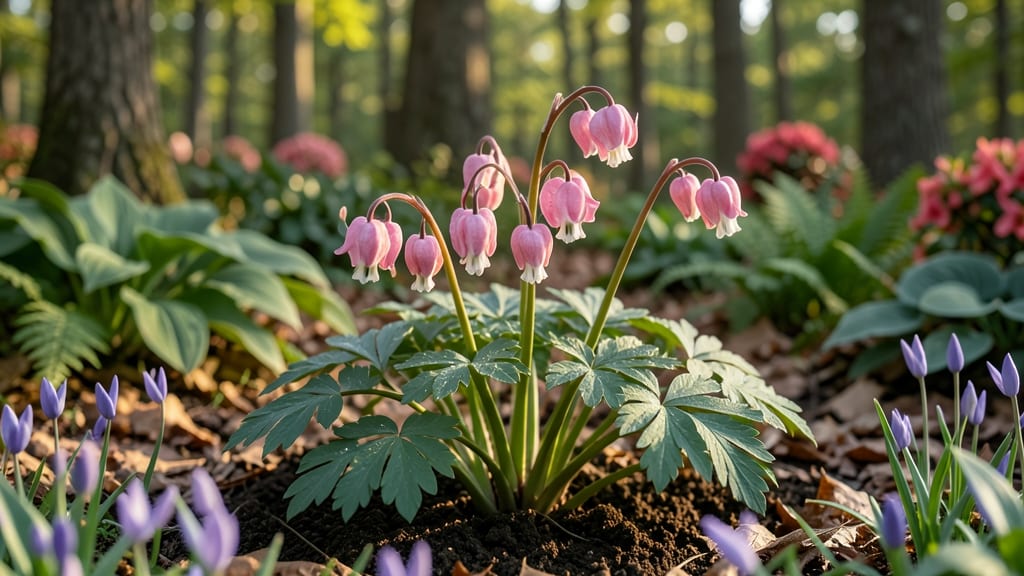
Bleeding hearts do not bloom all summer—they typically flower for 4-6 weeks in spring, with reblooming rare except in mild climates (Zones 5-8) where deadheading spent blooms may encourage sporadic summer flowers. Most varieties are spring ephemerals, prioritizing foliage over prolonged blooming.
Bleeding hearts (Dicentra spectabilis) are spring ephemerals, meaning they focus their energy on a single, dramatic bloom cycle rather than continuous flowering. 🌸 The plant's natural growth pattern prioritizes foliage production after blooming, which is why you'll often see lush green leaves even when flowers have faded.
In cooler climates, these plants enter dormancy after their spring display, while warmer Zones 5-8 may see occasional summer reblooming if you remove spent flowers promptly.
What many gardeners don't realize is that these plants actually store energy in their roots during the growing season. This stored energy fuels their spectacular spring blooms rather than supporting prolonged summer flowering.
The key to encouraging any summer blooms lies in proper deadheading and maintaining consistent moisture levels—especially during the plant's active growth phase in spring.
💡 In This Article
- Why Bleeding Hearts Bloom Seasonally (And How Climate Affects Reblooming)
- Maximizing Bleeding Heart Blooms: Pruning, Deadheading, and Climate-Specific Care
Why bleeding hearts bloom seasonally (and how climate affects reblooming)
The spring blooming cycle of bleeding hearts is hardwired into their biology as a survival strategy. These plants allocate nearly all their energy to producing flowers in early spring when conditions are ideal—cool temperatures (50-60°F) and increasing daylight hours trigger their flowering hormones.
The plant's roots store carbohydrates during fall and winter, which fuel this dramatic but brief bloom period. Once the flowers fade, the plant shifts focus to foliage production, creating the lush heart-shaped leaves that give this genus its name.
Climate plays a crucial role in determining whether you'll see any summer blooms. In Zones 5-8, the milder temperatures and longer growing season can sometimes encourage sporadic reblooming, but this requires precise conditions. The plant needs consistent moisture and 60-70°F daytime temperatures to initiate new flower buds.
In colder zones (3-4), the plant typically enters full dormancy after spring blooming, conserving energy for next year's display.
What's fascinating is how daylight length influences this—bleeding hearts need at least 12-14 hours of daylight to trigger flowering, which explains why summer blooms are rare in northern climates where days shorten quickly.
The botanical term for this seasonal pattern is "monocarpic flowering," where the plant produces flowers once per growing season before shifting resources to foliage or root development. This is different from continuous bloomers like impatiens or petunias, which produce flowers throughout the season.
The trade-off is that bleeding hearts prioritize dramatic spring displays over prolonged but modest blooming. 🌿 This explains why you'll often see gardeners with lush foliage but no flowers in summer—the plant is simply following its natural growth cycle.
There's a common misconception that all bleeding heart varieties bloom continuously. In reality, only a few cultivars like 'Alba' or 'Gold Heart' show any tendency toward summer reblooming, and even then, it's typically just a few scattered flowers rather than a full display.
The key difference lies in their genetic programming—most varieties are bred for spring spectacle rather than summer performance. This is why gardeners in Zone 7 might see occasional summer blooms while those in Zone 4 see none at all.
What most people overlook is how the plant's root system behaves during this cycle. After spring blooming, bleeding hearts develop a robust root network that stores energy for next year's flowers.
This energy storage is why you shouldn't prune the plant back in fall—you're essentially cutting off its food supply for next spring's display. The foliage remains green well into summer and fall, continuing photosynthesis to fuel these underground reserves.
This explains why you'll often see bleeding hearts with no flowers but healthy leaves throughout summer.
Understanding this growth pattern helps explain why deadheading (removing spent flowers) can sometimes encourage summer blooms in mild climates. When you remove the seed pods, the plant doesn't waste energy on seed production and may redirect some resources toward new flower buds.
However, this only works in Zones 5-8 where the growing season remains active. In colder zones, the plant's natural dormancy cycle takes over before any summer blooms can develop.
The science behind this seasonal blooming involves complex hormonal signals. Gibberellins (growth hormones) promote stem elongation and leaf production, while florigen (a flowering hormone) triggers bloom formation. In spring, the balance shifts dramatically toward florigen production, creating that spectacular display.
As temperatures rise, the plant's natural response is to reduce florigen production and increase gibberellin levels, shifting focus to foliage growth. This hormonal shift explains why you won't see bleeding hearts blooming continuously—they're biologically programmed for a single dramatic performance each year.