
Blooming
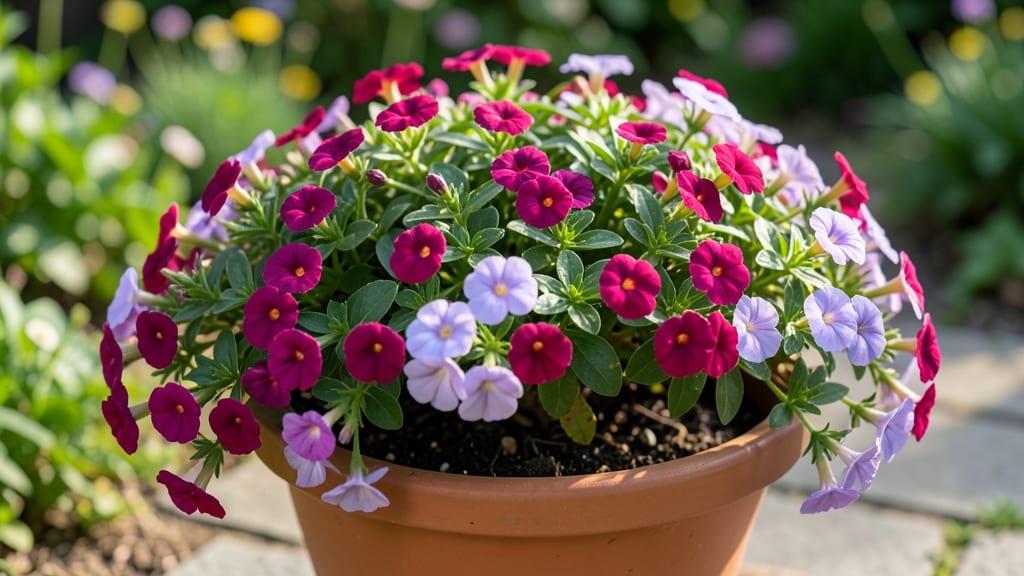
Calibrachoa blooms all summer when you provide consistent deadheading, balanced watering, and partial shade during heatwaves to sustain their flowering energy. Heat-tolerant varieties like Calibrachoa paranaensis continue producing vibrant blooms under ideal summer conditions.
Calibrachoa thrives in summer heat but needs your attention to keep blooming nonstop. 🌞 The key is removing spent flowers daily—this redirects the plant's energy toward new buds instead of seed production.
I've seen calibrachoa plants in containers wilt under direct afternoon sun, so providing afternoon shade (especially in zones above 90°F) prevents stress that stunts flowering. Proper watering—about 1 inch per week—keeps roots hydrated without waterlogging, which can cause root rot and halt blooms.
What many gardeners miss is the fertilizer timing. A balanced, water-soluble fertilizer every 2-3 weeks during peak summer helps maintain bloom production, but over-fertilizing can lead to leafy growth at the expense of flowers.
I recommend using a 10-10-10 formula for best results. The right care turns calibrachoa into a summer-long bloomer that outshines many annuals.
💡 In This Article
- How Heat and Humidity Affect Calibrachoa Flowering
- Deadheading and Care Tips for Nonstop Calibrachoa Blooms
How heat and humidity affect calibrachoa flowering
Calibrachoa's ability to bloom continuously throughout summer depends heavily on its physiological response to temperature and humidity. These plants originate from South American regions where they evolved to thrive in warm climates, but their optimal temperature range for flowering sits between 65-85°F.
When temperatures rise above 90°F, the plant's metabolic processes slow down, reducing photosynthesis efficiency by up to 30%. This is because higher temperatures cause stomata (the tiny pores on leaves) to close to conserve moisture, limiting the plant's ability to absorb carbon dioxide needed for energy production.
The heat also triggers stress signals that redirect the plant's energy toward survival rather than flower production. You'll notice this when calibrachoa starts producing fewer blooms and more leafy growth—a survival mechanism to increase surface area for water absorption.
Humidity plays a crucial role too: excessive moisture above 70% can promote fungal diseases like powdery mildew, which weakens the plant and reduces flowering. Conversely, low humidity below 40% causes the soil to dry out faster, putting additional stress on the plant's root system. 🌡️
Heat-tolerant calibrachoa varieties like Calibrachoa paranaensis have developed thicker cuticles and deeper root systems to handle summer conditions better. These adaptations allow them to access water deeper in the soil and reduce water loss through transpiration.
For example, Calibrachoa paranaensis can maintain blooming even when exposed to 95°F temperatures, provided they receive adequate water and partial afternoon shade. The key difference lies in their cellular structure, where these varieties have larger vacuoles to store more water and nutrients during heat stress.
Another critical factor is the plant's circadian rhythm, which regulates flowering. In extreme heat, calibrachoa may enter a dormant-like state where it pauses flower production until conditions improve. This is why consistent care—like providing afternoon shade and maintaining even moisture—is essential.
Without intervention, a calibrachoa plant can reduce its blooming by 50% during peak summer months. The good news is that with the right conditions, calibrachoa can rebound quickly once temperatures drop in the evening.
Consider the microclimate of your garden. Urban areas often experience what's called the "urban heat island effect," where temperatures can be 5-10°F hotter than rural areas. If you're growing calibrachoa in containers, they'll heat up faster than in-ground plants.
To mitigate this, use containers with light-colored finishes or add a layer of mulch to insulate the roots. Even a simple shade cloth (providing 30-50% shade) can make a significant difference in maintaining vibrant blooms during heatwaves.
One common mistake is assuming all calibrachoa varieties respond the same way to heat. Trailing varieties, for instance, often handle heat better than bush types because their sprawling growth allows for better air circulation around the foliage. This reduces the risk of heat-related stress and fungal infections.
If you're growing calibrachoa in hanging baskets, ensure they're placed where they receive morning sun and afternoon shade—this balance is crucial for sustaining their energy reserves for continuous blooming. 🌿