
Blooming
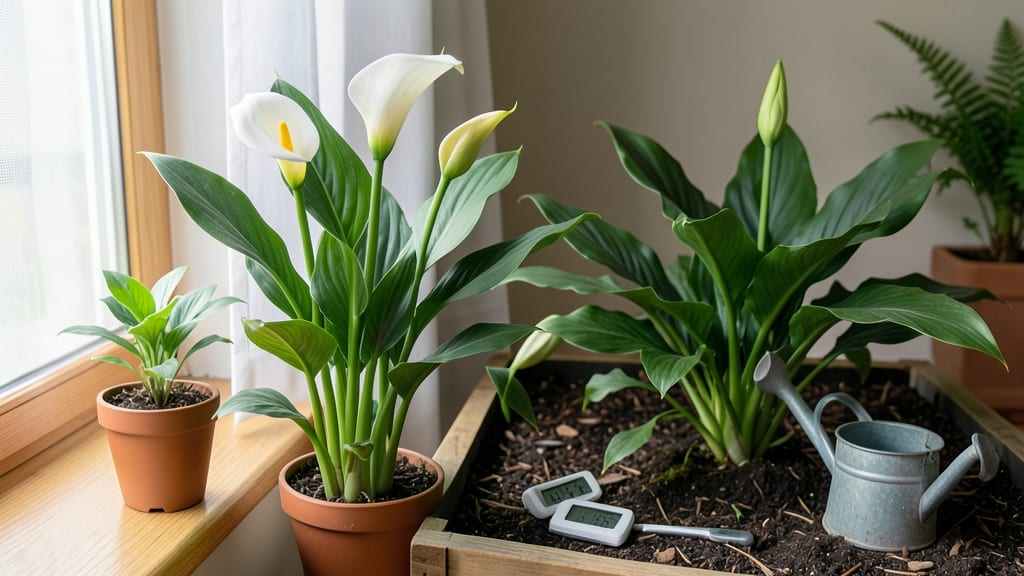
Calla lilies don't bloom all year—their flowering cycles are tightly linked to seasonal changes and specific growing conditions. Most varieties follow spring-to-summer blooming patterns with dormant periods in cooler months, though tropical types may produce occasional flowers in warm climates.
Calla lilies are actually quite particular about their blooming windows. 🌸 The Zantedeschia aethiopica variety, for example, typically blooms from late spring to early fall in temperate zones, while Zantedeschia rehmannii varieties often produce their striking blooms in late summer or early autumn.
These plants respond to environmental cues like temperature shifts and daylight length, which trigger their natural dormancy cycles. In warmer climates, some tropical varieties might surprise you with sporadic blooms, but don't expect continuous flowering throughout all four seasons.
What's interesting is how these plants store energy. During their dormant periods, calla lilies focus on building up root systems rather than producing flowers. This energy storage is what allows them to burst into bloom when conditions become favorable again.
For gardeners in cooler climates, understanding this cycle helps explain why you might see beautiful blooms one year and nothing the next—it's not necessarily a sign of poor care, but rather the plant following its natural rhythm.
💡 In This Article
- Seasonal Bloom Cycles of Calla Lilies
- Extending Calla Lily Blooms: Care Tips for Year-Round Growth
Seasonal bloom cycles of calla lilies
Calla lilies follow strict biological rhythms tied to temperature and daylight, much like many temperate perennials.
Their blooming windows are triggered by specific environmental cues: Zantedeschia aethiopica (the classic white calla) typically responds to 60-70°F daytime temperatures combined with 12-14 hours of daylight, which usually occurs in late spring to early summer.
This variety's blooms often last 6-8 weeks before entering dormancy as temperatures drop below 55°F.
The Zantedeschia rehmannii group, with its vibrant pink and purple blooms, follows a slightly different pattern. These varieties often bloom in late summer to early fall when temperatures remain warm but nights begin cooling—a phenomenon called "thermoperiodism."
Interestingly, their blooming can extend longer in USDA Zones 8-11 where winter temperatures rarely drop below 40°F, allowing for occasional fall or even winter blooms in mild climates.
What's fascinating is how these plants use their leaves as energy factories. During dormancy, calla lilies shed their foliage to conserve water and nutrients, but their rhizomes (underground stems) remain active, storing starches like amylose and amylopectin—the same compounds found in potatoes.
This stored energy fuels their dramatic spring rebirth. In tropical varieties like Zantedeschia elliottiana, this energy storage system allows for more flexible blooming, but they still require consistent warmth above 65°F to trigger flowering.
The key difference between temperate and tropical calla lilies lies in their sensitivity to vernalization (cold treatment) versus photoperiodism (daylight length). Temperate varieties often need a period of cool weather (40-50°F) for 4-6 weeks to break dormancy, while tropical types respond primarily to stable warm conditions.
This explains why you might see continuous blooming in Florida's Zone 9-10 but only seasonal blooms in New York's Zone 6-7.
Here's what happens when conditions are perfect: The plant's apical meristems (growth points) receive signals from both temperature-sensitive proteins and phytochrome pigments that detect daylight length. This dual trigger causes the plant to allocate resources toward flower production rather than leaf growth.
The result? Those iconic, elegant blooms that can reach 6-12 inches tall depending on the variety, with spathes that last 3-4 weeks per stem when conditions are ideal.
One common misconception is that all calla lilies behave the same way.
In reality, Zantedeschia albomaculata (the spotted calla) often blooms in mid-summer with a second flush in early fall if given proper care, while Zantedeschia odorata (the fragrant calla) may produce blooms year-round in tropical climates but requires 70% humidity and daily misting to maintain consistent flowering.