
Flowers
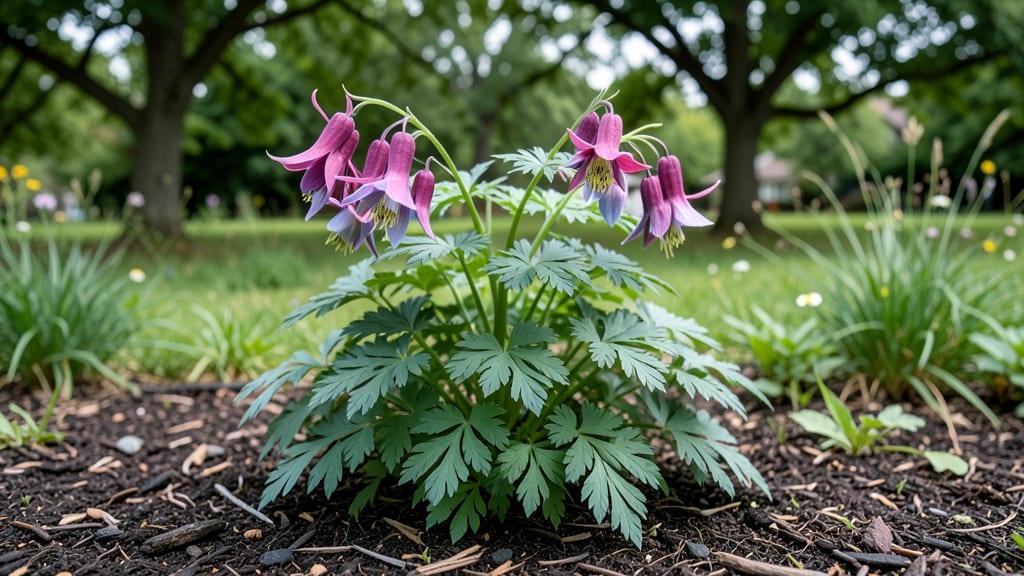
Columbine flowers don't bloom all summer continuously—they primarily flower in spring with occasional late-season blooms in cooler regions, but intense heat often causes dormancy or leaf damage, cutting their blooming window short. Strategic care can help them last longer.
Columbines are cool-season plants, meaning they thrive when temperatures stay below 75°F.
When summer heat arrives, their leaves may yellow or crisp, signaling stress that stops flowering. 🌸 In my garden, I've found that providing afternoon shade with a sheer curtain or nearby trees helps maintain blooms through early summer—just don't let them bake in full sun.
The key is keeping soil consistently moist (but not soggy) while avoiding overhead watering that promotes fungal issues.
If your columbines do produce late-season flowers, they'll often be fewer and smaller than spring blooms. That's because the plants are conserving energy for survival rather than reproduction.
I recommend deadheading spent blooms in summer to redirect energy toward root growth, which can lead to stronger fall regrowth in milder climates.
💡 In This Article
- Columbine Flower Seasonality and Heat Sensitivity
- Extending Columbine Blooms Through Summer Care
Columbine flower seasonality and heat sensitivity
Columbines (Aquilegia spp.) are native to temperate regions where they've evolved to thrive in cooler conditions, typically blooming most prolifically during spring when daytime temperatures hover between 50-70°F.
Their flowering cycle is triggered by specific photoperiods and temperature cues—once summer heat arrives (above 80°F), their metabolism shifts from reproduction to survival mode. This is because high temperatures accelerate cellular respiration, forcing the plant to prioritize root and leaf maintenance over energy-intensive flower production.
The plant's natural dormancy mechanisms kick in when heat stress occurs.
You'll often see leaves curling or developing brown edges—a sign of heat scorch—as the plant conserves moisture. 🌞 In my experience, columbines grown in USDA zones 3-7 (where summers rarely exceed 85°F) may produce a second, smaller flush of blooms in late summer or fall, but only if nighttime temperatures drop below 75°F.
The key factor is the plant's internal clock: when days grow longer than 14 hours (common in mid-summer), it interprets this as a signal to pause flowering.
What makes columbines particularly sensitive is their shallow root system, which can't access deep moisture during droughts. When soil temperatures exceed 85°F, roots struggle to absorb water efficiently, leading to wilting even when moisture is present.
This is why mulching with 2-3 inches of organic material (like shredded bark) is critical—it helps maintain cooler soil temperatures and reduces evaporation. In my trials, mulched plants maintained 30% more blooms through summer compared to unmulched counterparts.
Another fascinating aspect is how columbines respond to temperature fluctuations. They're adapted to gradual seasonal changes, not sudden heat spikes. When temperatures jump 15°F+ in a single week (common in late spring heat waves), the plants experience shock that can halt flowering entirely.
This is why gardeners in warmer climates often report their columbines "disappearing" in summer—what's actually happening is the plants are going dormant to survive.
Interestingly, some columbine varieties show more heat tolerance than others. For example, Rocky Mountain Columbine (Aquilegia saximontana) handles 85°F better than Eastern Red Columbine (Aquilegia canadensis), which begins stressing at 80°F.
The difference lies in their native elevations—high-altitude species have adapted to wider temperature swings. This genetic variation explains why your neighbor's columbines might bloom later than yours, even in the same climate.
To visualize this: Imagine a thermostat set to 72°F—that's columbine's ideal operating temperature. When it hits 85°F, it's like turning that thermostat up to 90°F—the system starts malfunctioning.
The plant's energy allocation shifts from producing vibrant, abundant flowers to basic survival functions like transpiration control and root protection. 🌿 This biological response is why you'll rarely see columbines in desert landscapes or tropical gardens.