
Blooming
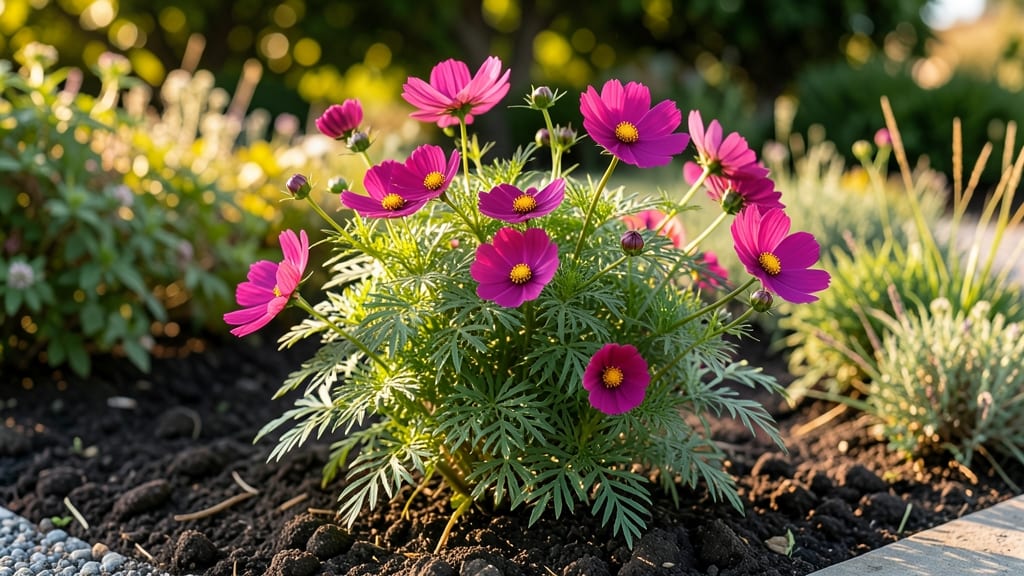
Cosmos bloom all summer long in most regions, typically producing vibrant flowers from early June through September or October, with some hardy varieties like 'Sensation Mix' continuing well into frost. Cooler climates may see shorter bloom periods.
These cheerful annuals thrive on long daylight hours, which is why they shine brightest during summer's peak. 🌼 What sets cosmos apart is their ability to self-seed prolifically, often returning the following year in warmer zones.
I've found that varieties like 'Bright Lights' (with striped foliage) and 'Double Click' (double-petaled blooms) tend to outperform others in heat tolerance, while 'Seashells' offers delicate, ruffled edges that last longer in cooler evenings. The key to maximizing their season is consistent moisture during establishment—once rooted, they're remarkably drought-resistant.
For gardeners in zones 3–10, strategic deadheading (removing spent blooms) can extend flowering by encouraging new growth. In my experience, pinching back leggy stems by one-third in early summer promotes bushier plants.
And here's a pro tip: interplant cosmos with basil or marigolds—they deter pests that might otherwise shorten the bloom cycle.
💡 In This Article
- How Cosmos Flowering Seasons Vary by Variety and Climate
- Extending Cosmos Blooms: Pruning, Deadheading, and Zone-Specific Care
How cosmos flowering seasons vary by variety and climate
Cosmos flowering seasons hinge on their day-neutral nature, meaning they bloom continuously when temperatures stay between 60°F and 80°F. Unlike short-day plants that need specific light cycles, cosmos respond to warmth rather than daylight hours.
This adaptability explains why they thrive from early June through September in most U.S. zones, though varieties like 'Sensation Mix' push limits by flowering until first frost in zones 7–10.
The key difference lies in their genetic heat tolerance—some varieties, such as 'Bright Lights,' handle 90°F+ heat better than delicate 'Seashells,' which may wilt in prolonged afternoon sun.
Temperature thresholds create dramatic variations. In cooler zones (3–5), cosmos often start blooming in late May but taper off by mid-September due to shorter daylight and dropping night temperatures. Conversely, in zones 8–10, they may begin flowering as early as April and continue until November, especially with consistent moisture.
The science? Cosmos enter dormancy when night temperatures dip below 50°F for more than 3 nights—this triggers hormonal shifts that halt flowering. 🌿 Varieties like 'Double Click' (double-petaled) are particularly resilient, often reblooming after light pruning even in heatwaves.
Daylength plays a secondary role. While cosmos aren't strictly long-day plants, they do perform best with 12+ hours of daylight, which aligns with summer solstice through early fall. This is why they often peak in July and August—when daylight is longest—before gradually slowing as days shorten.
In northern latitudes (zones 4–6), gardeners report a 4–6 week bloom window, while southern gardeners enjoy 12+ weeks. The visual payoff? A staggered planting schedule (every 2 weeks) creates a cascading effect, ensuring continuous color from June through October.
Soil moisture at establishment (first 4–6 weeks) determines long-term performance. Cosmos native to Mexico's dry regions store water efficiently, but young plants need 1 inch of water weekly to develop robust root systems. Once established, they become drought-tolerant, but consistent blooming requires moderate watering (every 7–10 days) during peak heat.
Overwatering can cause powdery mildew, which stunts flowers—this is why well-draining soil is critical. The trade-off? Neglecting water in hot zones (like Arizona) can reduce bloom size by 30–50% compared to optimally watered plants.
Color intensity also varies by climate. In cooler zones, cosmos produce deeper hues (like 'Ruby Red') due to slower metabolic processes, while hotter climates yield paler blooms (e.g., 'Pink Cloud').
This pigmentation shift occurs because high temperatures accelerate anthocyanin breakdown—the compounds responsible for vibrant colors. 🌈 For gardeners in zones 9–10, choosing heat-tolerant varieties like 'Purity White' ensures brighter displays year-round, as its petals reflect more sunlight, reducing heat stress.
Here's what this means for your garden: Plant early varieties (like 'Sensation Mix') in April–May for June starts, and succession-plant heat-tolerant types (e.g., 'Bright Lights') in June–July to extend seasons.
In zones 3–5, focus on cold-hardy selections and protect them with row covers during late-season chills. The result? A near-continuous show from late spring through frost, with minimal effort.