
Blooming
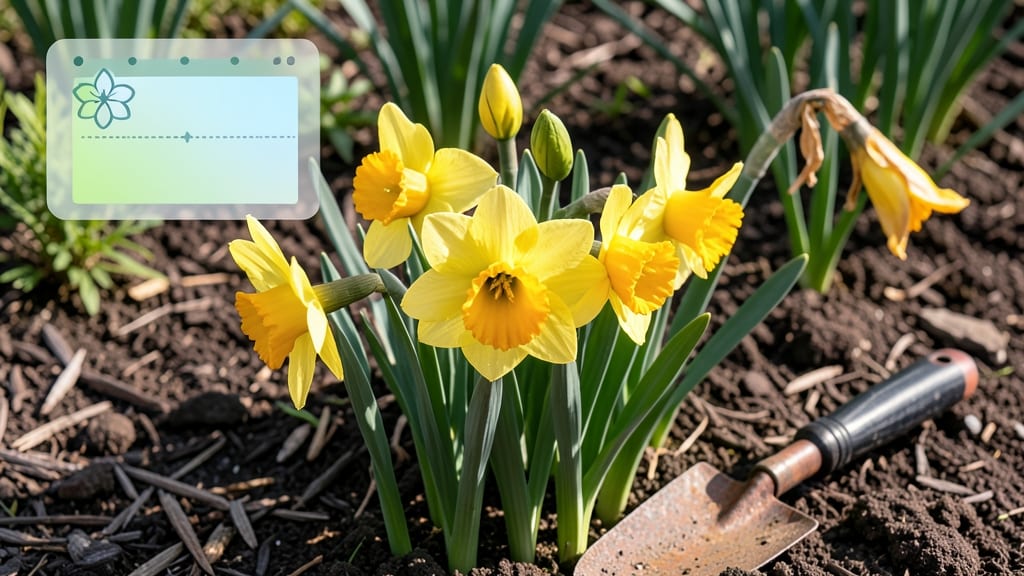
Daffodils do not bloom all summer; they primarily flower in early spring, with most varieties fading by late spring or early summer. Their bloom timing varies by species, climate, and planting zone.
Daffodils are spring's showstoppers, not summer's stars. 🌸 Their blooming cycle is tightly linked to daylight hours and temperature shifts—most varieties peak between February and May, with some late bloomers like Narcissus poeticus stretching into June.
What's fascinating is how different regions affect timing: Northern gardens might see blooms delayed until April, while Southern climates could enjoy them as early as January. The key to longer displays lies in choosing reblooming cultivars and providing consistent care during their active growth phase.
For gardeners eager to extend the season, selecting varieties like Ice Follies or Tête-à-Tête can deliver multiple bloom cycles. Proper planting depth (6 inches) and well-draining soil create ideal conditions, while regular watering and balanced fertilization (10-10-10 in early spring) encourage robust growth.
Pruning spent blooms promptly redirects energy to foliage development, setting the stage for potential reblooming in fall.
💡 In This Article
- Understanding Daffodil Bloom Seasons by Variety
- How to Extend Daffodil Blooms in Your Garden
Understanding daffodil bloom seasons by variety
Daffodils follow a biological clock tied to photoperiodism—the way plants respond to daylight length. Most varieties need 12-16 weeks of cold temperatures (below 40°F) to trigger blooming, then wait for increasing daylight (12+ hours) to flower.
Early bloomers like Narcissus papyraceus (paperwhite daffodils) emerge as early as November in warm climates, while classic trumpet daffodils (Narcissus pseudonarcissus) typically wait until March or April. The Narcissus poeticus (poet's daffodil) often stretches blooming into June, making it the summer's latecomer.
The science gets even more interesting with reblooming varieties. These special cultivars (like Ice Follies) produce flowers twice—first in spring, then again in fall.
This happens because they store energy in their bulbs during summer dormancy, then respond to shorter daylight in autumn. 🌱 What's unique is that rebloomers need full sun exposure (6+ hours daily) and consistent moisture to store enough energy for two bloom cycles. Without proper care, they'll only flower once.
Climate plays a dramatic role in timing. In USDA Zone 5, daffodils might bloom 2-3 weeks later than in Zone 8 due to colder winters. The chilling requirement (cold period needed to break dormancy) varies: some need only 400 hours below 45°F, while others require 900+ hours.
This explains why daffodils planted in warm coastal areas (like Southern California) often bloom in January, while those in colder inland regions wait until April.
Here's what most gardeners miss: daffodil blooming isn't just about timing—it's about bud formation. Flowers develop underground during summer, with buds visible in fall. If summer heat exceeds 85°F for extended periods, bud formation suffers, leading to smaller or fewer blooms next spring.
This is why afternoon shade in hot climates can actually improve future blooming performance.
Consider these key factors when selecting varieties:
- Early bloomers: Narcissus papyraceus (Nov-Dec), Tête-à-Tête (Feb-Mar)
- Mid-season: Ice Follies (Mar-Apr), Carlton (Apr-May)
- Late bloomers: Narcissus poeticus (May-June), Actaea (May-June)
- Rebloomers: Ice Follies, Minnow (fall rebloom potential)
The takeaway? Daffodils are spring's fleeting stars, not summer's steady performers—but with the right variety and care, you can extend their show by several weeks or even coax a second performance from select cultivars. 🌿