
Blooming
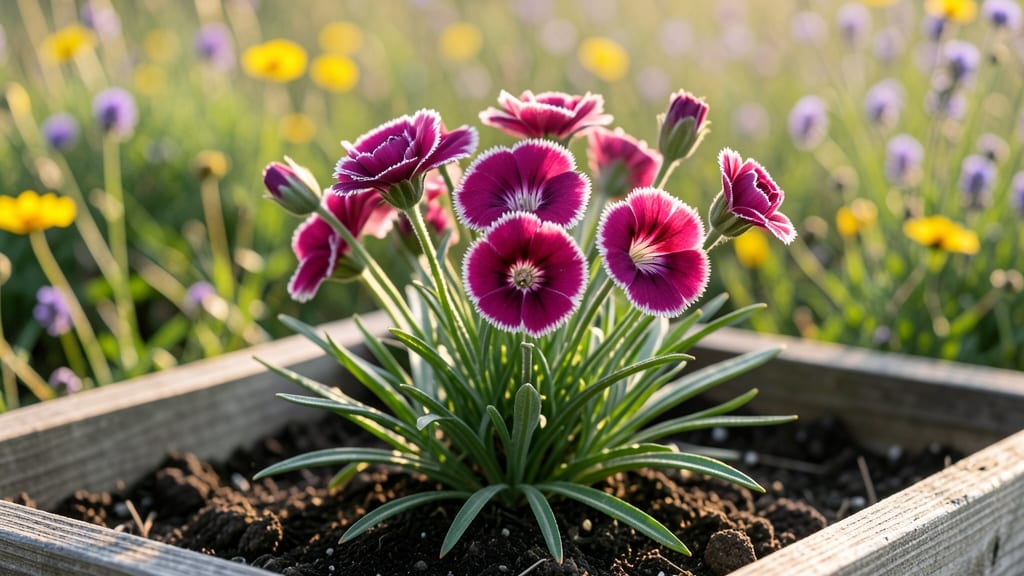
Dianthus do bloom all summer in perfect growing conditions, but most varieties reach their peak in spring and early summer before gradually declining by mid-to-late summer. Some cool-season types may produce a second flush of flowers in fall, while heat-resistant hybrids like ‘Firewitch’ can extend blooming well into August or longer in milder climates.
Dianthus blooming patterns depend heavily on your climate zone and the specific variety you're growing. Cool-season types like Sweet William thrive in spring and may rebloom in fall when temperatures dip, while heat-tolerant hybrids can handle summer heat better but still need consistent care.
The key to summer-long blooms lies in proper deadheading, balanced fertilization, and avoiding water stress—all of which help the plant focus energy on producing new flowers instead of seed development. 🌸
For example, in Zone 5 gardens, I've seen ‘Firewitch’ dianthus continue flowering through July with minimal maintenance, while traditional varieties might need a mid-summer trim to encourage fresh growth. The right soil pH (around 6.0-7.0) and mulching also play crucial roles in maintaining moisture and root health during hot months.
💡 In This Article
- Dianthus Blooming Seasons by Variety and Climate
- Extending Dianthus Blooms: Pruning and Care Tips
Dianthus blooming seasons by variety and climate
Dianthus blooming patterns hinge on their biological classification and environmental triggers. Annual varieties (like ‘Firewitch’) are bred for heat tolerance and often bloom continuously from spring through summer, sometimes extending into early fall in cooler regions.
Their secret lies in selective breeding that delays the natural flowering-to-seed transition, a process triggered by day length and temperature shifts. In contrast, perennial types like ‘Sweet William’ follow a more traditional seasonal rhythm, peaking in spring when temperatures rise but daylight hours remain long.
The magic number for optimal blooming is 60-75°F during the day with cooler nights (50-60°F). When summer temperatures climb above 85°F, most dianthus varieties experience heat stress, causing buds to drop or flowers to wilt prematurely.
This is why coastal gardens in Zone 7-9 often see longer blooming seasons—the marine influence keeps temperatures moderate. For example, in Southern California, ‘Firewitch’ dianthus can continue flowering into September, while inland areas might see blooms taper off by early August.
Light exposure plays a critical role too. Dianthus require full sun (6-8 hours daily) to produce their signature vibrant blooms, but the intensity matters.
In high-desert regions (like Albuquerque), the bright sunlight and dry air actually help extend blooming by reducing fungal pressure, while humid climates (like the Southeast) may require afternoon shade to prevent bud rot.
The plant's natural defense mechanism against heat involves closing stomata (pores) to conserve water, which can temporarily halt flower production until conditions improve.
Here's how varieties differ by climate zone:
- Cool climates (Zones 3-5): Expect peak blooms in May-June with possible fall reblooming if temperatures stay below 75°F after Labor Day
- Moderate zones (6-8): Continuous blooming from April through July, with heat-tolerant hybrids lasting until August
- Hot climates (9-11): Spring blooms only, unless you use shade cloth and frequent watering to prevent stress
What most gardeners don't realize is that dianthus actually stop blooming when they sense they're producing seeds. This natural cycle is triggered by ethylene gas released as flowers age.
In wild populations, this ensures energy goes to seed production rather than new flowers—but in cultivated varieties, we've bred out this response to some degree. The result? With proper care, you can trick your dianthus into thinking it's still springtime, extending that colorful display well beyond what nature intended.
For visual reference, imagine a Sweet William plant in Zone 5: it might produce 30-50 blooms per stem in May, then gradually reduce to 10-20 blooms by July unless you intervene with deadheading.
Meanwhile, a Firewitch in Zone 9 could maintain 20-30 blooms per stem continuously from March through October with minimal care. The difference comes down to genetics and environmental adaptation strategies built into each variety.