
Blooming
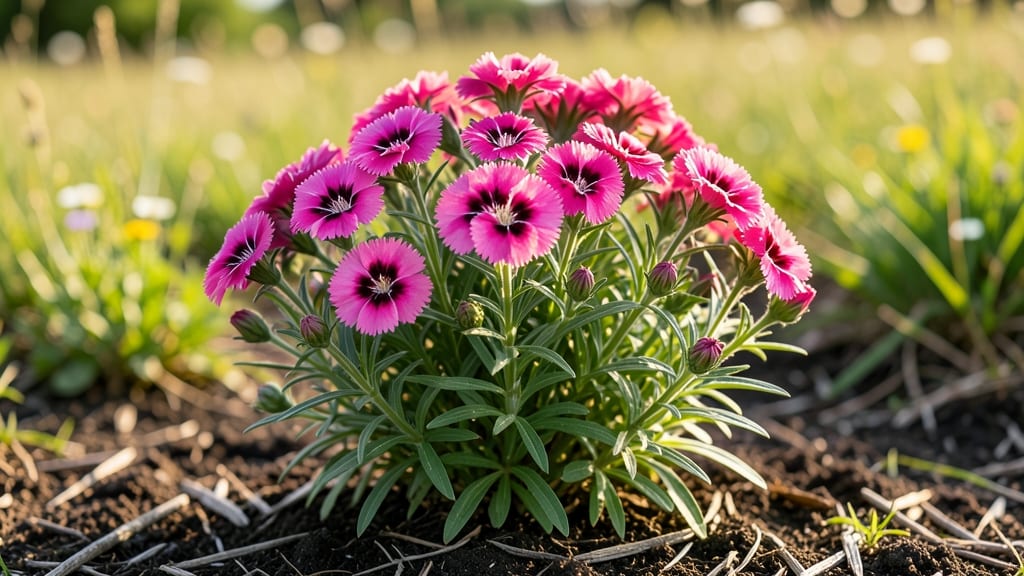
Dianthus flowers do not bloom continuously all summer, but many varieties—like Sweet William and Rainbow Pinks—produce fresh blooms in spring and fall after summer dormancy or proper deadheading. Heat and drought often shorten their flowering periods.
Most dianthus varieties follow a natural seasonal rhythm, with peak blooming in spring and fall when temperatures moderate. 🌸 Perennial types like 'Firewitch' or 'Matrona' may enter summer dormancy to conserve energy, while annuals like 'Rainbow Pinks' often fade faster under intense heat.
The key to encouraging reblooms lies in consistent care—removing spent flowers, providing afternoon shade, and maintaining even moisture without overwatering. I've seen gardeners extend summer blooms by 4-6 weeks with these adjustments, though extreme heat will still trigger dormancy in most types.
What sets dianthus apart is their ability to "remember" seasonal cues—daylight length and temperature shifts trigger new growth. For example, varieties like 'Moonlight' will often produce a second flush of blooms when nights cool below 75°F after a summer break.
The trade-off? Neglecting deadheading or letting soil dry out completely can signal the plant to focus on survival rather than flowering.
💡 In This Article
- Dianthus Reblooming Patterns by Variety
- Extending Dianthus Blooms Through Summer Care
Dianthus reblooming patterns by variety
Dianthus blooming cycles depend entirely on whether they're annuals or perennials—and their native growing conditions. Annual varieties like Rainbow Pinks complete their life cycle in one season, typically blooming heavily in spring before fading by midsummer unless deadheaded religiously.
Perennials, however, have built-in survival strategies: they often enter summer dormancy when daytime temperatures exceed 85°F to conserve energy, then rebound with fresh blooms when cooler fall weather arrives. 🌿 This explains why 'Firewitch' dianthus might look spent in July but produce a spectacular second flush in September.
The science behind this involves photoperiodism—the plant's response to daylight length. Most dianthus varieties need 12-14 hours of daylight to trigger flowering, which explains why summer's long days can actually suppress blooming.
In cooler climates (zones 3-5), this means spring blooms peak in May, while warmer zones (7-9) may see staggered blooming throughout summer due to milder temperatures.
For example, 'Matrona' dianthus in Southern California often blooms from March through November, while the same variety in New England might only flower April-June and again in September.
Temperature plays a critical role in reblooming frequency. Studies show that dianthus varieties exposed to consistent temperatures above 90°F for more than 2 weeks will often enter full dormancy, with some varieties like 'Sweet William' completely halting flower production. The good news?
Many perennials store energy in their roots during summer, allowing them to "remember" seasonal cues and produce stronger fall blooms than their spring counterparts. This is why gardeners in hot climates often see their dianthus perform best in fall after summer's heat subsides.
Daylight length also creates regional variations. In northern latitudes where summer days stretch to 16 hours, dianthus may struggle to bloom continuously because the plants perceive constant "summer" conditions.
However, in Mediterranean climates with hot, dry summers and mild winters, varieties like 'Rainbow Pinks' can actually bloom year-round with minimal care. The key difference lies in how each variety interprets seasonal signals—some prioritize survival during heat, while others adapt to bloom through summer's extremes.
Consider these variety-specific patterns when planning your garden:
- Annuals (e.g., Rainbow Pinks): Bloom heavily in spring, then fade by summer unless deadheaded weekly
- Perennials (e.g., 'Firewitch'): Enter summer dormancy but rebound in fall with stronger blooms
- Heat-tolerant varieties (e.g., 'Moonlight'): Can bloom intermittently through summer in zones 7-10
- Cool-climate varieties (e.g., 'Matrona'): Often bloom only in spring and fall, with minimal summer flowers
The takeaway? Your local climate and variety selection determine whether you'll see continuous summer blooms or seasonal flushes. With the right combination, you can enjoy dianthus flowers for 8-10 months of the year instead of just spring! 🌸