
Blooming
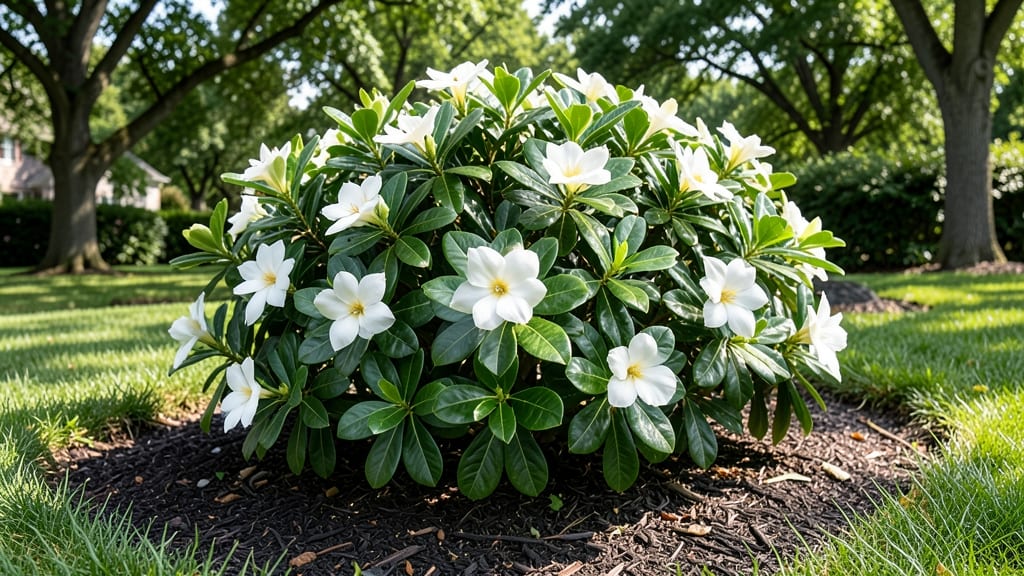
Gardenias don't bloom all summer—most varieties flower mainly from late spring through early fall, peaking in warm climates between May and September. Cooler temperatures or dormancy periods often stop blooming completely.
Gardenias are sensitive to temperature shifts, and their blooming cycles align with natural seasonal changes rather than continuous summer growth. 🌸 In tropical regions, some varieties like G. jasminoides may produce sporadic flowers year-round, but even then, they follow a spring-to-fall dominant pattern.
The key factor is daylight—longer summer days trigger blooming, but excessive heat or drought can stress the plant and reduce flower production. I’ve noticed that gardenias in USDA zones 8-10 tend to bloom more consistently than those in cooler climates, where winter dormancy resets their cycle entirely.
What many gardeners don’t realize is that over-fertilizing with nitrogen can actually discourage blooming by promoting leafy growth instead. The plant needs a balanced approach—low nitrogen, high phosphorus fertilizers during the growing season help encourage flowers.
For those in cooler climates, providing winter protection (like mulch or a frost blanket) ensures the plant survives to bloom again the following spring.
💡 In This Article
- Gardenia Blooming Seasons by Variety and Climate
- Tips to Extend Gardenia Blooms Beyond Peak Season
Gardenia blooming seasons by variety and climate
The blooming patterns of gardenias are deeply tied to their natural tropical origins. Most gardenias, particularly the popular G. jasminoides, evolved in Southeast Asia where they experience distinct wet and dry seasons.
These plants rely on daylength and temperature cues to trigger flowering—typically requiring 12-14 hours of daylight combined with warmth between 70-85°F to initiate bud formation. 🌿 In temperate climates, this translates to peak blooming from May through September, as summer daylight naturally extends past 14 hours.
Climate plays a dramatic role in blooming consistency. Tropical varieties like G. radicans (Cape Jasmine) may produce flowers year-round in USDA zones 10-12, but even these show reduced blooming during monsoon seasons when humidity exceeds 80% for prolonged periods.
The contrast is stark when comparing gardenias in Florida (zone 9), which may bloom sporadically in winter, versus those in Georgia (zone 8), where winter dormancy completely halts flowering until spring.
This explains why garden centers in warmer regions often have blooming plants year-round, while northern gardeners must wait for summer.
The science behind this involves photoperiodism—a plant's response to daylight duration. Gardenias are long-day plants, meaning they need extended daylight to produce flowers.
When days shorten in autumn, the plant conserves energy for root growth rather than blooming. 🌞 This is why gardenias in zone 7 or cooler often require artificial grow lights (14+ hours) during winter to encourage any flowering at all.
The trade-off is that this energy-intensive approach can weaken the plant if overused.
Another critical factor is vernalization—the need for a period of cold exposure to reset the flowering cycle. Most gardenias require 4-6 weeks below 60°F to break dormancy and prepare for spring blooming.
This explains why gardenias in Southern California (mild winters) may bloom earlier than those in North Carolina, where colder winters provide the necessary dormancy period. The exception is G. fortunata, which can bloom year-round in ideal tropical conditions but still shows seasonal intensity peaks.
Soil temperature also influences blooming. Gardenias prefer root zones between 65-75°F. When soil temperatures drop below 60°F, root activity slows, directly impacting nutrient uptake and flower production.
This is why gardenias in container gardens often bloom more consistently—the pots warm up faster in spring and retain heat better in fall than in-ground plants. 🌱 The root temperature difference can be as much as 10°F between container and ground-planted gardenias in the same location.
Understanding these mechanisms helps explain why gardenias in greenhouses can bloom year-round—the controlled environment maintains optimal temperature, humidity (50-70%), and light conditions. However, even greenhouse gardenias show reduced blooming during winter months unless supplemented with grow lights, proving that seasonal cues are hardwired into their biology.
This biological programming is why gardenias will never bloom continuously like annuals or some tropical perennials.