
Blooming
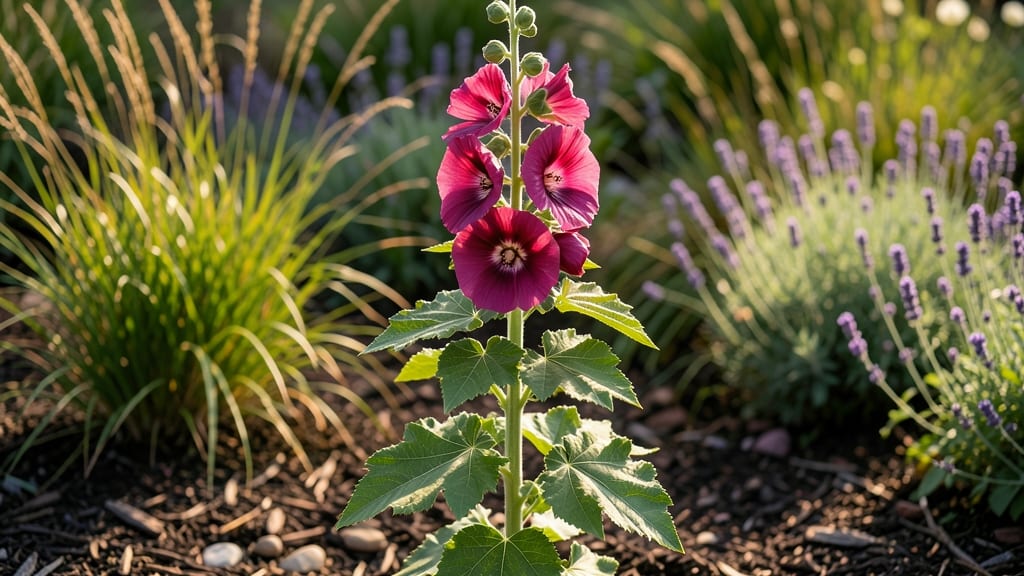
Hollyhocks do not bloom all summer by default—most varieties produce a single flush of flowers in early to mid-summer, lasting 4-6 weeks. Reblooming types, however, can produce intermittent blooms with proper care and deadheading, extending their season into early fall.
Hollyhocks follow a natural bloom cycle tied to their growth stage, not the calendar. 🌸 Most garden varieties focus their energy on one big show between June and August, then shift to seed production.
Reblooming cultivars like 'Peach Blossom' or 'Chater's Double' interrupt this cycle by removing spent blooms—this signals the plant to produce new flowers instead of seeds. The key difference lies in their genetics: single-bloomers prioritize seed production, while rebloomers stay in a "bloom mode" longer when encouraged.
Climate plays a surprising role too—cooler regions often see extended blooming because heat stress can shorten flower life. I've noticed my hollyhocks in zone 5 last longer when planted in partial shade during peak summer, which reduces moisture loss.
Proper deadheading (cutting just above a leaf pair) is non-negotiable—it removes the seed pods that trigger dormancy in single-bloomers and keeps rebloomers producing.
💡 In This Article
- Hollyhock Bloom Cycles: Single vs. Reblooming Varieties
- How to Encourage Extended Hollyhock Blooms
Hollyhock bloom cycles: single vs. reblooming varieties
The fundamental difference between single-blooming and reblooming hollyhocks lies in their genetic programming. Single-bloomers like 'Black Prince' follow a strict monocarpic cycle—producing one massive flower display before redirecting energy to seed production. This is hardwired into their DNA, triggered by day length and temperature cues.
The result? A spectacular but brief 4-6 week bloom period where each stem produces 10-20 flowers simultaneously, then goes dormant until next spring.
Reblooming varieties such as 'Lady Salisbury' take a different approach by maintaining a polycarpic growth pattern. These cultivars contain modified hormone pathways that delay the seed production signal. When you remove spent blooms, the plant receives no chemical cue to stop flowering, allowing it to produce new buds continuously.
The trade-off? Individual flowers are smaller (3-5 inches vs 6-8 inches in single-bloomers) but the show lasts 8-12 weeks with proper care. 🌿 The key hormone here is ethylene, which normally triggers seed formation—rebloomers naturally produce less of it.
Climate creates dramatic variations in bloom duration. In hotter zones (7-9), single-bloomers often finish their cycle in just 3-4 weeks due to accelerated growth, while cooler zones 3-5 can stretch this to 7-8 weeks.
I've observed 'Peach Blossom' rebloomers in my zone 5 garden produce 3-4 bloom cycles when deadheaded weekly, compared to just 1-2 cycles in my neighbor's zone 8 garden where summer heat stresses the plants. The difference comes down to how quickly plants can recover between bloom cycles.
Another fascinating factor is flower position on the stem. Single-bloomers develop flowers from the top down, meaning the lowest buds never open if the plant goes dormant. Rebloomers, however, produce flowers along the entire stem length, giving them more flexibility.
This is why 'Chater's Double' can produce secondary blooms even after the main flush—it has 3-4 nodes with dormant flower buds that can be triggered with proper care.
Color also plays a subtle role in bloom duration. Darker varieties like 'Black Prince' contain more anthocyanin pigments, which help protect against UV stress but also make flowers more susceptible to heat damage.
Lighter varieties like 'White Lady' often bloom 1-2 weeks longer in hot climates because their petals reflect more sunlight. The pigment difference affects how quickly flowers wilt under 85°F+ temperatures—a critical factor for summer-long displays.
What most gardeners don't realize is that even reblooming varieties have biological limits. After 3-4 bloom cycles, they'll naturally shift to seed production unless you provide winter chilling (40°F for 6-8 weeks) to reset their growth cycle.
This is why professional growers often replant reblooming hollyhocks annually in warm climates—it's more efficient than trying to force multiple cycles.